The evolution of the depiction of the various Native American peoples in cinema, from the silent era to the present day: how their image on the screen has changed the way to understand their history and culture.
Glaucus, a demobilized centurion returns home to Pompeii to find his father murdered by a gang of black-hooded Christian robbers that terrorizes the city and he decides to investigate the matter while the nearby volcano threatens to erupt.
Whilst celebrating Lleu's 18th birthday, Lleu and two friends go for a boat ride, when they discover beneath the water the golden doorway to the Mabinogi (the Otherworld). They swim down and are transported back in time many centuries to the Mabinogi. There they encounter some problems with mediaeval life, and they have to deal with the conflict between fate personal choice and magic
In Edo-era Japan, a ukiyo-e artist languishes in his master’s shadow. Creatively stifled, he finds consolation in the company of a prostitute, and becomes entangled in a love triangle. A mystery emerges involving two portraits and the sudden disappearance of the artist Sharaku. Helmed by Cannes-selected director Tatsuji Yamazaki, the film employs kabuki-inspired sequences and stylised sets.
France. End of the 19th century. Louise Violet 40, a Parisian teacher, is sent on a mission to the French countryside. But in a place where the daily life is linked to the seasons, land and crops, she must first convince parents to send their kids to school. With the help of the mayor, she is gradually accepted by the parents and their children. But soon, her past catches up with her. Despite the obstacles she faces, Miss Violet will give her heart and soul to her belief that education is the key to freedom.
The film is set in the 1930s in the USSR. The film tells about one day of the construction of the Magnitogorsk Iron and Steel Works. The heroes of the film are simple construction workers who are burning at work. Upon learning that their colleagues in Kharkov have set a record, they mobilize to break it. The entire construction site was engulfed in immense socialist competition. The teams are ready to complete the work on time at any cost. A Moscow journalist who has come to cover the scale of the great construction project is looking for the hero of his report...
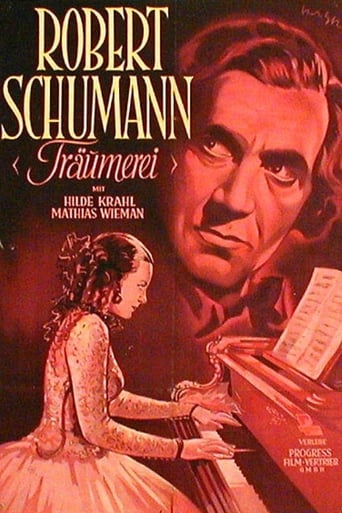
A musical film based on biographical facts about Clara Wieck's love for composer Robert Schumann (1810-1856), her marriage against her will, Schumann's triumph, and his tragic end due to mental illness. The film is beautiful and entertaining, full of noble spirit and beautiful words about art and love, which only conflict in a theoretical context; not least thanks to its solid cast, this film is quite serious and far from kitsch. Completed in 1944, during World War II, the film was rejected by the Nazi leadership, but was eventually released and enjoyed success with an audience already weary of war.
Russia, 1917, WWI. This is the story of the 1st Russian Women's Battalion of Death, formed as part of an ill-conceived propaganda ploy by the Russian Provisional Government in late May of 1917.
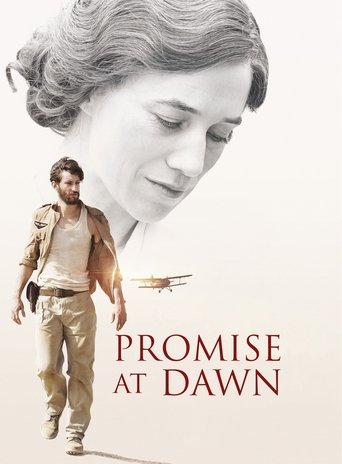
From his childhood in Poland to his adolescence in Nice to his years as a student in Paris and his tough training as a pilot during World War II, this tragi-comedy tells the romantic story of Romain Gary, one of the most famous French novelists and sole writer to have won the Goncourt Prize for French literature two times.
The movie follows the perspective of several characters (such as Japanese victims, soldiers, American prisoners of war and others) and how they lived or tried to survive the effects felt during the aftermath of the Atomic Bomb dropping by the Enola Gay at Hiroshima, during World War II.
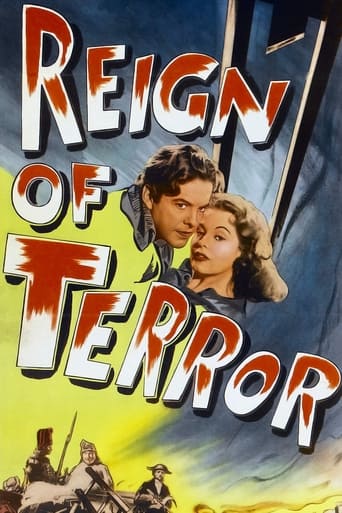
The French Revolution, 1794. The Marquis de Lafayette asks Charles D'Aubigny to infiltrate the Jacobin Party to overthrow Maximilian Robespierre, who, after gaining supreme power and establishing a reign of terror ruled by death, now intends to become the dictator of France.
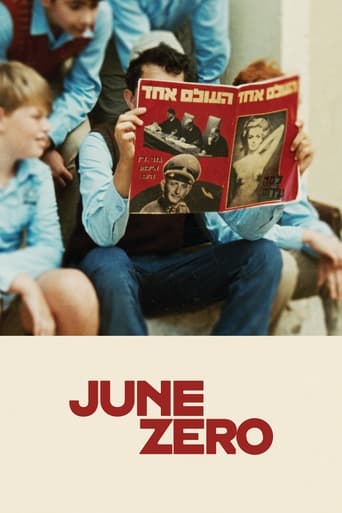
Israeli filmmaker Amos Gitaï offers a look impressionist long history of armed conflict in their nation.
In the household of Lee Gyeong-jin, a high-ranking official of Joseon Kingdom, three sons die from an unidentified horror. A woman pregnant with a child of the third son soon learns of the evil spirit that haunts the house.
1917. Bakary Diallo enlists in the French army to join his 17-year-old son, Thierno, who has been forcibly recruited. Sent to the front, they will have to face the war together. While Thierno learns to become a man, Bakary will do everything to bring him back safely.
Fernando, a journalist, and his friend César join terrorist group MR8 in order to fight Brazilian dictatorial regime during the late sixties. César, however, is wounded and captured during a bank hold up. Fernando then decides to kidnap the American ambassador in Brazil and ask for the release of fifteen political prisoners in exchange for his life.
March 1945. The Japanese army launches a sudden and extremely brutal assault against the French garrisons in the Far East. Thousands of civilians and soldiers were executed. Hunted by the Japanese enemy, a column of legionnaires already weakened by alcohol and disease decides to enter the jungle to try to reach China and the allied bases.
Hasyarathna Ramakrishna is a 1982 Indian Kannada film, directed by B S Ranga and Produced by B R Vasanth, A Ramesh Rao, S V Rajarao and B S Ranga. The film stars Ananthnag, Aarathi, Srinath, Manjula, Sripriya, K S Ashwath, Dinesh, Shivaram, Ashwath Narayan and Anantharam Maccheri in lead roles. The music of the film was composed by T G Lingappa.
Exuberant, eye-opening movie that serves up a dazzling hundred-year history of the role of gay men and lesbians have had on the silver screen. Film contains fabulous footage from 120 films showing the changing face of cinema sexuality, from cruel stereotypes to covert love to the activist triumphs of the 1990s.
Israel, 1961. Nazi war criminal Adolf Eichmann, responsible for organizing the extermination of European Jews, is sentenced to death.
Dramatization of events from the Second Opium War which culminated in the looting and destruction of imperial estate "Yuan Ming Yuan", AKA the Old Summer Palace by invading English and French troops.
Activate your FREE Account!
You must create an account to continue watching