The history of italo disco, a musical genre that conquered the world during the incredible eighties, the most cybernetic decade; a style that was not just another kind of dance-pop music, but also the origin of an aesthetic, a true social phenomenon and the creative center of a very profitable industry.
This fascinating historical drama looks at the life of "the Czech Schindler," Zdenek Toman, a controversial figure who was an unsavory politician and dubious entrepreneur, but also the savior of hundreds of Eastern European Jews.
On one of the October nights at the ball, gymnasium pupils and officers scoff at the love of Kuzma Zakharkin, the “cook's son”, to Lena, the daughter of the manufacturer. Cannon volley interrupts the fun. In the city begins the Moscow armed uprising of workers. At the center of the fate of two families is the capitalist Leontyev and the worker Zakharkin, whose sons became the organizers and participants of this uprising.
Kulak Walter's successor, Robert, calls his fellow villagers to form a collective farm. The poor peasantry of the village actively supports his call. The first collective farm of German colonists "Rote Fane" (Red Flag) is created. Local kulaks begin to fight against him. Under the influence of the kulaks' agitation, part of the middle-class colonists went to Germany. The collective farm grows and becomes stronger, and the kulaks weaken. Walter bribes his watchman, old Shakir, and incites him to kill Robert. But Shakir can't beat Robert. He exposes Walter's nefarious intentions and joins the collective farm. A letter comes from the departed colonists, reporting that there is an economic crisis and unemployment in Germany, and expressing regret for following the provocation and leaving the Soviet Union.
In 19th-century Louisiana's Cajun country, Belizaire is the informal spokesman for his citizens, who don't see eye to eye with local racists who wish to eradicate all Cajuns. Complicating matters is that Belizaire's former flame is now married to his biggest rival, an affluent landowner's son. Before he knows it, Belizaire is caught up in a web of murder, lies, and prejudice.
How does art survive in a time of oppression? During the Soviet rule artists who stay true to their vision are executed, sent to mental hospitals or Gulags. Their plight inspires young Igor Savitsky. He pretends to buy state-approved art but instead daringly rescues 40,000 forbidden fellow artist's works and creates a museum in the desert of Uzbekistan, far from the watchful eyes of the KGB. Though a penniless artist himself, he cajoles the cash to pay for the art from the same authorities who are banning it. Savitsky amasses an eclectic mix of Russian Avant-Garde art. But his greatest discovery is an unknown school of artists who settle in Uzbekistan after the Russian revolution of 1917, encountering a unique Islamic culture, as exotic to them as Tahiti was for Gauguin. They develop a startlingly original style, fusing European modernism with centuries-old Eastern traditions.
In 19th century New Orleans, creole Henriette must choose between love and devotion to the church. Neither choice is going to be easy, as there is great opposition to her ideas of breaking traditions.
A semi-documentary biography film about the life and work of Soviet film actor Pyotr Aleynikov. Includes newsreels from the 1930s, footage from films featuring Aleynikov and interviews with his closest friends and colleagues.
After being released from an Italian prison, British officer Eric Newby must find his way out of Italy before the Germans come. However, he is injured on the way and is left behind from his fellow soldiers. He is helped out by the local Italians, and he meets Wanda, a beautiful local girl who helps him learn Italian so he can escape. Slowly, their small friendship turns into a romance, but with the Germans looking for Eric, they are kept apart, not knowing what will happen.
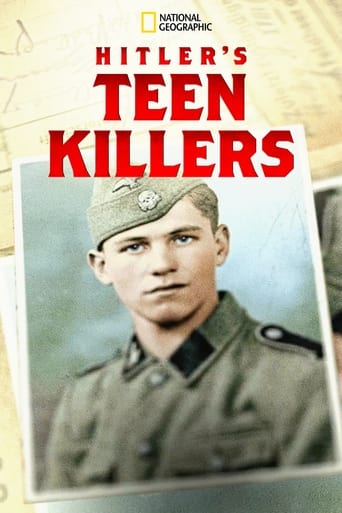
They grew up under the Nazi regime. They pledged to give their lives for Hitler. They were fanatics who would not be stopped. They were the 20,000 teenagers who made up the 12th SS Panzer Division. Unleashed in France to halt the Allied invasion, they would sow terror and destruction in their wake. Historical colorized archives and a handful of survivors tell us this story.
Jonathan Cake, Jemma Redgrave and Hugh Bonneville lead an outstanding cast in this mini-series tracing the turbulent political career and tempestuous private life of Oswald Mosley, leader of the British Union of Fascists during the 1930s. The mini series charts Mosley's rise to political notoriety through his personal life – from youthful rising star of the Conservative Party to potential leader of the Labour Party, and later abandonment of conventional party politics to become a figurehead of burgeoning fascism.
Learn how one man reluctantly took on the most powerful institution of his day and won. Martin Luther is credited with expounding a new vision of man's relationship with God and, by extension, a redefinition of man's relationship with authority. Filmed across Europe -- from the rustic rural Germany to the opulence of the Vatican City -- you'll witness the collapse of the medieval world and the birth of the modern age.
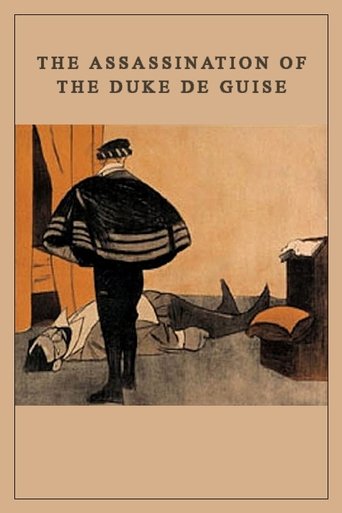
The film portrays the events on the day King Henri III of France arranged for Duke Henri de Guise to be murdered.
The rock-wild youth of the 1960s during the apparitions of their idols.
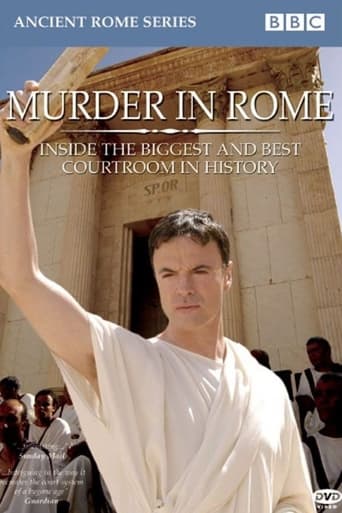
Cicero, the future Consul of Rome, is just starting out as a trial lawyer in crime-ridden Rome where assassinations for political advantage and for estate grabbing had become de rigueur. The matriarch of a prominent family hires him to defend a relative on a charge of patricide. He faces one of the shrewdest criminal trial prosecutors in the Republic who is backed by powerful political forces with motives to see that his client is convicted and executed in one of the most horrible manners possible.
Hildegard von Bingen was truly a woman ahead of her time. A visionary in every sense of the word, this famed 12th-century Benedictine nun was a Christian mystic, composer, philosopher, playwright, poet, naturalist, scientist, physician, herbalist and ecological activist.
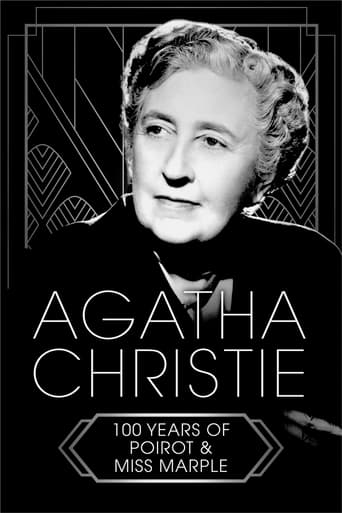
British writer Agatha Christie (1890-1976) published her first novel in 1920, in which the eccentric Belgian private sleuth Hercule Poirot made his debut. Later, in 1927, the first short story starring the gentle spinster Miss Jane Marple appeared. A fascinating journey through popular culture in search of the footprints of two of the most charismatic characters in crime and mystery literature.
During the Russian Revolution, a young nobleman and his peasant maid flee from their homeland to Constantinople where they marry and begin a challenging new life.
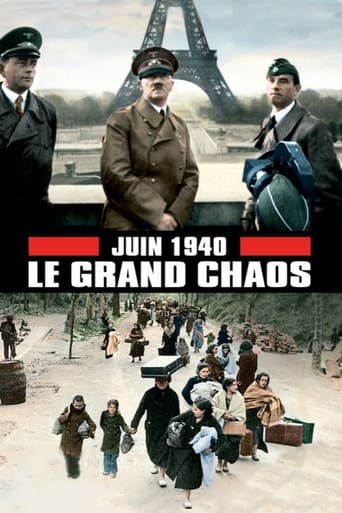
From May 10, 1940, France is living one of the worst tragedies of it history. In a few weeks, the country folds, and then collapsed in facing the attack of the Nazi Germany. On June 1940, each day is a tragedy. For the first time, thanks to historic revelations, and to numerous never seen before images and documents and reenacted situations of the time, this film recounts the incredible stories of those men and women trapped in the torment of this great chaos.
Postwar France was slow to recover from the after-effects of the World War Two. The economy was doing poorly, and many people were poor and homeless, sleeping under bridges, etc. The winter of 1953-54 proved particularly difficult for these people, as it was one of the coldest on record. Father Pierre (Lambert Wilson), a parish priest, on seeing the suffering of these people (and their frequent death from the cold), was moved to write the French government seeking help for them. When his letter, which was published in the newspapers, succeeded in rousing overwhelming popular support for helping the homeless, he was able to form a charitable group (still active today) titled "Les Chiffoniers d'Emmaus," or "The Ragpickers of Emmaus" to channel help to them. This biographical film tells the true story of Abbe Pierre's successful efforts in those years.
Activate your FREE Account!
You must create an account to continue watching