A film about the great Russian actress Vera Fyodorovna Komissarzhevskaya (1864–1910).
Six polar explorers arrive to a remote island in Arctic for a year-long scientific expedition. When their ship departs, they unpack only to find a young stowaway, who romanticized Arctic heroes, and tried to join them on multiple occasions finally succeeding. That's how six became seven. Life of polar explorers is tough, and full of danger. During one year they are largely isolated from the mainland, and should survive using their resourcefulness, smarts, knowledge, and existing supplies with occasional unreliable radio communications. The Seven are resilient, cheerful, they forged a true friendship. Now they are ready to face the unforgiving Arctic.
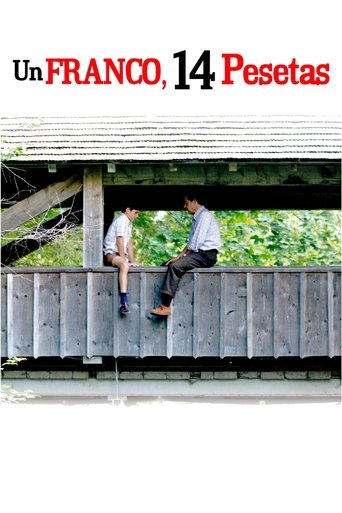
In 1960, Martín and Marcos are forced by their difficult personal circumstances to travel to Switzerland in search of work, leaving their families in the Madrid of Franco's Spain. But they undertake more than a simple journey; they begin the road to a new life.
In São Paulo, in the late 1960s, the convent of the Dominican friars became a trench of resistance to the military dictatorship that governs Brazil. Moved by Christian ideals, frets Betto, Oswaldo, Fernando, Ivo and Tito came to support the guerrilla group Ação Libertadora Nacional, commanded by Carlos Marighella.
Leni Gruyetin, a resident of Nazi Germany, lives a tumultuous life as she bears witness to the fascist regime of the Nazis.
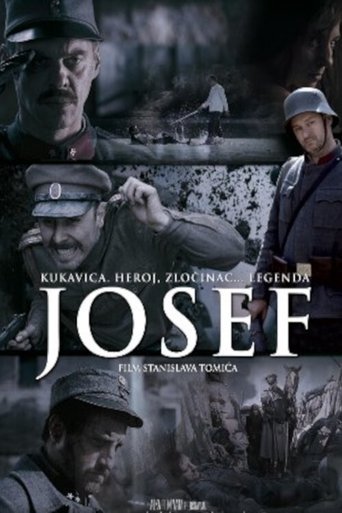
It is a movie about survive in war time (WW1 East front). In dark colors, with interesting characters, mixture of ash and sand, puzzle of stories, cynic, precise, harsh, bitter, Rubick cube of times and events.
1970 something. As the end of an era of repression approaches, a bourgeois family still in its bubble of power spends its vacation in a country house. The teenage cousins spend their days in indolence, interrupted by fits of hysteria. It will only take the introduction of an outside element for violence to erupt.
In spite of a longstanding tradition forbidding women from working in a sake brewery, Retsu, a young blind woman, challenges herself to overcome her disability in order to save her family's sake business.
Josef Laufer portrays Egon Erwin Kisch in two daring journalistic adventures: in “Zuřivý reportér,” Kisch goes undercover in a poverty lodging house, uncovers a tattoo’s dark backstory and deciphers a secret telegram hinting at war via the legend of the black rose; in “Lovci senzací,” he pursues sensational leads and exposes hidden truths, proving why he was rightly called “the raging reporter.”
National Geographic follows underwater explorer Bob Ballard as he searches for the aircraft carrier sunk during the Battle of Midway.
A southern aristocrat clashes with a driver transporting stolen slaves to freedom.
The beautiful account of the powerful drama of love and courage of Austrian Archduke Franz Joseph and Princess Elizabeth of Bavaria. This is a condensed version of the original German language 3-part "Sissi" series.
A biopic by the dramatist Trevor Griffiths of Aneurin "Nye" Bevan, the British Labour politician who founded the country's National Health Service in the 1940s.
During the Battle of Waterloo, a soldier's wife searches for her missing husband in the nearby forest and must resort to extraordinary measures to survive.
Namibia: The Struggle for Liberation is a 2007 epic film on the Namibian independence struggle against South African occupation as seen through the life of Sam Nujoma, the leader of the South-West Africa People's Organisation and the first president of the Republic of Namibia.
Having married the 11-year-old Emperor Peter II with his daughter, Menshikov immediately takes him and his sister Natalia to his palace. Fearing a bad influence on the boy from the Dolgoruky and, especially, Elizabeth, with whom Peter II was in love, the prince deprives him of communication with the royal court. But his plan is to keep Peter II in possible isolation until he comes of age.
A little known fact is that Chinggis Khaan, better known as Genghis Khan, would collect orphans from his bloody battlefields and have his own mother raise them. These adopted brothers grew up to become his most loyal officials and advisers. Khaan organised his Mongol soldiers into groups according to the decimal system. Soldiers were arranged in units of 10 ("aravt"), 100 ("zuut"), 1,000 ("minghan") and 10,000 ("tumen"). Each unit had an appointed leader reporting to a larger unit. A 10-person "aravt" unit is ordered by Khaan to locate a skilled doctor who lives in a forest. En route, they discover an abandoned baby. He is in fact the child of an enemy warrior who gives pursuit, even though they have saved the child's life. Whilst protecting the child from attacks from enemy soldiers, the members of the "aravt" must also complete their mission. Through their actions, they demonstrate the benevolence and bravery of Mongol warriors as the final battle closes in.
The plot is based on the novel "Akechi Samanosuke no Koi," the final work in a trilogy by Hiroshi Kato about the forced suicide of Oda Nobunaga at the temple Honnoji. Historically, the general Akechi Mitsuhide is credited with causing Nobunaga's downfall. Kato's novel focuses on Mitsuhide's nephew Samanosuke, who fought alongside his uncle during the assault on Honnoji.
Three sisters run brothels protected by the authorities, abuse and prostitute young women under the false pretense of employing them as servants.
Activate your FREE Account!
You must create an account to continue watching