Directed by French Director Christian Faure and released in 2014, The Law brilliantly traces three days, in late Fall 1974, of stormy debate in the French National Assembly, around a bill which would make "voluntary termination of pregnancy" legal. Behind this bill stands a lone woman brilliantly played by a remarkable Emmanuelle Devos (also in The Other Son): Simone Veil the Minister of Health in the Jacques Chirac government during the presidency of Valéry Giscard d'Estaing. During these three days of violent debate Veil, a Jew and Holocaust survivor, is spared nothing: political negotiations, solitude, sparring arguments, insults and violence to her family. In spite of all of this, Veil never wavers.
Julie and Désirée Clary are courted by the brothers Joseph and Napoleon Bonaparte. Joseph marries Julie and Napoleon is affianced to Désirée. When Napoleon breaks the engagement and marries Joséphine de Beauharnais, Désirée becomes involved with General Bernadotte.
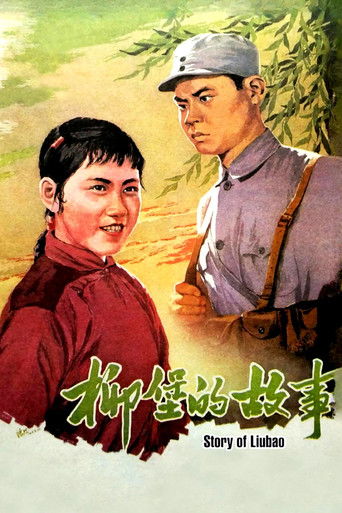
Lin Jin, a solider of the New Fourth Army, stayed in Liubao village with his Army. During Lin Jin's stay, he fell in love with a local girl, Ermeizi. However, he had to leave Liubao with his troops for several years. Lin Jin and Ermeizi lost contact during the war after Lin Jin had left Liubao. Years later, Jin returns to Liubao where he finds Ermeizi again.
A devoted musician and saint sacrifices worldly comforts to construct a temple for Lord Rama, facing trials and spiritual challenges in this biographical story.
What if nobody wants to believe you? Hanni, a farmer's wife and mother of three, is worried about her daughter Magdalena. The girl is smaller than the others, more sensitive, vomits more often and has increasingly poor eyesight. The doctors, the teacher and the family all say it must be her psyche. Glasses with normal lenses will certainly help. But as a mother, Hanni senses that a new pair of glasses won't change anything and that there is more at stake. Even plagued by an unheard-of memory from her youth, she begins to fight unwaveringly and unstoppably for her daughter's suffering, not only putting her family's happiness and her livelihood at risk, but also not shying away from the Bavarian justice system in the end.
There is a civil war in Central Asia. Bai-rapist kills the whole family of a Turkmen young man, the shepherd Chara Esenov. The surviving Chara, avenging the scolded honor of her young sister, single-handedly pursues Shamurad Khan, the head of the local Basmachi gang. Acquaintance with the Red Army soldier clarifies the meaning of the fight to the hero of the film, he adjoins the Red Guard, opposing the Basmachi, and, giving up personal revenge, once leads Shamurad into a detachment for a legal trial ...
Centered around the 2002 massacres in Gujarat, the film tells the story of a happy family that is torn apart by the loss of their son Parzan.
Tells the story of Sadie and Bessie Delany, two African-American (they preferred "colored") sisters who both lived past the age of 100. They grew up on a North Carolina college campus, the daughters of the first African-American Episcopal bishop, who was born a slave, and a woman with an inter-racial background. With the support of each other and their family, they survived encounters with racism and sexism in their own different ways. Sadie quietly and sweetly broke barriers to become the first African-American home-ec teacher in New York City, while Bessie, with her own brand of outspokenness, became the second African-American dentist in New York City. At the ages of 103 and 101, they told their story to Amy Hill Hearth, a white New York Times reporter who published an article about them. The overwhelming response launched a bestselling book, a Broadway play, and this film.
The History Channel marks the 20th anniversary of 9/11 with a new groundbreaking documentary about the biggest manhunt in human history. This documentary draws on interviews and stories told in the Museum's special exhibition of the same name, and features interviews with Jan Seidler Ramirez, chief curator and executive vice president of collections, to tell the sweeping tale, linking policy, intelligence, and military decision-making as they converged on a mysterious compound in Abbottabad, Pakistan.
East German film about the history of Red Orchestra, a real life German pro-Soviet spy ring created after the rise of Hitler that turned into a resistance movement led by a leftist Nazi officer, Harro Schulze-Boysen, and Arvid Harnack.
it's a fast moving blood and thunder tale well rendered and at least rooted in fact, and has a good feel for the period. It's interesting to have a look at somewhere else in medieval Europe besides England and France for a change. After all, Spain, Portugal, and the Italian states and some other principalities were big players at that time, too.
Syracuse lies between the warring nations of Rome and Carthage; as long as the balance of power between the nations remains intact, both nations are willing to preserve the neutrality of Syracuse. However, Rome has now gotten the upper hand in its struggle for power. The fate of Syracuse lies in the hands of its leader, the famed inventor and scientist Archimedes.
A true story, interwoven with a fictional poignant love story between a Rohingya girl and an Indian Special Forces Officer. It focuses on the peril, uncertainty, betrayal and misery of life in the Rohingya refugee camp.
A film biography of Rikard Nordraak, composer of the Norwegian national anthem.
The disembodied head of Pancho Villa, kept in a glass jar in a research institute, is the narrator of several short stories from his own life, stories that might or might not have happened but are the stuff of legend.
16th century ruler King Philip II of Spain maneuvers within a court of deceit and betrayal
William Rice is perhaps the wealthiest man in Texas. With no heirs, Rice plans to leave his estate in the form of a much-needed college. Relying on the good nature and upstanding character of his lawyer, Rice feels confident that his wealth and name will leave a prestigious legacy for generations. When nefarious forces threaten the planned college, the two are left fighting to retain his legacy.
June 14, 1941, 3 a.m. Over 40000 people from Estonia, Latvia and Lithuania are deported by Soviets to Siberia. Among them is a philosophy student Erna, a happily married mother of a little girl. Separated from her husband, Erna and her daughter are dispatched together with other women and children to remote Siberian territories. Despite hunger, fear and brutal humiliation Erna never in next fifteen years loses her sense of freedom and hope of returning to homeland.
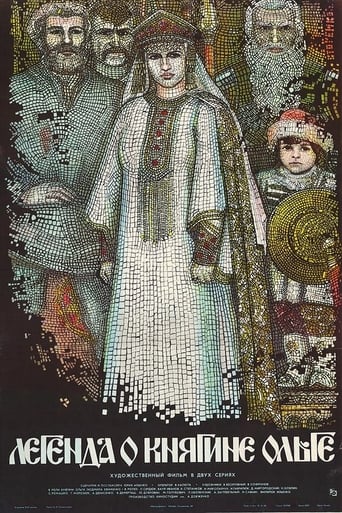
The film is a poetic adaptation of a series of stories (oral and written) about Princess Olha of Kyivan Rus' (Ukraine-Rusʹ) at the start of the 11th century. Inspired by chronicles and folk legends this is a story of a common girl Olha who married Prince Ihor and became his successor on the throne after his murder and one of the most remarkable political leaders in early medieval European history. She converted to Christianity and brought her realm into Europe.
Activate your FREE Account!
You must create an account to continue watching