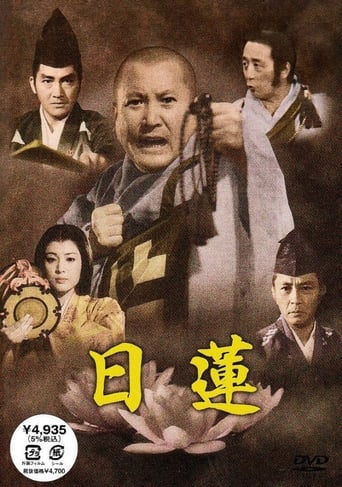
An epic drama about Nichiren's life. Nichiren was a Buddhist monk who lived for 60 years during the Kamakura period (1185-1333) in Japan. Nichiren taught devotion to the Lotus Sutra as the exclusive means to attain enlightenment. Because of his devout belief, Nichiren is met with opposition throught his travels, with life on the line, can Nichiren accomplish his goal?
Iconic British band blur (“Song 2”, “Girls & Boys”) comes together to record their first album in eight years – the chart-topping The Ballad of Darren – and prepare for the biggest concerts of their career, two sold-out shows at Wembley Stadium. With footage of the band in the studio and on the road, plus performances of their much-loved, seminal songs.
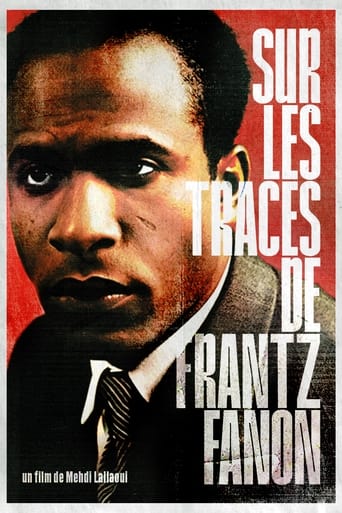
Who was Frantz Fanon, the author of Wretched of the Earth and Black Skin, White Masks, this Pan-African thinker and psychiatrist engaged in anti-colonialist struggles? Born in Martinique, Frantz Fanon was not yet 20 years old when he landed, weapons in hand, on the beaches of Provence in August 1944 with thousands of soldiers from "Free France", most of whom had come from Africa, to free the country from Nazi occupation. He became a psychiatrist and ten years later joined the Algerians in their fight for independence. Died at the age of 36, he left behind a major work on the relationships of domination between the colonized and the colonizers, on the roots of racism and the emergence of a thought of a Third World in search of freedom. 60 years after his death, the film follows in the footsteps of Frantz Fanon, alongside those who knew him, to rediscover this exceptional man.
Hebe Camargo is one of the most emblematic entertainments in Brazil. At her 60s, she went on to control her own career and, despite the criticism, the dreadful husband and the powerful and sexist bosses, she revealed herself to the public as an extraordinary woman, capable of overcoming any personal or professional crisis.
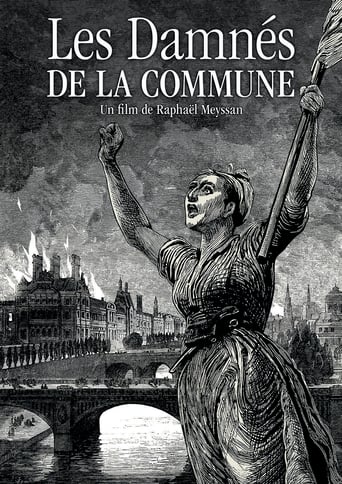
Exclusively created with period engravings, this animated feature explores the Franco-Prussian War of 1870 and the ensuing Paris Commune revolution in 1871.
A well-known publisher - Melchior Wańkowicz asks famous writer Tadeusz Dołęga-Mostowicz to create a reportage about "success a la Polonaise". Tadeusz goes with his assistant Diana on a journey to do a series of interviews and meet historical, distinguished personalities. The initial antipathy between Tadeusz and Diana turns into friendship first, and then into... Who will the pair of our heroes meet? How will their relationship develop? What successes and achievements of the young Polish state will they learn about? We invite you to watch Niepospolita (The Unique)!
Inside the dramatic search for a cure to ME/CFS (Myalgic Encephalomyelitis/Chronic Fatigue Syndrome). 17 million people around the world suffer from what ME/CFS has been known as a mystery illness, delegated to the psychological realm, until now. A scientist in the only neuro immune institute in the world may have come up with the answer. An important human drama, plays out on the quest for the truth.
Ottone and Savio work hard to keep each other out of trouble with the Roman Centurions while scraping together food and drink with various scams. Emperor Nero's wife, the beautiful Poppea, takes an interest in Ottone, who after a short stint as a gladiator gets a region to manage and an army of his own to command, all the while assisted by his best friend and partner in crime Savio.
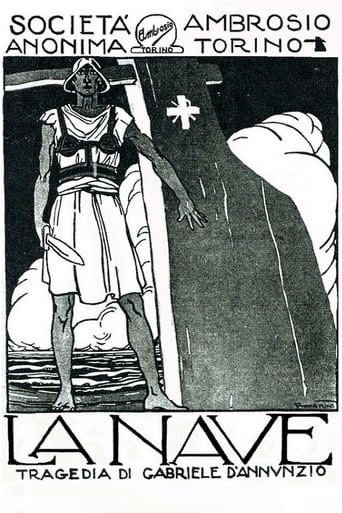
The newly-settled city of Venice in the Sixth Century AD: A wandering people struggle to establish Christian Theocracy. Basiliola Faledro, an exotic dancer, wicked and cunning, arrives from faraway lands seeking to avenge her pagan lineage; Her father and brothers blinded and humilated by frenzied zealots. Her primary targets are the brothers Gràtico, both newly-elected to positions of power: One, Marco, an arbiter and tribune, the other, Sergio, a bishop. The title refers to a bold pronouncement made by Deaconess Ema Gràtico to her subjects the Venetians, a seafaring and desperate tribe-- That their native homeland is aboard a ship.
From 1972 to 1974, the Watergate scandal was frequently a part of “The Dick Cavett Show.” In fact, Cavett was at the forefront of national TV coverage, interviewing nearly every major Watergate figure as the crisis unfolded. With exclusive access to the archive of the show, documenting the scandal in the words of the people who lived it: from the botched burglary at the Democratic National Headquarters; to the must-see TV of the daily Congressional Watergate hearings; to the ongoing behind-the-scenes battle between the White House and “The Dick Cavett Show,” culminating with the resignation of President Nixon on August 9, 1974. Offering a unique opportunity to mark the 40th anniversary of a defining moment in American history.
A historical satire critical of the rising tide of Anti-Semitism in Germany. Based on the novel by Lionel Feuchtwanger, Jew Süss is the story of life in the 18th-century Jewish ghetto of Württemberg. Süss works himself out of the ghetto and into a position of power with the help of an evil duke.
Biopic on the father of the nation of Bangladesh, Sheikh Mujibur Rahman. The film will showcase his growing up as a child to his standing up against all injustice in his youth to fighting for the independence of his country. How he led a country to it's independence with his inspirational presence and fight for the justice.
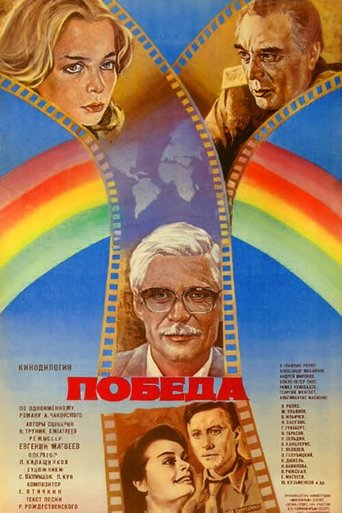
30 years after the end of World War II, a Soviet and an American journalist meet again for realizing post war paths of their countries.
After the Stonewall riots and at the height of the gay liberation movement in America, an entire generation were busy celebrating their newfound emancipation, unaware of an impending epidemic. A disease that seemed determined to wipe out an entire generation of gay men, was largely ignored by politicians and the mainstream media. Gaetan Dugas was a French-Canadian flight attendant, who offered to help early scientific research into the origins of AIDS. An unfortunate series of events followed and he would be vilified as Patient Zero, the man who gave us AIDS.
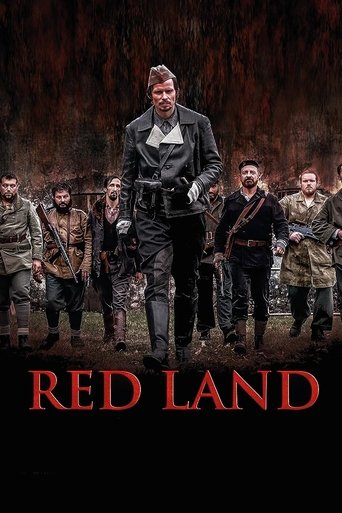
Italy, September 1943. After the armistice and the flight of the King, the war theaters of the North-East see the advance of Tito's partisans. At the center of the story, in this dramatic historical context, the figure of Norma Cossetto, a young Istrian student, barbarously raped, killed and thrown into a foiba by the Tito partisans.
Activate your FREE Account!
You must create an account to continue watching