Soviet horror movie based on the play by the writer Vyacheslav Adamchik Raisa Gromyko. The film takes place in the XVI century.
Three brothers embark on a journey that begins with a kinship with Brazil's indigenous tribes, to their creation of South America's largest national park.
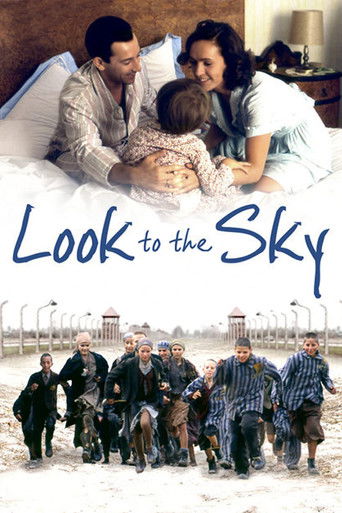
A Jewish boy living in Amsterdam at the onset of World War II is taken to a concentration camp with his parents. Based on the memoir of Holocaust survivor Jona Oberski.
The extraordinary life of Carla Fracci, the greatest Italian ballerina of all time, told from her first steps at the Accademia del Teatro alla Scala in Milan to the stages of the most prestigious international theaters, passing through the controversial choices, difficult sacrifices, and important satisfactions that marked her rise. Freely inspired by the autobiography “Passo dopo passo – La mia storia” (Step by Step – My Story).
An examination of the life of great Russian author Leo Tolstoy, who penned the 1877 novel Anna Karenina.
Russian countess in 1893 has strange dreams about herself living a life as a dishwasher in 1993' Moscow after dissolution of the USSR.
Spring of 1917. Soldiers of the former Wild Division are returning to their villages. Anzor, a footman of Prince Naurbek, commander of the Kabarda regiment, finds poverty and ruin at home - his mother and many other villagers have fallen into bondage debts to Princess Zhansurat. Anzor goes to the prince and asks him to return his land - after all, he shielded Naurbek from enemy bullets in battle. Having received a handful of millet, Anzor returns to his place. Subsequent meetings with the Bolsheviks Kantemir and Mashuko, and then with Kirov himself, convince Anzor of the necessity to fight against the princes.
Documentary on the Greek history of the first half of the 20th century, from the Balkan wars until December events, with a special emphasis on the Asia Minor Catastrophe and its aftermath, through filmed documents by Joseph Hep, George Prokopiou, Achilleas Mandras, Philopimenas Finos, Gabriel Loggos and Kyriakos Kourbetis.
Two stepsisters uncover a bizarre conspiracy about a secret battle between the people named Joe in the world and the people named Bob.
Actress Rosemary Clooney reminisces about the making of the classic holiday film White Christmas (1954).
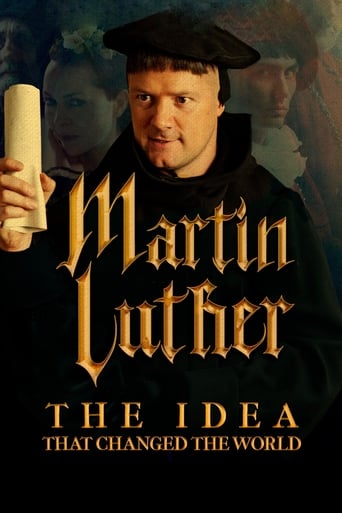
The year 2017 marks the 500th anniversary of one on the most important events in Western civilization: the birth of an idea that continues to shape the life of every American today. In 1517, power was in the hands of the few, thought was controlled by the chosen, and common people lived lives without hope. On October 31 of that year, a penniless monk named Martin Luther sparked the revolution that would change everything. He had no army. In fact, he preached nonviolence so powerfully that — 400 years later — Michael King would change his name to Martin Luther King to show solidarity with the original movement. This movement, the Protestant Reformation, changed Western culture at its core, sparking the drive toward individualism, freedom of religion, women's rights, separation of church and state, and even free public education. Without the Reformation, there would have been no pilgrims, no Puritans, and no America in the way we know it.
A group of swordsmen takes on a hard-fight battle to possess a precious sword named Loegeom. Ahn Gil-won, one of the swordsmen, heads to enemy camp by himself, looking for the sword. He manages to swipe out the gang of enemy, finds his sword and heads on his way with his lover.
Falcino, a small town in the south of Italy. No one sees. No one hears. Nobody talks. But everyone knows. And so they all become accomplices of a tragedy against women, against kids, against a family. A story of violence and slavery. Indifference is stronger than their conscience. Maria, a young mother of a family, lives with her husband Gerardo and her two children, Rocco e Carmela, on her father-in-law's farm: "grandpà" Giuseppe. Gerardo decides to emigrate to Austria to earn more money so as to allow a more comfortable life for the family. This absence will be the beginning of a nightmare that will lead Maria and her daughter to be victims of abuse of an unscrupulous ogre (monster).
The movie revisits the shooting of then-president Chen Shui-bian and vice president Annette LU on the eve of the presidential election in 2004. After the shooting, the two won the presidential election. Moreover, the crime suspect was drowned in a near port days after the incident. The assassination case has been investigated by the authority for 15 years; however, several questions surrounding the "319 Shooting" remain unanswered to this day. The movie approaches a dark period of Taiwan history and shows the mechanics of power - in a witty and creative way.
Also known as The Man Without a Country
One year on from the notorious Ripper murders, London is terrorised once again by a series of brutal killings. When gruesome letters from the Ripper begin landing on his desk, an innocent reporter finds himself drawn into a deadly mystery, threatening the lives of everyone around him.
For the USA, World War 2 was an all-out war - to mobilize the masses, the US government launched a huge propaganda campaign and cinema, the medium of the masses, was quite simply their most important weapon. Government authorities monitored the production of feature films and the military itself produced documentaries aimed at rallying the American people to support the troops. This film tells the story of four Hollywood directors of European origin, who returned to the "Old World" during the Second World War to make propaganda documentaries for the US Army at the front: William Wyler from Alsace, Frank Capra from Italy, Anatole Litvak from Ukraine and - in post-war Germany - Billy Wilder from Austria.
Jeanne Poisson, the headstrong, ambitious, witty and erudite, catches the eye and heart of French King Louis XV at a costumed ball. She masters the art of seduction well enough to become accepted even by the Queen, corpulent mother of ten. As a sensibly chosen Royal 'favorite' mistress she is soon ennobled Marquise of Pompadour to facilitate her introduction at court. The immature dauphin (crown prince) proves a bitter and unrelenting enemy, joined by his imposed Saxon bride, and his sister at her deathbed. Although friends at court help Pompadour return, her health gives way.
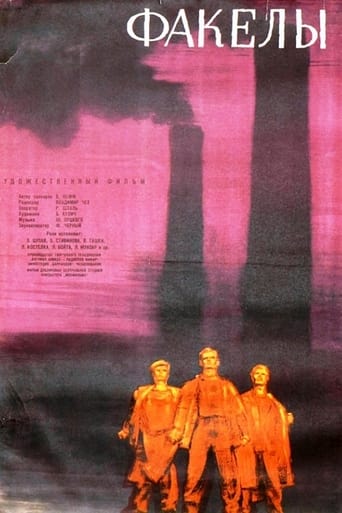
Prague in the 1870s. Work in Smolík's sulphur factory is hard and dangerous to health. The poorly paid workers resemble torches because their clothes are soaked with poisonous phosphorus. Young Josef Rezler also works in the sulphur factory and uses his earnings to feed his mother and little sisters. He throws his perpetually drunken father out of the house. The older worker Brož forces Josef to learn to read and write. A cholera epidemic breaks out in Prague and Josef is the only one of his family to survive the disease...
One of the most controversial men of his age, Alexander Hamilton was a gifted statesman brought down by the fatal flaws of stubbornness, extreme candor and arrogance. His life and career were marked by a stunning rise to power, scandal and tragedy. But his contributions survive. As Secretary of the Treasury during the tumultuous early years of the republic, Hamilton led the transformation of the young country into industrial powerhouse.
Activate your FREE Account!
You must create an account to continue watching