In 1838, François-Xavier Bouchard fights beside his Québec countrymen and the English minority.
This silent-screen classic, like many others produced near the end of the silent era, was both a theatrical extravaganza boasting an original orchestral score and an item which languished in obscurity for many years. When Carlo Piccardi took what was left of the score by Maurice Jaubert and re-created it, the existing footage was restored and paired with a new orchestral performance which was shown in Paris in 1988. The film's story concerns the travails of a woman who has been living quite comfortably as the mistress of a colonel in the Tsar's army in Russia. However, she eventually encounters a penniless young lieutenant and falls madly in love with him, as he does with her. Despite her best intentions of remaining with the colonel, and his intention to avoid trouble with his fellow soldiers, they cannot forswear this relationship, and tragedy is the inevitable result. The title refers to a moving incident in the story, and translates as "the wonderful lie of Nina Petrovna."
A historical farce about Napoleon.
In 19th-century China, during the corrupt Qing Dynasty, the people are suffering at the hands of greedy landlords, crooked officials, and unwelcome invaders. To bring his people together, Chen Xiang opens a martial arts school combining teaching techniques from both the North and the South. When Chen refuses to join the armies of the Qing Prince, the prince seeks revenge on Chen's school and family. To survive, Chen must rise up and fight to free his students and protect his home.
During its 85-minute running time, this jarring experimental film takes a no-holds-barred look at the way women have been treated and depicted in Western art.
Mont Blanc, the highest peak in the Alps, rises to 4,810 m and was first climbed on August 8, 1786. Chamonix natives Jacques Balmat and Michel Paccard set out on the afternoon of August 7 and returned victorious on the morning of the 9th, after two nights spent outdoors. This film is a staging that reconstructs this great event with all the problems it created and resolved, thus contributing to the emergence of the modern concept of mountaineering. Denis Ducroz, guide and filmmaker, immerses us in the minds and times of these two men, 224 years later.
The Story of a Japanese-Canadian woman who finds friendship after her family is interned to a small town during World War II.
The third film of the film trilogy ("Personally known", "Emergency assignment", "Kamo's Last Feat") about the Bolshevik revolutionary S.A.Ter-Petrosyan, known as Kamo (1882-1922).
1963 Tamil Film
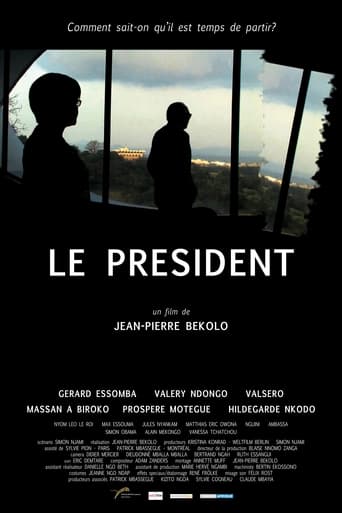
Cameroonian filmmaker Jean-Pierre Bekolo's newest work uses split-screens (at times, up to four images simultaneously) to present a fake documentary in which "the president" has disappeared; talk-show hosts, rivals, politicians and even rappers chime in on what may have occurred, and what their president for life has—or has not—done for Cameroon.
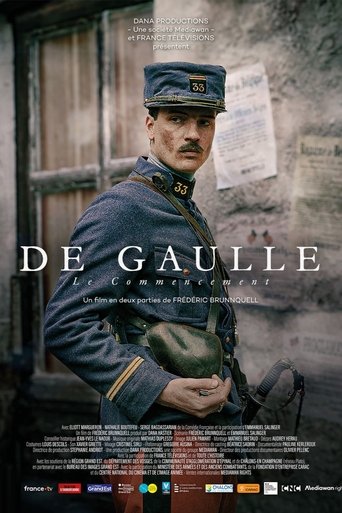
From Washington to Saigon, Rome to Mexico, Paris to Prague, a wave of protests shook the world. 68 looks back at the looks back at the Vietnam War, the Prague Spring and the Soviet Invasion, the Paris riots, Dubcek, Che Guevara, De Gaulle, Cohn-Bendrik and more. A dive into the chaos of a turbulent year, featuring fantastic colour footage and the music of Jimi Hendrix, Janis Joplin, Jim Morrisson and Bob Dylan.
Thomas Jefferson has just returned from France, hoping to relax with his daughters at Monticello. George Washington however, has a favor to ask of him. Hit by tough political opposition, specifically afraid of rising monarch strength, he urges Jefferson to become his Secretary of State. Jefferson accepts, albeit grudgingly. Not long after, he is battling his archrival, Alexander Hamilton, a Federalist just before his election in 1800.
Guillaume Seznec and Pierre Quéméneur join forces to sell cars to the Soviets. It was then that the latter suddenly disappeared, while driving with the former about 30 kilometers from Paris. The body will never be found. Seznec quickly became the main suspect and was sent to prison for life, even though nothing clearly indicated that he was the culprit.
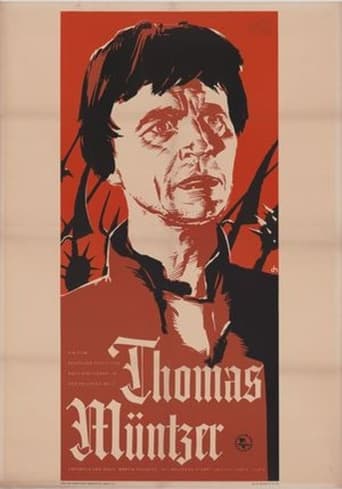
In 1523, young Thomas Müntzer arrives with his wife Ottilie in the Thuringian village Allstedt to assume the rectorate. As a follower of Luther′s teachings, he finds in the Bible not only reasons for clerical, but also for secular reforms. But when Luther turns away from the rural population after a discord with Müntzer, it is Müntzer who becomes the peoples′ spokesman. He is forced to go to Southern Germany, where he convenes with revolting farmers. But his way leads him back to Thuringia. In 1525, he and Heinrich Pfeiffer form the centre of the Thuringian peasant uprising in Mühlhausen, but their success is diminished by the fact that peasants and craftsmen don′t seem to be able to work together. In Frankenhausen, Müntzer becomes the leader of a peasants′ army that is set to fighting the ruler′s army – and sustains a devastating loss. Müntzer is arrested and sentenced to death by decapitation for his insurgency.
Activate your FREE Account!
You must create an account to continue watching