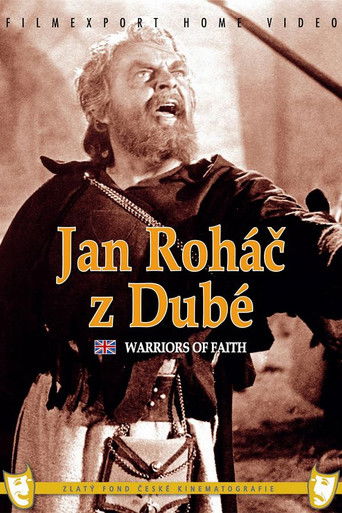
After the Battle of Lipany, the remnants of the Hussite troops concentrated under the leadership of Jan Roháč of Dubé at Sion Castle. However, he had no prospects of victory against the soldiers of the Lordship. Sion was conquered, Roháč of Dubé was captured and executed as a pest in Prague on September 9, 1437.
Told in three unique stories, Songs of Love from Hawaii is a hybrid historical drama that uncovers the journeys of Hawaii's first Korean immigrants. From picture bride Lim Ok Soon to those isolated in Kalaupapa, their tales of love, sacrifice, and resilience come alive through stunning performances by world-class musicians and rare archival images against Hawaii's breathtaking landscapes.
A young actress becomes politically aware within the Paris Commune of 1871.
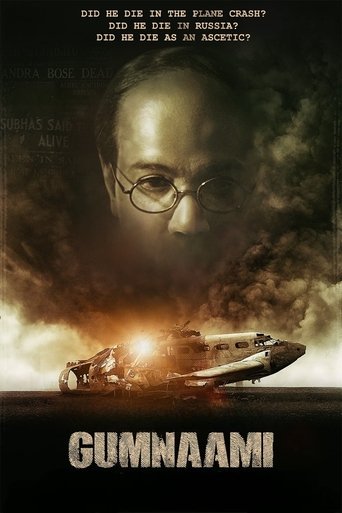
Gumnaami is a film based on the Mukherjee Commission Hearings which happened from 1999 to 2005 where the three theories about Netaji Subhas Chandra Bose's death were discussed and debated. It is a dramatization of the hearings where an investigative journalist supporting the Gumnaami Baba theory locks horns with the official lawyer who supports the plane crash theory. In their clash, the Death in Russia theory also comes up.
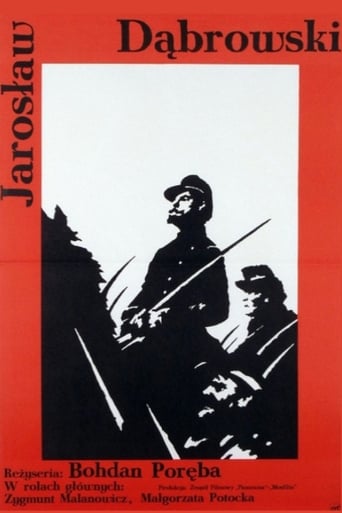
A film biography of Jarosław Dąbrowski, a Russian officer, Polish independence activist, and communist.
When the British army looks set to defeat Mussolini’s Italian forces, Hitler sends reinforcements; the Afrika Korps led by General Rommel. The Desert Fox is on winning form until Montgomery, the British commander, sets up a plan to crush his opponent. After the American landing in North Africa, the Axis armies have no choice but to surrender and put an end to the Desert War.
In 1930s Alabama, nine young black men are accused of raping two white women. The judge in the case, unlike the rest of the town, comes to believe that the boys are innocent and, against all advice from his friends and family, sets them free, which turns the entire community against him.
In the south of Sweden, some farmers get into trouble when the German Count is forcing them to perform day labor for him. But a man refuses to bow to the German Count.
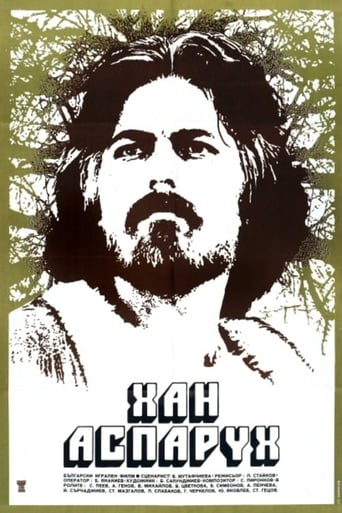
This is an epic screen presentation showing the creation, the consolidation and the power of First Bulgarian Kingdom and the first Bulgarian ruler Khan Asparuh. The second part of the great historical epic - "The Migration" - tells about the long journey to the land of the Bulgarians of today's Bulgaria. Here the young Khan Asparukh laid the foundations of the new state. The authors adhere to the established historical versions for this event. The film builds on the impressive mass scenes and the convincing served psychological characteristics of the main characters. The image of Asparoukh is a natural center of the story, in which many minor persons recreate the environment of the Khan. Romantic exalted, Asparukh is shown as capable leader of the people, consistently implement his own ideas.
In 1847, British writer Emily Brontë (1818-48), perhaps the most enigmatic of the three Brontë sisters, published her novel Wuthering Heights, a dark romance set in the desolation of the moors, a unique work of early Victorian literature that stunned contemporary critics.
The story of liberation of Saigon by People's Army of Vietnam and National Liberation Front of South Vietnam on 30 April 1975.
This movie accurately describes the accomplishment of chief hydraulic engineer Mr. Bing Li 2500 years ago, and his name is used as the title of this movie.
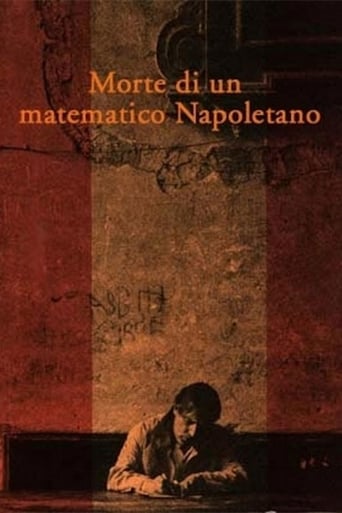
Naples, 1959. Pure Mathematics professor Renato Caccioppoli, Bakunin's grandson, is a tortured soul. Recently discharged from the psychiatric hospital, left by his wife, and increasingly disillusioned with academia and the Communist Party, he lives his last days with painful detachment.
A deep investigation, in the way of a poetic essay, on one of the main Latin American movements in cinema, analyzed via the thoughts of its main authors, who invented, in the early 1960s, a new way of making movies in Brazil, with a political attitude, always near to people's problems, that combined art and revolution.
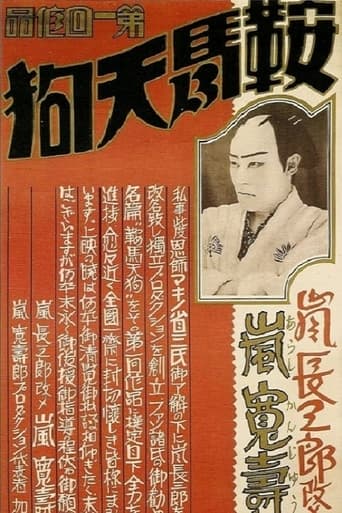
Kurama Tengu is a 1928 black and white Japanese silent film with benshi accompaniment directed by Teppei Yamaguchi. It is a film which is a part of the series depicting the bold and daring hero Kurama Tengu. The popular series comprises numerous films based on the original novel written by Jiro Osaragi, but those featuring Kanjuro Arashi are considered to be the most valuable. Of note is the last scene in which the main character takes on numerous foes with a sword in each hand.
Musical by the Takarazuka Revue. In modern day France, an exhibition is being held at the Palace of Versailles of the "Necklace of Marie Antoinette". The necklace had been used in a fraud case that marked a chapter in French history and later went missing. It has been reproduced using real diamonds. Fujiko has sneaked into Versailles, as has the gang of Lupin, Goemon, and Jigen - all with the intention of getting their hands on the necklace, which is valued at over 3 billion yen in today's money. But they bump into Inspector Zenigata. Lupin is the one who manages to foil Zenigata and grab the necklace. Yet the instant he lays hands on it, everyone is enveloped in a mysterious light. When they regain consciousness, they notice they have gone through a time slip to 1785, before the French Revolution when Louis XVI and Marie Antoinette were around.
Lissette's favorite aunt Adriana, who lives in Australia, is arrested in 2007 while visiting her family in Chile and accused of having worked for dictator Pinochet's notorious secret police, the DINA, and of having participated in the commission of state crimes. When Adriana denies these accusations, Lissette begins to investigate her story in order to film a documentary about her.
Activate your FREE Account!
You must create an account to continue watching