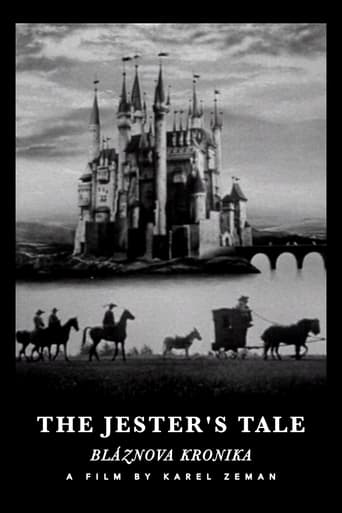
An anti-war black comedy set during the Thirty Years' War. It follows ploughman Petr, recruiter Matěj and country girl Lenka who get caught up in both sides of the war and experience many adventures before they find happiness. The film combines live action with animation to suggest the artistic style of the engraver Matthäus Merian.
Sergio of Tula goes to Dubno to free Princess Mascia, who is prisoner of Queen Jassa, but he is seduced by the latter, who stirs his ambition by putting her army at his service to take King Stephen's throne.
Zanussi has described the film as his most autobiographical work. A young boy in post-World War II, Communist-dominated Poland, whose father's decision to remain in Britain after the war has made his family politically-suspect with the local Party authorities, is sent by his mother to stay with an "aunt" (in reality an old family friend) in Warsaw.
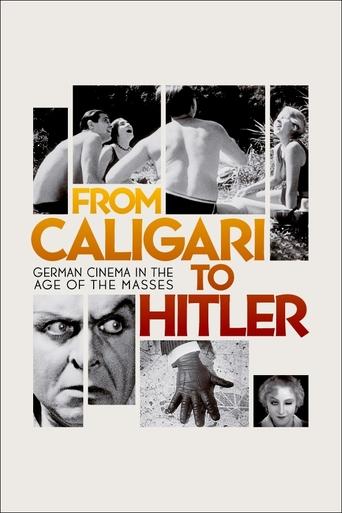
Film journalist and critic Rüdiger Suchsland examines German cinema from 1919, when the Republic of Weimar is born, to 1933, when the Nazis come into power. (Followed by Hitler's Hollywood, 2017.)
A comparison of Pearl Harbor the movie vs the reality.
Don Caesar de Bazan, a reckless nobleman, falls for Maritana, a gypsy dancing girl. When Maritana is insulted by a drunk, Don Caesar wins her love by coming to her rescue. The two go to Madrid, where the girl is summoned to dance before the Queen. Maritana also attracts the attention of King Charles. Don Jose, the prime minister, who secretly loves the Queen, plots to get Maritana for the King. To do this, he schemes to have Maritana marry a nobleman so she can enter the King's court.
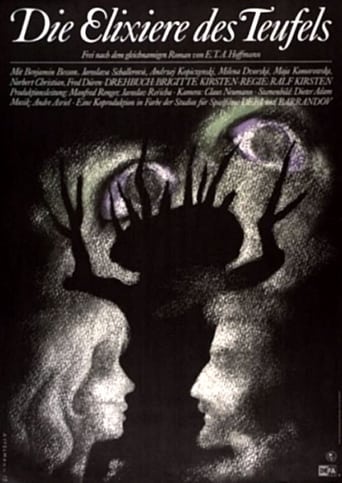
Young seminary student Franziskus has been ceremonially ordained. He wants to escape the harshness and injustice of the world and devote himself to the service of God in the quiet seclusion of a monastery. He is also hoping to forget the beautiful lady Aurelie, whose life he saved in a flooded brook and with whom he spent an amorous night. He knows that her father would never allow her to marry him. But the devil dressed in a monk's habit and under the name Viktorin intervenes in Franziskus's destiny and attempts to lead him astray. To do so he first uses the diabolical elixirs kept at the monastery as a rare relic. When the young monk gets expelled from the monastery, Viktorin prepares another trap with the help of Aurelie's stepmother Euphemie.
Set in the 19th century Warsaw. The indolence of aristocrats who, secure with their pensions, are too lazy to undertake new business risks, frustrates Wokulski. His ability to make money is respected but his lack of family and social rank is condescended to. Because of his "help" (in secret) to "the doll's" impecunious but influential father, the girl becomes aware of his affection.
Jewish rebellers are fighting against subjection and supressors. Broken people are shouting for a leader. The crowd starts to follow a young man, who is speaking in the name of love. The man's name is: Jesus. His rapidly growing popularity fills the govenor and religious leaders with fear and scareness. Pursuit and the world's first show trial starts. The story rolling in modern setup and scenery tells the story of Jesus' life.
Country Dr. Robert Koch is desperate: a tuberculosis epidemic is decimating the children in his district and no one is able to do anything about it. Every fourth child is already sick and the parents must helplessly watch as their young ones die. Now Koch is undertaking to find the cause of the tuberculosis --- something he has already been working on for years --- which has been causing this plague of illness. His work is made more difficult by envy; for example, that of his teacher, who was wounded defending his honor. But his greatest obstacle is the famous Berliner scientist and Reichstag deputy, Privy Councilor Rudolf Virchow: He is extraordinarily skeptical of Koch's theory, that the cause for tuberculosis is a bacteria.
Summer 1942. Nazi troops storm the Caucasus. They are rushing to get their hands on Baku oil. An Abwehr special group called "Wartburg" has settled in the Nalchik area. In Baku, German spy Ziegel (Pavel Kadochnikov) heads to the oil fields from Maykop under the name of Soviet engineer Kashtanov. Tankers carrying gasoline begin to explode in the Caspian Sea. Soviet counterintelligence agent "Khazri" infiltrates "Wartburg"...
Josef Laufer portrays Egon Erwin Kisch in two daring journalistic adventures: in “Zuřivý reportér,” Kisch goes undercover in a poverty lodging house, uncovers a tattoo’s dark backstory and deciphers a secret telegram hinting at war via the legend of the black rose; in “Lovci senzací,” he pursues sensational leads and exposes hidden truths, proving why he was rightly called “the raging reporter.”
On the night of June 22, 1941, a fire breaks out on a German passenger ship. The Soviet tanker "Caspian" comes to its aid - and navigator Nikolai Borshch rescues a German girl, being severely injured in the process. Later, however, the Germans capture the "Caspian" and force it to go to Hamburg...
Under an Eastern European totalitarian regime, a prominent dissident writer survives repression by resuming a submissive sexual relationship with her former lover. After their split-up years ago, he had joined the Secret Police in order just to take her back and provide the protection she needed. Struggling to preserve her humanity, she falls in love with a young platonic dreamer, a kind of rebel without cause, whom she initiate in literature and reinvents as a character capable to meet her own desires of freedom. BEYOND AMERICA is a love story and an action drama altogether, with archetypes of an aggressive, totalitarian society.
Allegory of the suppression of the 1919 revolution and the advent of fascism in Hungary; in the countryside, a unit of the revolutionary army spares the life of father Vargha, a fanatical priest. He comes back and leads massacres. A new force, represented by Feher, apparently avenges the people, but only to impose a different, more refined and effective kind of repression.
Summer 1939. Ella Maillart and Annemarie Schwarzenbach leave Europe for Asia. Ella hopes to make an ethnographic film and to help Annemarie get off drugs. In Kabul she realizes to have lost all certainties and faces the difficult search for herself. For a year she travels alone in the British Indies, a keen observer of the colonial system, living from moment to moment while war ravages Europe. Letters, diaries, film footage and photographs reveal a portrait of Ella Maillart (1903-1997), one of the greatest travelers and photographers of the last century. Narrated by the voice of a great actress, Irène Jacob.
Activate your FREE Account!
You must create an account to continue watching