Spanning over 2,000 years, this study looks at the complex relationship between Jewish and Catholic thought from a social and historical perspective. Examining different significant moments for both religions throughout the centuries, this commentary on the book analyzes and explains the conflicts that have arisen between the two religions since their beginnings.
Contemporary film critics regard the epic film I Am Cuba as a modern masterpiece. The 1964 Cuban/Soviet coproduction marked a watershed moment of cultural collaboration between two nations. Yet the film never found a mass audience, languishing for decades until its reintroduction as a "classic" in the 1990s. Vicente Ferraz explores the strange history of this cinematic tour de force, and the deeper meaning for those who participated in its creation.
A documentary exploring the difficulties the newly-independent Estonia faced in the early 1990s after emerging from decades of Soviet rule. The film focuses especially on then-32-year-old and inexperienced Mart Laar, who became country's prime minister while there still were tens of thousands of Soviet soldiers in the country.
From a small Italian community in 15th-century Florence, the Medici family would rise to rule Europe in many ways. Using charm, patronage, skill, duplicity and ruthlessness, they would amass unparalleled wealth and unprecedented power. They would also ignite the most important cultural and artistic revolution in Western history -- the European Renaissance. But the forces of change the Medici helped unleash would one day topple their ordered world.
Giorgio Capitani reconstructs in the Rai TV film the parable of the famous entrepreneur, in a product that in technical terms does not escape the logic of television, but still manages to offer an interesting picture of a key figure of postwar Italy.
Crown of Castile, 1520. The Comuneros rise up against Charles I, king of Castile and Aragon and emperor of the Hispanic Monarchy. While Juan de Padilla, leader of the uprising, and his captains, Juan Bravo and Francisco Maldonado, fight against the imperial armies, his wife, María de Pacheco, rules the city of Toledo, capital of the rebels.
Paul Weller's musical rebirth unfolds as he records the solo album Wild Wood in 1992-93, embracing analog sound and revisiting his roots, captured through new interviews with Weller, band members, producer, and collaborators.
After the Japanese Invasion of Korea in 1592, Iljimae, a master of the interlaced sword method, heads to Japan to find the national treasure, the Cheonryongsword, which was robbed by the Japanese pirate Kuroda. Around this time, there were two more men looking for Kuroda, one of them was Ma-cheol, a one-armed swordsman who lost his left arm due to Kuroda's trick, and the other was Kuroda's henchman Okamodo, who lost his newlywed wife and even lost his own eyes. This is Yoshiyama, the swordsman who lost his mind. At first, the three knights, who met by chance, were wary of each other for their own goals, but were captured by Kuroda's persistent pursuit. In the end, after a bloody fight, they succeed in revenge, and Iljimae returns home with the recovered Cheonryongsword.
A young English exchange student staying with a German family falls for the daughters
The film based on the novel of the same name by Alexandre Dumas, is concerned with fraternal royal strife at the court of Henri III. Tragically caught between the millstones of history are the gallant Count de Bussy and the woman he adores, la Dame de Monsoreau.
Prince Hal, son of King Henry IV, seems to be squandering his life away with the fat knight Sir John Falstaff and the whores, boozers and petty rogues of Eastcheap. But beside these scenes of glorious misrule gathers a nationwide rebellion led by the Duke of Northumberland and his charismatic son, Hotspur. The first installment of Shakespeare's gripping account of the rise of Hal from idle barfly to monarch-in-waiting combines compelling power politics with the hilarious antics of Falstaff, Shakespeare's greatest comic creation.
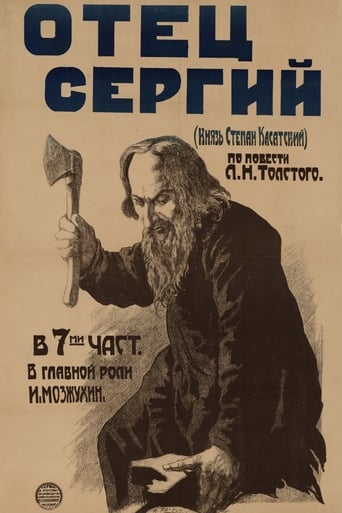
The story of Prince Stepán Kasátsky discovering his fiancée was the mistress of the Czar, so he then becomes a monk.
In the border zone of the Soviet-Polish state border, gangs of the Organization of Ukrainian Nationalists operated. Captain Olkhovik was given the task of infiltrating the OUN gang.
It’s 2017 in Bisbee, Arizona, an old copper-mining town just miles from the Mexican border. The town’s close-knit community prepares to commemorate the 100th anniversary of Bisbee’s darkest hour: the infamous Bisbee Deportation of 1917, during which 1,200 striking miners were violently taken from their homes, banished to the middle of the desert, and left to die. Townspeople confront this violent, misunderstood past by staging dramatic recreations of the escalating strike. These dramatized scenes are based on subjective versions of the story and “directed,” in a sense, by residents with conflicting views of the event. Deeply personal segments torn from family history build toward a massive restaging of the deportation itself on the exact day of its 100th anniversary.
The legend of the life of Antonio 'Gauchito' Gil and the construction of the myth are axes of this story. 40 years after his death, an old man goes through the towns telling the legend of the pagan saint. He tells the story of his miracles and the exploits of the Gaucho, who knew how to do justice in times of war.
A woman goes slowly mad as she is confined to a room for weeks on end by her husband.
The film tells the story of Raquel, Rodolfo and Hernán, members of a brigade at the UNAM during the student movement in Mexico in 1968. Through their photographs, films and writings, we will know the history of the day that the army took the university and how their students united, shouted and never forgot.
Activate your FREE Account!
You must create an account to continue watching