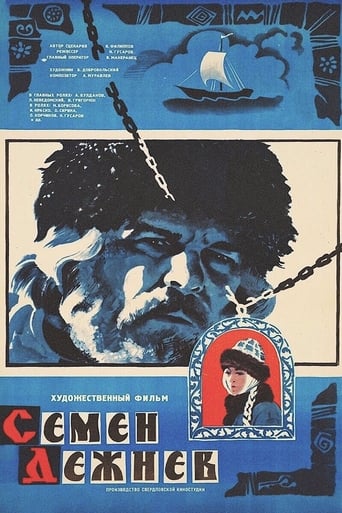
Veliky Ustyug at the beginning of the 17th century. Semyon Dezhnyov falls in love with the daughter of a rich merchant — Avdotya, but the groom is poor. The girl's father sets a condition: Dezhnyov must go to Siberia and get rich — only then will he receive consent to marry. Dezhnyov agrees and leaves for Siberia. Although he passes the test, he does not return to Avdotya. He finds a strait "from a warm sea to a cold one": from the mouth of the Kolyma he swims to the Pacific Ocean and opens the strait between the continents.
It’s 2017 in Bisbee, Arizona, an old copper-mining town just miles from the Mexican border. The town’s close-knit community prepares to commemorate the 100th anniversary of Bisbee’s darkest hour: the infamous Bisbee Deportation of 1917, during which 1,200 striking miners were violently taken from their homes, banished to the middle of the desert, and left to die. Townspeople confront this violent, misunderstood past by staging dramatic recreations of the escalating strike. These dramatized scenes are based on subjective versions of the story and “directed,” in a sense, by residents with conflicting views of the event. Deeply personal segments torn from family history build toward a massive restaging of the deportation itself on the exact day of its 100th anniversary.
Brazil, 18th century. The colony of Portugal endures a decline in gold production. A Portuguese minority rules over a corrupt and autocratic society. Joaquim is an efficient soldier, famous for capturing gold smugglers. While waiting for his promotion to Lieutenant, he leaves for a risky mission in search of new gold mines - the only way to buy the freedom of Blackie, a slave he is in love with. Inspired by the true story of Tiradentes, the first leader of the Brazilian revolutionary movement.
This historical drama, set in 1905, depicts the difficult plight of Korean henequen field laborers in Mexico. The story follows the love between the daughter of an aristocratic family fallen on hard times, and the son of a butcher.
In 1937, neighbours would gather in the evenings to listen to the gramophone played by Daniela, a peasant who loved music. However, an insult from a fellow villager was enough to send the innocent Daniela to the Gulag on absurd charges.
After losing his best friend in a fierce battle against Baekje in the first year of Queen Jindeok's reign, Hwarang Won-hyo questions life and death and becomes a monk. Despite being courted by countless women, from Queen Jindeok to Princess Yoseok, Sammo, and Asaga, Won-hyo resists all temptations. Until one day, when he is moved by Princess Yoseok's desperate prayers, he wanders the streets, feeling guilty for his disloyal behavior.
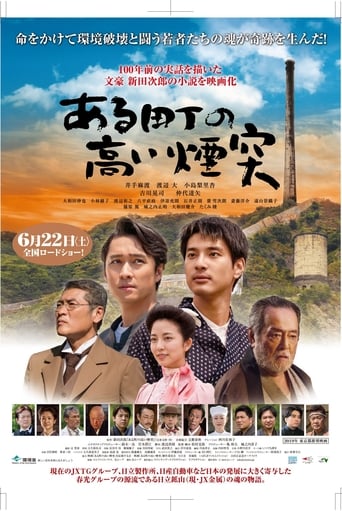
Japan in 1910, industrialization is unstoppable and devastating entire areas in the name of progress. In X, a farming village in Ibaraki Prefecture, the environment is so polluted that the plants in the fields die and the air, which is laden with toxic smoke, can no longer be breathed. But Saburo, the grandson of the village elder, can no longer put up with this and forms the resistance of the villagers. In Junpei, the idealistic employee of Hitachi, he finds an unexpected ally, and together they fight for a way to save the village.
Helen Castor presents an in depth and insightful series covering England's early Queens, from the High Middle Ages with Eleanor and get daughter-in-law Eleanor of Aquitane, through the Late Middle Ages with Isabella of France and Margaret of Anjou and finishing with Lady Jane Grey, Mary I and Elizabeth I.
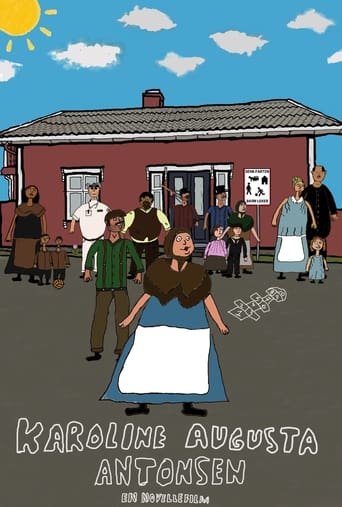
Born into a family of farmers in the mid-19th century, Karoline Augusta Antonsen moves to a nearby industrial city in her late teens, driven by the dream of building a large family and owning a big house. This short film follows her journey of hope, and her struggle to survive in a tough economy. Will she achieve her lifelong ambition or will her story end in tragedy?
Between June 1940 and March 1943, the 1,200 kilometer long demarcation line broke France in two. For almost three years she controlled the daily newspaper of 40 million French people. In the north the zone occupied by Hitler's soldiers, in the south the zone administered by Marshal Pétain's Vichy regime. This film lifts the veil in this theater on the shameful mistakes of the collaboration, but also on the most courageous and noble deeds. Archive images and film recordings at places where the border used to be crossed are alternated with interviews with the last witnesses of this time.
Pushkin and Puschin met at the Tsarskoye Selo Lycee. After the Decembrist revolt of 1825, Puschin was exiled to Siberia while Pushkin was allowed to return and later supported the Tsar. Despite the distance, their friendship endured through letters and poetry.
A group of swordsmen takes on a hard-fight battle to possess a precious sword named Loegeom. Ahn Gil-won, one of the swordsmen, heads to enemy camp by himself, looking for the sword. He manages to swipe out the gang of enemy, finds his sword and heads on his way with his lover.
In the middle of the first world war, Barcelona is the center of multiple operations related to war, although Spain is a neutral country.
The movie tells of the contest between two rivals for the love of an Inuk woman. The forces of nature will decide the winner.
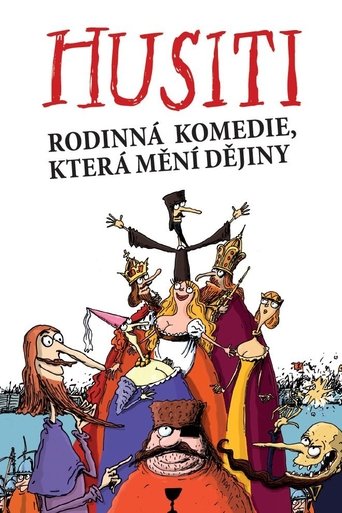
What if the events in a key era in our history were actually completely different than what our history textbooks try to tell us? What if Master Jan Hus didn't even get warm in Constance, let alone burn up? What if Jan Zizka had more than one healthy eye? This animated comedy from director Pavel Koutský playfully breaks the myths about the Hussite era as the pedestal of history is occupied not by preachers and military leaders but by two unbelievable scatterbrains, who become the heroes of their time against their will.
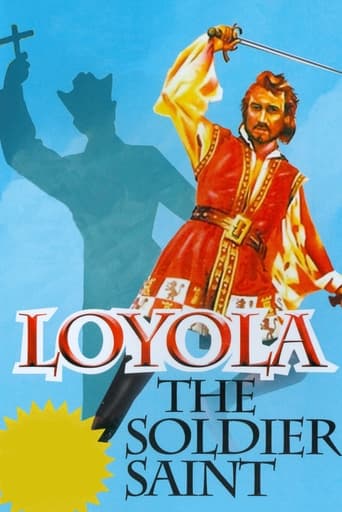
A historical drama based on St. Ignatius of Loyola as a Warrior, as a Founder of the Jesuit Order and as a Saint .
The story of Francisca Sánchez del Pozo, " Paca ", and the Prince of letters, the Nicaraguan Rubén Darío. In 1956, Francisca Sánchez, married to José Villacastín, and already in the twilight of her life, receives in Navalsaúz two writers, Antonio Oliver and Carmen Conde.
Subash Chandra Bose is a Patriotic action darma based movie in which Ashok (Venkatesh) working in a TV channel with his girl friend Anita (Genelia), covers the meeting of a politician (Prakash Raj). By seeing Prakash Raj there, Ashok gets images from the bygone era. In a flash back, it is revealed that in the year 1946, a man named Subash Chandra Bose alias Chandram (Venkatesh) fights against local British officer (Gulshan Grover). Subash Chandra Bose worships the real freedom fighter Subash Chandra Bose. When the state governor (Tom Alter) comes to Chintapalli along with his daughter Diana for a brief vacation, Subash Chandra Bose welcomes him by blowing up the water tank in his palace.
Activate your FREE Account!
You must create an account to continue watching