An IRA man races to Dublin to warn his colleagues of a forthcoming raid, but he is captured by British forces.
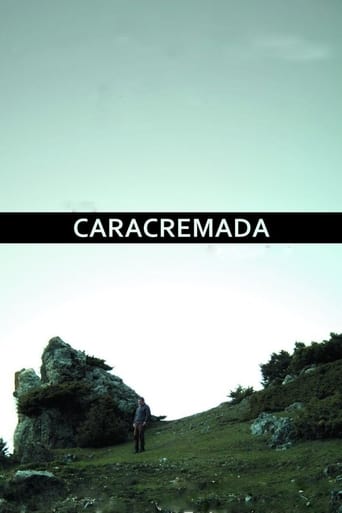
"Caracremada" ("Burnface" in Catalan), a nickname given by the Spanish Civil Guard to Ramon Vila Capdevila, reflects about the libertarian resistance against Franco's regime through the last active guerrilla fighter. In 1951 the CNT ordered the retreat of its militants; however Ramon Vila remained in the woods of inland Catalonia where he restarted the fight operating on his own.
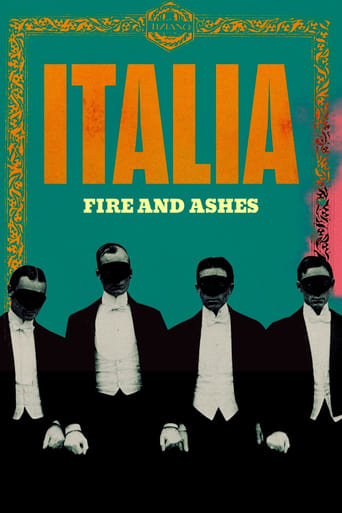
The epic and poetic tale of the early years of Italian cinema, from 1896 to 1930: how peplum was born, how the first stars shone, how many daring filmmakers were able to create an original style amalgamating literature, theater, painting and opera; a tale of splendor and decadence.
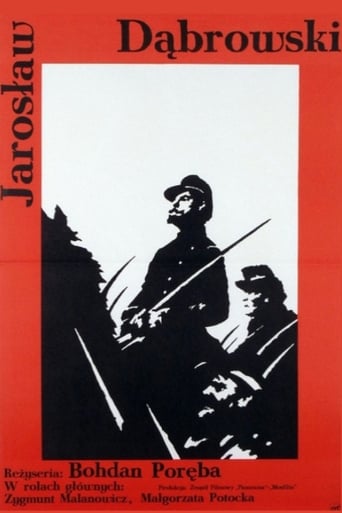
A film biography of Jarosław Dąbrowski, a Russian officer, Polish independence activist, and communist.
Set on a remote farm on the west coast of Iceland in late summer 1936. Hrefna, encouraged by her grandmother’s stories, begins to mix past and future in her imagination, travelling back to the 14th century.
Continuing where His Trust (1911) leaves off, George takes care of his deceased master's daughter after her mother's death. He sacrifices his own meager savings to give the girl a good life, until the money runs out and he tries to steal money from the girl's rich cousin.
Growing up in a small rural farm town in the early 1950's, sixteen- year-old Jimmy Hoffer, and his two siblings do their best to survive poverty and a crumbling family unit.
August Strindberg's historical play about the king he called Sweden's traitor.
Two friends, a military and a journalist, after the collapse of the Albanian front, go to Macedonia to organize resistance against the Bulgarians.
In the late 1860s, after becoming engaged to three bachelors in the town, Petra flees from an angry mob and seeks refuge in a rectory. Based on the Bjørnstjerne Bjørnson novel "Fiskerjænten".
For eight centuries, between the 9th and 1st century BC, the Etruscans, inhabitants of the Italian peninsula, were one of the most powerful peoples of the Mediterranean basin, and when they disappeared they left behind impressive necropolises, vestiges of sanctuaries and even entire cities. How did they attain such power? How far did they extend their dominion and influence? What were the causes of their decline?
The year is 1918. Toník returns home from the front. In Kladno, where he arrives, things are seething with discontent. The Social Democrats are in government, but nothing has changed. Socialization has not been implemented, there is hunger and food is still being skimped on. The first news about a socialist state arrives from Russia. On May 1st, the workers' Kladno manifests its loyalty to the ideals of the Great October Socialist Revolution. In December 1920, a general strike is declared in Kladno as well. The workers arm themselves, workers' councils take over the administration of the city and are also established in the surrounding villages. An armed uprising is being prepared. However, the right-wing leadership of the Social Democratic Party attacks the workers in the back. The army is sent to Kladno...
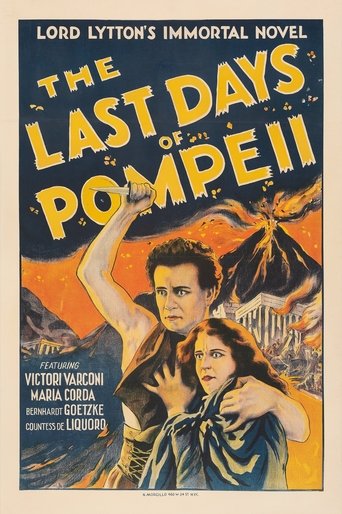
Carmine Gallone and Amleto Palermi’s The Last Days of Pompeii 1926 stages in sumptuous colour tinting the epic fall of the ancient city buried by Mount Vesuvius’ eruption. Adapted from Edward Bulwer-Lytton’s love story, the film was innovative in its special effects and an early major box-office hit. A beautiful tinted restoration print was prepared using photochemical processes by Centro Sperimentale di Cinematografia-Cineteca Nazionale in the mid-1990s and the premiere screening of the restoration print was held in the amphitheatre in Pompeii, followed by a screening at the major restoration festival ‘Il Cinema Ritrovato’ in Bologna in 1998.
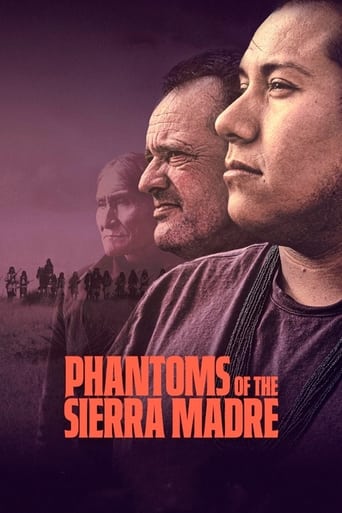
A Danish writer travels to Mexico with the purpose of locating a mysterious Apache tribe that fervently seeks to remain in obscurity.
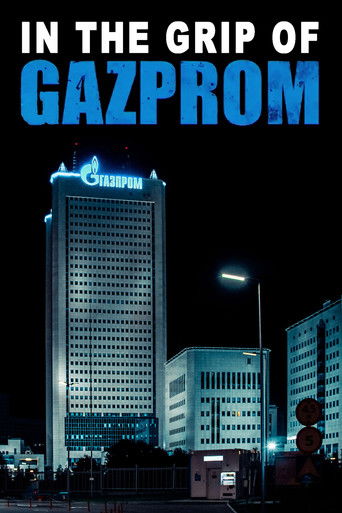
The war in the Ukraine has changed the way many European countries view Russian politics. Suddenly it became clear how dependent countries had become on Russian gas imports for decades and what Vladimir Putin was up to. However, no country needs more gas than Germany. It was only after Russia's invasion of the Ukraine that the German government realized that Russia had long used gas as a weapon to impose its will on states. The instrument created for this purpose is the natural gas production company GAZPROM. So how did Germany become so dependent on Russian gas? The documentary shows how, over several decades and several changes of government, a broad alliance of politicians and business representatives did everything possible to secure Germany's energy supply with cheap Russian gas, while the Kremlin's foreign policy became increasingly aggressive and the warnings of experts went unheeded.
The epic story of Thomas Edward Lawrence the First World War military officer who united the tribes of Arabia against the Ottoman Turkish army. The film reveals that while being one of the most enigmatic figures of the 20th century, he was also a deeply troubled man, delving into his personal torment, the secret his family were hiding, and the punishment he endured.
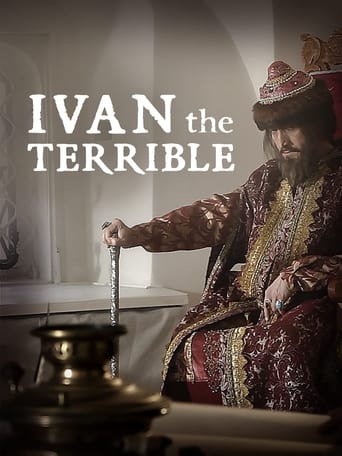
Ivan, first tsar of Russia. History will remember him as "the Terrible. Russian people love him for centuries. He liberates Russia from foreign oppressors, demands absolute obedience and loyalty in order to radically modernise Russia? Ivan IV, Grand Duke of Moscow, first Tsar of Russia by the grace of God. A madman? A sadist?
Documentary following the history of America's first cinematographers.
After the novel of the same name of Yusif Samadoghlu. The film is about three intervals in time: the distant past, yesterday and today, about innocent victims, about repression, and conquest of different countries.
The Great Kanto Earthquake of 1923 marked a moment of unprecedented material destruction and cultural rupture in modern Japan. The disaster soon became subject to human interpretation and political manipulation as the earth tremors and subsequent fire produced not only physical chaos but also the rumors and violence against Koreans revealing what was fearful and why. After a century, this documentary reconstructs the course of this mayhem against the colonized, and traces the ways in which the story of this genocidal violence has long been covered up, haunting those whose lives were never the same after encountering the forbidden truth.
Activate your FREE Account!
You must create an account to continue watching