The story is based on Konstantine Gamsakhurdia's novel and depicts the social and political changes taking place in Soviet Georgia in the 1930s through the line of the main characters: Tarash Emkhvari and Arzakan Zvambaya.
Oh, Dior is an exclusive and sophisticated documentary on the French designer Christian Dior, celebrating the 70th anniversary of the brand.
Broadcaster Gyles Brandreth travels to the West Yorkshire moors, known as "Bronte Country". It is an area that shaped the Bronte sisters, and they have, in turn, helped shape it. He explores some of the influences on their writing.
Brazil, 1961. In the underground of the Piratini Palace, the governor of Rio Grande do Sul, Leonel Brizola, awaits a bombing by the Brazilian armed forces. The country is on the verge of a civil war, following the resignation of president Jânio Quadros and the movement to keep vice-president João Goulart from taking office. Using the radio transmitter from his improvised bunker, Brizola sets up the Legality movement, to ensure Goulart's right to the presidential chair. Caught in the crossfire, two brothers who are in love with the same woman unite to fight alongside Brizola.
A fellow member of the company named Hanjiro tells Koharu, an actress in a traveling theatrical troupe, about a keepsake folding fan that his lost love Lady Okyo gave him years ago. It turns out this fan is a precious clan heirloom whose possession, for convoluted reasons, will determine the clan's leadership. Sword-slinging bad guys descend to capture the fan, and Koharu embarks on a road trip to Edo to return the MacGuffin to the rightful hands of Lady Okyo.
Vespertilio Spillover is a moving images materializing from a woodcut depicting cat-bats in a rare book written by the German scientist Athanasius Kircher (*1602 / +1680) illustrating China in comparison with the actual context of the Covid-19 insurgence, including the spillover infection phenomenon and its potential causes. THIS FILM IS DEDICATED TO ALL VICTIMS - R.I.P.
The title of the film, set in Luxembourg in 1942, during the Nazi occupation, amalgamates the words Schacko (helmet) and chapeau claque (opera hat). The village, in which it is set, has not yet been feeling the effects of the war at this point.
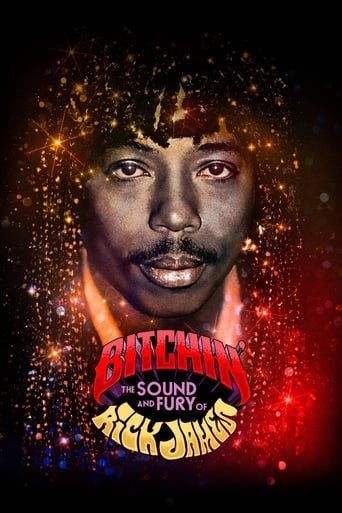
This profile of legendary funk/R&B icon Rick James captures the peaks and valleys of his storied career to reveal a complicated and rebellious soul, driven to share his talent with the world.
14th October 1973 event, the power of freedom was happened by a group of country. From Thammasat University through the line of soul to meet the death under the sheet of tricolor flag in the amidst of gun’s soot and friend’s cry.
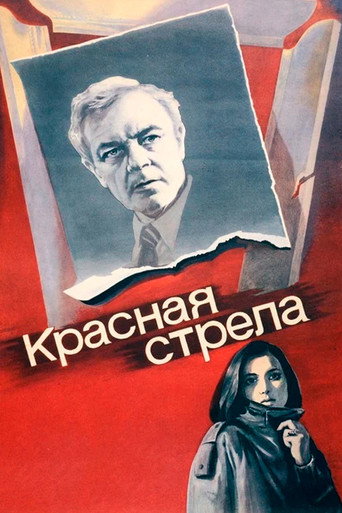
The Red Arrow is the special train No.1 between Leningrad and Moscow. The film is set in the 1980s during perestroika in the Soviet Union. Kropotov (Lavrov) is communist CEO of a big industrial company in Leningrad. He is crafty and successful in getting a major order from the Soviet Government; building an automated assembly line. But his style of management clashes with his subordinates, talented engineers. Their potential is strangled by Kropotov's manipulative control. The government order is not accomplished and Kropotov gets fired. He is rethinking his outdated business style while on the train No.1 to Moscow.
The life story of Marshal Georgi Zhukov, hero of the First World War and commander of the Red Army during World War II, as told by actor Mikhail Ulyanov, who often portrayed him on film.
Vera is a young woman in the Kingdom of Yugoslavia who gets entangled in the WW2 spy network and also in the patriarchal society full of powerful, arrogant men with whom she deals bravely and arrogantly.
A backwoods team of Missouri kids race to solve a 100 year old mystery and save their friends in this family friendly action adventure. Chased deep into ancient caves they must escape treasure hunters hot on their trail or be lost forever.
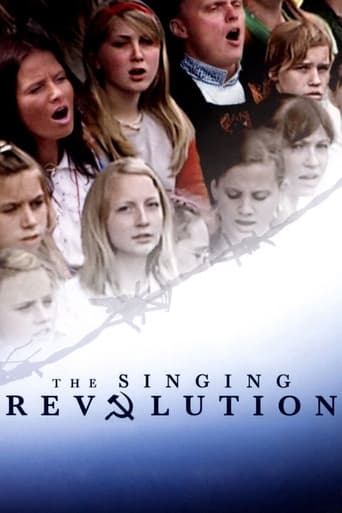
Most people don't think about singing when they think about revolutions. But song was the weapon of choice when, between 1986 and 1991, Estonians sought to free themselves from decades of Soviet occupation. During those years, hundreds of thousands gathered in public to sing forbidden patriotic songs and to rally for independence. "The young people, without any political party, and without any politicians, just came together ... not only tens of thousands but hundreds of thousands ... to gather and to sing and to give this nation a new spirit," remarks Mart Laar, a Singing Revolution leader featured in the film and the first post-Soviet Prime Minister of Estonia. "This was the idea of the Singing Revolution." James Tusty and Maureen Castle Tusty's "The Singing Revolution" tells the moving story of how the Estonian people peacefully regained their freedom--and helped topple an empire along the way.
Two siblings lose their parents amidst turmoil in revolutionary France and are adopted by a peasant family. Once grown up, the older brother enlists in the Napoleonic Wars.
A documentary drama retelling the shift of Mitterand's policy. In May 1981, F.Mitterrand is elected President of the Republic, after more than twenty years in the opposition. He wants to change the life; he believes in the supremacy of politics over economics. He wants it to be fast and executes his programme to realise the socialist transformation. Two years later, Pierre Mauroy and Jacques Delors introduce an unprecedented austerity plan and open the parenthesis of austerity... that would never be closed.
Toledo, 1585. Samuel, a young Jewish goldsmith, falls in love with Catalina, daughter of Doménikos Theotokópoulos el Greco, a famous painter.
James Powell, a college senior, falls for Bess Gunther, a sophomore. However, the attractive Bess is deeply in love with F. Scott Fitzgerald, or "Scotty", as she likes to call him. The obsession leads Bess down a road James prefers not to follow. Years later, he wonders whether she's the one that got away.
Activate your FREE Account!
You must create an account to continue watching