This lavishly spectacular film focuses on the character of Lőrinc Parcen Nagy from the 1200-page Tibor Déry novel interwoven with numerous autobiographical elements. Lőrinc Parcen Nagy is the offspring of an upper middle class family, whose life is marked by two violent deaths: the suicide of his father and the slaughter of an innocent worker. He breaks with his family and his mother in disgust; she is of weak character, a person who abandoned her own husband. He is also unable to discover the right tone with his colleagues and his lover who is an illegal party worker.
Set in 1981, the movie tells the story of Kars after the 1980 coup d'état. At that time, the region was covered in snow for months, and in addition to the many problems brought about by the coup, it was impossible to find coal. Coal was a blessing that only privileged people and some state institutions could access. Serhat, Gürbüz and İbo, three close friends, start looking for coal instead of playing games during the report card holiday following the coup. Their struggle for heating, one of their most basic needs, will turn into a story of solidarity that will shape their childhood.
Adventurer, pilgrim, penitent but above all outstanding writer, Fernão Mendes Pinto left us an unparalleled romance, the living and human palpitation of one of the greatest historical adventures of man.
In the wake of World War II, most Germans have been raised with the mistaken belief that the Holocaust had been planned and executed by just a tiny minority of Nazis, namely, the Gestapo and the SS. The sad truth, however, is that Hitler's philosophy of ethnic cleansing, as the Fuhrer so brazenly espoused in his frightening manifesto, "Mein Kampf," had been enthusiastically embraced not only by the entire military but also by most of the civilian population. The long-suppressed proof of their widespread collaboration and participation was unveiled in The Wehrmacht Exhibition, a damning collection of photographs and film footage that toured Deutschland between 1999 and 2004. The show shook the country to its core because it forced folks to face up to the fact that it took much more than a madman and his henchmen to wipe out six million.
In Renaissance Rome, young Beatrice Cenci dares to defy her tyrannical father. Imprisoned, abused, and betrayed, she plots her father's murder with the help of her lover and a vengeful servant. When justice turns against her, Beatrice faces execution with unflinching dignity. A death that still echoes throughout the centuries as a cry for freedom and justice.
Alina, Luisa and América are three women who after fighting to restore and stabilize democracy to their country realize they’ve been betrayed by the leader of the revolution. The three women begin to confront and challenge the new system in their own ways and for different reasons they find themselves jailed.
A Protestant businessman, Jean Calas, is tortured to death for allegedly killing his son to stop him becoming a Catholic. Voltaire launches a Europe-wide campaign to win rehabilitation for Calas and compensation for his family.
The film tells about the childhood and youth of the wife, friend and military ally of the founder of the country of the Soviets Nadezhda Konstantinovna Krupskaya. The main attention in the film is paid to the participation of a young revolutionary in the organization of the struggle of the workers of St. Petersburg for their rights, against the autocracy.
The film is a 125-minute, black-and-white biography of French priest and diplomat Charles Maurice de Talleyrand-Périgord (1754–1838), who served for 50 years under five different French regimes: the Absolute Monarchy, the Revolution, the Consulate, the Empire, and the Constitutional Monarchy. Its title comes from one of the main historical nicknames for Talleyrand, that he shares with demon king Asmodeus and English poet Lord Byron.
Featurette about the demise, during the early 1940s, of the once-popular Mr. Moto B-films series that starred Peter Lorre.
In the 1960s, the US government came up with an experimental plan supported by the oil companies to try using nuclear explosions to extract natural gas in the American West. The tests set for Wyoming were known as the Wagon Wheel Project.
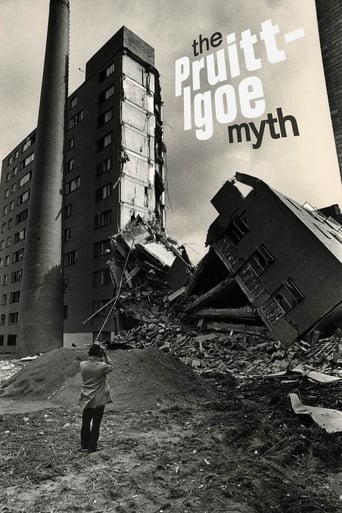
Destroyed in a dramatic and highly-publicized implosion, the Pruitt-Igoe public housing complex has become a widespread symbol of failure amongst architects, politicians and policy makers. The Pruitt-Igoe Myth explores the social, economic and legislative issues that led to the decline of conventional public housing in America, and the city centers in which they resided, while tracing the personal and poignant narratives of several of the project's residents. In the post-War years, the American city changed in ways that made it unrecognizable from a generation earlier, privileging some and leaving others in its wake. The next time the city changes, remember Pruitt-Igoe.
Jorge, an Argentinian writer in the 40ʼs, and Luis, a Mexican game developer in the 2020ʼs, investigate a mysterious question: What is Tlön? What is Uqbar? As each of them finds new answers, Tlön’s mystery will unveil bit by bit, exposing them to a revelation that will change their lives...
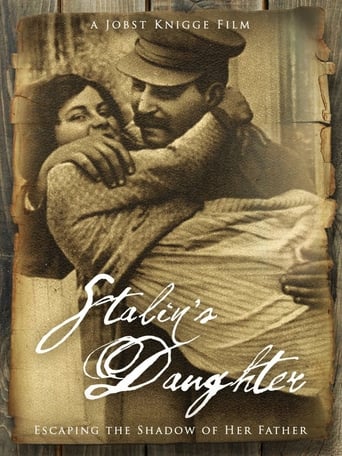
A shock wave started as Stalin's daughter Svetlana Iosifovna Alliluyeva fled to the West. During her childhood, she remained at the center of power and was her father's favorite child. However, her life was overshadowed by death and violence. Her mother and brother died, family members were murdered, and her partner was exiled by Stalin. The Iron Curtain was an obstacle in her family dream. This documentary shows for the first time interviews with friends and relatives, exclusive photos and documentation, as well as the last and never broadcast interview with Alliloejeva.
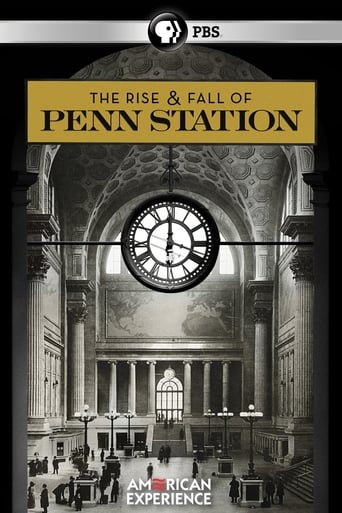
In 1910, the Pennsylvania Railroad successfully accomplished the enormous engineering feat of building tunnels under New York City's Hudson and East Rivers, connecting the railroad to New York and New England, knitting together the entire eastern half of the United States. The tunnels terminated in what was one of the greatest architectural achievements of its time, Pennsylvania Station. Penn Station covered nearly eight acres, extended two city blocks, and housed one of the largest public spaces in the world. But just 53 years after the station’s opening, the monumental building that was supposed to last forever, to herald and represent the American Empire, was slated to be destroyed.
The last 57 days of magistrate Paolo Borsellino, killed by the Sicilian Mafia in 1992, as seen by the six brave officers of his security detail who will die with him.
The Da Vinci Code has raised questions about religion art and faith across the globe. Now take a 2000 year journey through time to examine the surprising truths and controversial ideas set forth in Dan Brown's worldwide bestseller.
Firmly believing her own life is no more precious than the lives of the innocent people being persecuted, with the help of a few friends, Diana embarks on a perilous campaign of rescuing more than 10,000 children from the Ustasha camps in Nazi-occupied Croatia.
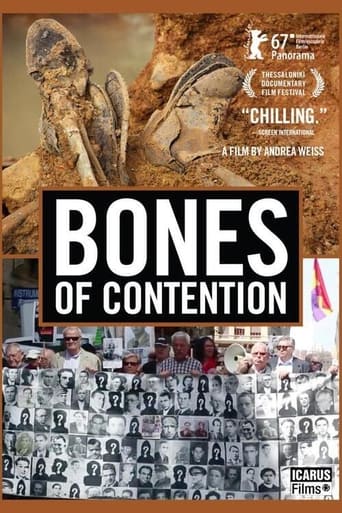
A history of the political and social repression carried out by the ruthless regime of Spanish dictator Francisco Franco between 1936 and 1975 that focuses on the lives of gays and lesbians during those dark years and the death of the Spanish gay poet Federico García Lorca.
Activate your FREE Account!
You must create an account to continue watching