Siti Zubaidah is based upon the 19th century poem 'Syair Siti Zubaidah Perang Cina'. It centers on Siti Zubaidah, the wife of Sultan Zainal Abidin, who is left defenseless after her husband is taken hostage by a Chinese empress. She eventually allies herself with Princess Rukia of Yunnan, who had fled her own palace under threats of sexual assault. Taking matters into their own hands, they adopt male identities and lead a military conquest across China to rescue the Sultan. Directed by B. N. Rao and starring Maria Menado, the Cathay production borrowed from both of its niches at the time: the film language and costume styles of Malay cinema and Chinese wuxia films, resulting in an imagined reality fusing both visual cultures. At the core of the myriad garbs, armour, accessories and makeup donned by the characters, the tale chronicles the adoption of transformative identities to overcome adversity, enact justice and revenge.
The wizard Finn sends Masha and Vanya on a journey through the fairy tale films of Aleksandr Ptushko, many dangers await them there.
A drama about the Musha incident
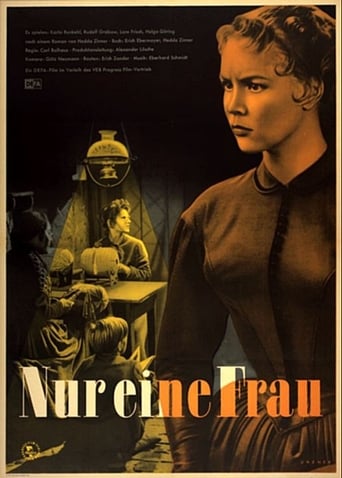
The film tells the life story of Louise Otto Peters, who in the middle of the XIX century in Germany for the first time raised a voice of protest against the unfair treatment of women and their labor. She created the first "women's newspaper" in Germany. The daughter of a famous lawyer, Louise could have easily arranged her life by marrying the wealthy Baron Rodern. But she chose a different purpose in life - to fight for equal rights for women. Through her articles and public speeches, she won the authority and respect of ordinary people.
At the end of the Cold War, something new arised that should influence an entire generation and express their attitude to life. It started with an idea in the underground subculture of Berlin shortly before the fall of the Wall. With the motto "Peace, Joy, Pancakes", Club DJ Dr. Motte and companions launched the first Love Parade. A procession registered as political demonstration with only 150 colorfully dressed people dancing to house and techno. What started out small developed over the years into the largest party on the planet with visitors from all over the world. In 1999, 1.5 million people took part. With the help of interviews with important organizers and contemporary witnesses, the documentary reflects the history of the Love Parade, but also illuminates the dark side of how commerce and money business increasingly destroyed the real spirit, long before the emigration to other cities and the Love Parade disaster of Duisburg in 2010, which caused an era to end in deep grief.
In 1968, John Weiley shot 'Autopsy on a Dream' - a film about the Sydney Opera House detailing its construction process and the politics of Jorn Utzon's dismissal. Weiley's film was controversial; it was screened once and then he was told it had been destroyed. Forty five years later a copy was discovered in the BBC vaults by an ABC producer looking for archive footage of the Opera House. Weiley was contacted and told about a film that had no sound track. Weiley was overjoyed; for years he had kept the original sound. So began the painstaking process of restoring this record of a unique moment in Australian culture to its former glory, complete with updated voice-over from the original narrator, Bob Ellis. It is set in context by a 30 minute prologue entitled 'The Dream of Perfection'. Made by the same filmmaker, John Weiley, forty-five years on, 'Dream of Perfection' tells the story of the 1968 film - from commission to destruction, to surprise resurrection.
In the era of the ninth shogun, Ieshige, the Ooku of Edo Castle was a world of only women, with Tokiwa at the head and numbering up to a thousand. The town girl Otoshi catches the eye of Oitsu-no-kata and is brought into the Ooku. Oitsu receives the favor of Ieshige and is blessed with an heir, but Oko-no-kata resents Oitsu to the point of wanting to curse her to death. At that time, rumors of an evil spirit in the unopened room spread throughout the Ooku.
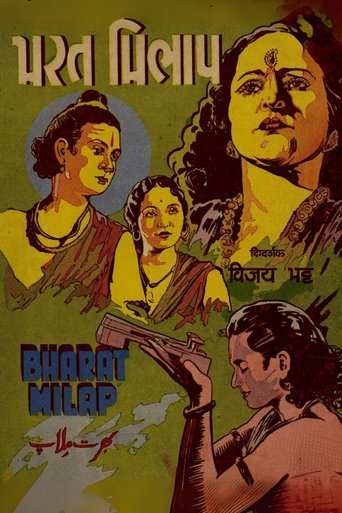
Queen Kaikeyi exiles Rama and demands Bharat be king. Bharat, devoted to Rama, refuses the throne and goes to the forest, urging Rama to return. Rama insists on upholding his father's vow. Bharat then rules Ayodhya as Rama's regent, placing Rama's sandals on the throne until his return.
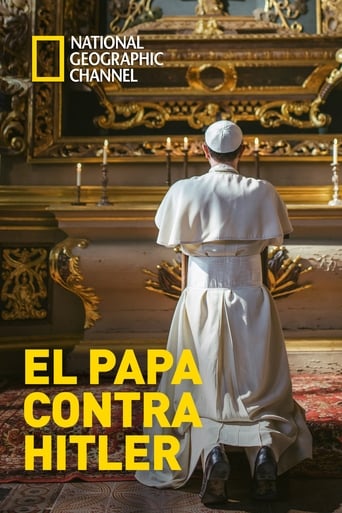
In the darkest days of World War II, St. Peter's was shrouded in the shadow of the swastika. But even as the Führer surrounded him, the Pope was plotting a secret counter-offensive. Wartime Pontiff Pius XII has been derided for his public silence about the Holocaust. But evidence suggests his silence may have been subterfuge.
In medieval Germany, poor and witty Till Eulenspiegel fools and cheats citizens, churchmen, and landlords. Although in most cases he uses his wit for personal well-being, he often helps the poor and weak. Eventually, he gains an influential but also dangerous position as royal fool at the court of the emperor.
On August 21, 1940, Trotsky was assassinated in Mexico City, after eleven years of exile. The killer, Ramon Mercader, a young Spanish communist, was a character straight out of a spy movie. He was recruited in 1937 by Stalin's secret service when the latter decided to eliminate Trotsky, that tireless opponent. Through the epic story of Trotsky's last years in exile in Mexico, enriched with flashbacks to his political past, this film, a true historical thriller, offers a cross-narrative between Trotsky's life in exile and the setting up, at the same time, of "Operation Duck", the code name for his assassination.
Based on a true story in the American owned Cananea mine. It depicts how the owner profits while the Mexican workers struggle to survive and are exploited for their labour.
This humorous and factual history of five lads who grew up to become Founding Fathers brings the early days of American history to life with sass and substance, in Lane Smith's inimitable style.
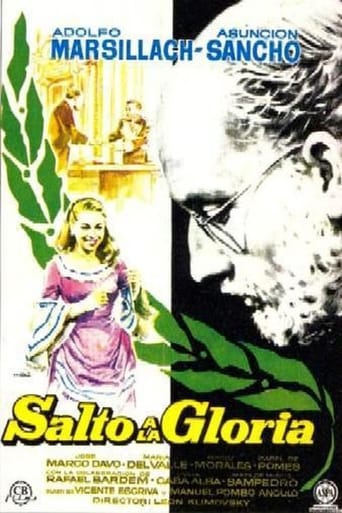
The story of doctor Santiago Ramón y Cajal, who adapting Golgi's silver staining method enabled the visualization of the real structure of the central nervous system, based on individual cells, the neurons. For which both were bestowed the Nobel prize in 1906.
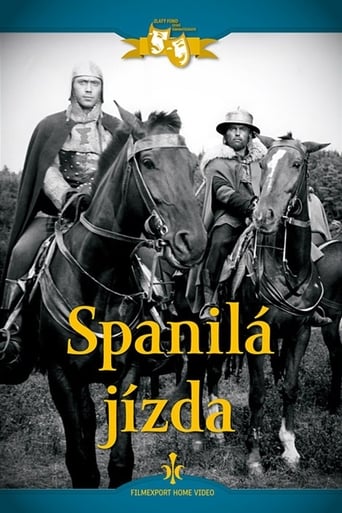
In the Hussite times, religious truth was sifted even on the tips of weapons. When in 1430 the Hussites set out on a raid to Nuremberg, the so-called Spanila Cavalry, to defend their doctrine, the young commander of the cavalry, the landowner Keřský, whose bride had once been kidnapped by a vicious crusader, saw it as an opportunity for personal revenge. Although Oldřich Daněk has tried to establish a distinctive interpretation of historical events, he reflects on where the blinded desire to punish a bad deed with further cruelty leads, but his version seems too thesis-like and lifeless, it does not rise above the descriptively illustrated scenes from old Czech chronicles...
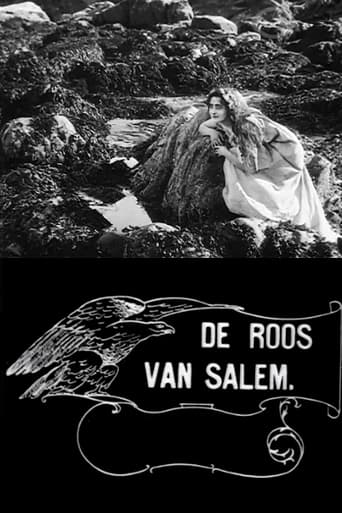
A young girl living in Salem attracts the attentions of The Puritan. After he's brushed off by the girl, he becomes furious and desiring revenge, declares to a council of elders that the girl and her mother are witches.
Can one recent local election in Louisiana tell us anything about the state of race relations in twenty-first century America? RACE is a story of high ground and low roads in post-Katrina New Orleans politics.
Ten families read letters from their loved ones killed during Operation Iraqi Freedom in this powerful and moving HBO documentary by Oscar and Emmy Award-winning filmmaker Bill Couturie (Dear America: Letters Home from Vietnam). Photos of the soldiers in military and civilian life are shown as family members read the final correspondence received from Iraq and share their thoughts and memories about the fallen troops and the realities of war.
Activate your FREE Account!
You must create an account to continue watching