One war, ten days, three stories: the Old City of Jerusalem, at the dawn of a new Middle East. For the Brits, it’s the shameful end of 30 years Mandate. For the Jews, it’s the birthday of their State. And for the Palestinians, it’s a catastrophe. Only now, 60 years later, images can be shown from three opposing points of view, telling a whole new story.
For decades, Eva Braun was seen as Adolph Hitler's "dumb blonde" - just a pretty distraction for the Nazi dictator. But more recently, historians have revealed another side to her story. She was an attentive disciple dedicated to the man she called "my Führer," but stayed out of the limelight as World War II unfolded. Eva and Adolph married in April 1945, and the next day they committed suicide.
This is a humouristic viewpoint upon Norways history the last 100 years - Since the end of the union with Sweden in 1905. A Guide through Norways history the last 100 years.
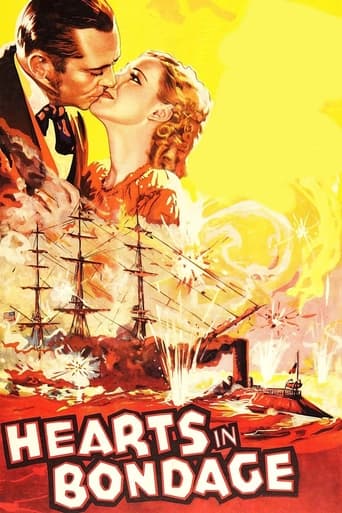
During the Civil War, Elinor, a pretty Northern girl, comes south to visit her aunt-- Little does anyone suspect she works as a spy. Lieutenant Yancey, who's nearly engaged to the fetching and resourceful Rose, is gallant enough to show the Yankee guest around, including a walk down a hidden creek where a gunboat is built and awaits powder. Elinor sends this intelligence North, and the Bluecoats attack.
Best friends Kenneth Reynolds and Raymond Jordan are U.S. Navy officers, and Kenneth is engaged to Raymond's sister. But the eruption of the Civil War divides them, as Raymond stands by his native Virginia while Kenneth remains on duty as a Northern officer. Kenneth's uncle, John Ericsson, designs a new kind of ship, an ironclad he calls the Monitor. Eventually the war pits Kenneth, on board the Monitor, against his friend Raymond, serving aboard the South's own ironclad, the Merrimac (as it is called here). A naval battle ensues, one that will go down in history.
After returning home, Haluk, who has lived abroad for years, begins to tutor sixteen-year-old Ümran and tells her a story from years ago. Ümran thinks that it is a story about something else, but the story concerns her closely.
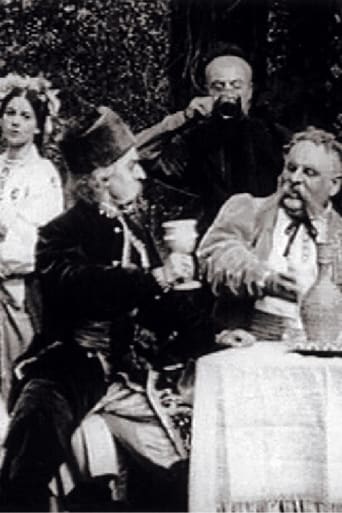
Mazepa, the Ukrainian governor is in love with his goddaughter Maria. He quickly wins her heart. But her old father treats the wooer harshly… Maria runs away. The furious father won’t submit. This intrigue makes the most of the ingredients of historical drama. Maria is confronted to the arbitrary; the young woman is in a dilemma between her love and her family. The tragic outcome is equal to her destiny.
Six polar explorers arrive to a remote island in Arctic for a year-long scientific expedition. When their ship departs, they unpack only to find a young stowaway, who romanticized Arctic heroes, and tried to join them on multiple occasions finally succeeding. That's how six became seven. Life of polar explorers is tough, and full of danger. During one year they are largely isolated from the mainland, and should survive using their resourcefulness, smarts, knowledge, and existing supplies with occasional unreliable radio communications. The Seven are resilient, cheerful, they forged a true friendship. Now they are ready to face the unforgiving Arctic.
At the time of Tunisian independence, owners of large boats decide to sell, while many small fishermen soon find themselves without work. Their wives then decide to pool their gold rings to sell them and thus buy boats.
Aging composer Franz Liszt lives in an abbey. On his birthday, a priest brings him a box that was just delivered; there is no return address. In the box he finds a single flower. The flower brings back memories of his lost love of long ago, who inspired him to compose his unforgettable melodies.
The story of the Hakoah Vienna Jewish womens swim team of the 1930s, their forced separation, and their reunion decades later.
1953, colonized Algeria. Fanon, a young black psychiatrist is appointed head doctor at the Blida-Joinville Hospital. He was putting his theories of ‘Institutional Psychotherapy’ into practice in opposition to the racist theories of the Algies School of Psychiatry, while a war broke out in his own wards.
Tippi Hedren, the unforgettable actress who starred in The Birds (1963), made in her memoirs a relentless portrait of its director, the genius British filmmaker Alfred Hitchcock (1899-1980), the same one who, despite his disturbing personality and questionable working methods, made her a Hollywood star. From Minnesota to Hollywood, the true story of a unique performer and a free woman.
A village in Mazowsze, 1943. Two teenage boys, Janek and Staszek, find two young Jews hiding on a farm. They soon realize that the boys, Abram and Chaim, are their age and are the sons of a respected pharmacist who lived in a nearby town before the war. They were the only survivors of the anti-Jewish pogrom led by the Germans in the nearby forest. In spite of the deadly threat, Janek and Staszek decide to hide the boys and keep it a secret.
The history of italo disco, a musical genre that conquered the world during the incredible eighties, the most cybernetic decade; a style that was not just another kind of dance-pop music, but also the origin of an aesthetic, a true social phenomenon and the creative center of a very profitable industry.
A courier carrying a large sum of money intended for Bonaparte's army is attacked. A miscarriage of justice will lead an innocent person to the guillotine.
A disturbing chapter in Russian history is explored in this documentary. In 1933, Joseph Stalin sent 6000 "unwanted" citizens of Moscow and Leningrad to a desolate Siberian island - with no food or clothes to speak of. Decades later this documentary returns to the island.
Activate your FREE Account!
You must create an account to continue watching