At the end of 13th and the beginning of the 14th century twenty-four-years old, Prince Svetoslav Terter takes the helm of the state. The young Prince engages in a intricate political game, into getting his way by means of court intrigues, and is forced by circumstances. Svetoslav Terter is remarkably shrewd and consistent. He is perhaps the only head of state at this time to take the liberty of impeaching the primate of the country's church. He tries to rally the neighboring Slav people to a joint resistance to the Turkish conquest. Terter lives through a great personal tragedy. He becomes estranged from his dearest person, Mariya, who is too weak to join him on the difficult road of his choice. (written by Georgi Djulgerov)
"Brim" is a trans-generational drama exploring racial trauma, resilience, and legacy, as we follow a family from the 1940s into the 2020s. The narrative navigates the erasure of Blackness and how racial trauma impacts Alzheimer's disease and cognitive decline as the majority American identity reckons with race and privilege and their role in oppressive systems.
An animated short set to the tune of Pat Boone's Exodus Song satirizing the history of the land called Israel/Palestine/Canaan/the Levant.
Lyddie faces a daunting task: She's struggling to reunite her family and save their farm. To do that, she takes a job at a cotton mill and, with the help of Diana (who's toiled in the mills since age 10), learns that there are risks involved with being a factory girl -- namely, dangerous working conditions and low wages. Soon, Lyddie finds herself in the forefront of a suffrage movement to better those appalling conditions.
This Passing Parade entry looks at several historical "truths" that just aren't so: Steve Brodie never jumped off the Brooklyn Bridge; Mrs. O'Leary's cow did not start the great Chicago fire; Nero didn't fiddle while Rome burned; and Lady Godiva never rode naked through the streets of Coventry.
The St. Valentine's Day massacre is the stuff of American legend, and the tale is familiar to nearly everyone. But the story of that bloody day in Chicago has never been told, or seen, like this before. Cutting-edge graphics and frenetic recreations accompany Johnny Fratto, son of onetime Al Capone-associate Louis "Lew" Fratto, back to Chicago, where he uncovers massacre myths and learns more about the life his father and uncles led when they roamed those lawless streets in the 1920s. Johnny gets guidance and opinions from a team of renowned Chicago gangster experts, and bridges the gap between the stories he heard as a little boy and the reality he lived growing up in a mob family. Johnny's take about what happened on Feb. 14, 1929 will surprise you.
Blending drawings, paintings, filmed interviews, and recorded testimony, this animation-documentary hybrid tells of the tragic fate of the Estonian artist Ülo Sooster.
A thin gent in formal wear, amid a club or party, reads a book about primitive man after he's ignored by a pretty lady. We see the book enacted: Weakhands loses his girlfriend to Bruteforce, but chances upon a design for a weapon to vanquish his rival and win her back. His tribe sees this and sets him up as their leader. With the club, he fends off various creatures (a winged lizard, a snake, a dinosaur) and a rival tribe led by Monkeywalk. The women even manage to repel an attack. But the rival tribe discovers the secret of the club themselves, and capture the women. Weakhands, sitting in despair, chances upon a new weapon: the bow and arrow.
In 1991, when images of the Gulf War flooded the international media, it was virtually impossible to distinguish between real pictures and those generated on computer. This loss of bearings was to change forever our way of deciphering what we see. The image is no longer used only as testimony, but also as an indispensable link in a process of production and destruction. This is the central premise of "War at a Distance", which continues the deconstruction of claims to visual objectivity Harun Farocki developed in his earlier work. With the help of archival and original material, Farocki sets out in effect to define the relationship between military strategy and industrial production and sheds light on how the technology of war finds applications in everyday life.
1828 in the German port city of Bremen: Two very different women collide in an age that has no place for either of them. One strives for a career in law, at a time when women aren't even admitted to universities. The other has lived life outside the law and may now have to pay the tab. One of them needs to get her head together – while the other would do anything not to lose hers. -- Based on a true story.
This short film portrays the story of Matthew Fontaine Maury (1806-1873), an American Naval officer who developed the first maps that charted the oceans' winds and currents.
The life of legendary Brazilian musician Alfredo da Rocha Vianna Filho, better known as Pixinguinha.
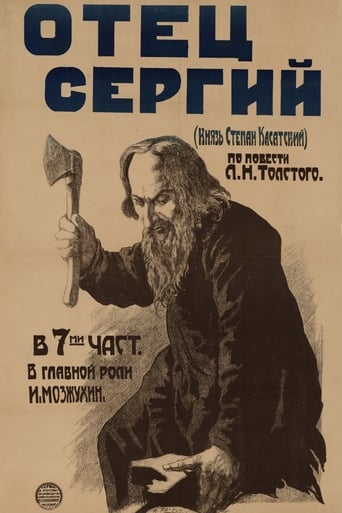
The story of Prince Stepán Kasátsky discovering his fiancée was the mistress of the Czar, so he then becomes a monk.
Directed by Wancang Bu.
During the Nazi invasion of Greece, a female resistance fighter embarks on a revenge operation to assassinate her own mother, in the name of God. Inspired by Euripides’s Electra.
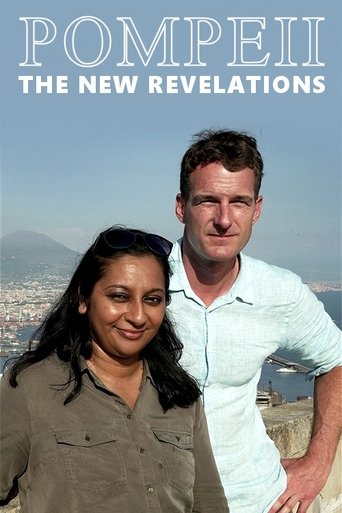
Archaeologist Raksha Dave and historian Dan Snow return to Pompeii to gain special access to a variety of new excavations, including two never-before-seen discoveries.
"Iskra" is the codename for the plan of the operation of the Soviet troops to break the blockade of Leningrad. In January 1943, the blockade of Leningrad was broken. A corridor 8-11 km wide was formed between Lake Ladoga and the front line.
During the later years of Joseon Dynasty (1392-1910), Lim Kkeok-jeong, a butcher's son, stands up against the aristocrats' tyranny and helps displaced people live in peace at a village he has established. He also forms a chivalrous robbers' band to get rid of corrupt officials. He dedicates himself to saving people from misery and teaching a lesson to the aristocrats and corrupted officials.
A heart-capturing early childhood of one of the most popular saints of the last millennium – Don Bosco
Activate your FREE Account!
You must create an account to continue watching