Explore the ruins of Port Royal, once a flourishing pirate city, known for extravagance, women and liquor. The city which went by the sobriquet "wickedest city on earth", lies in shambles deep below the waters of Jamaica's Kingston Harbor after a devastating tsunami struck it on June 7, 1692
A bombing mission over Germany by the American Eighth Air Force, from the initial planning for the mission through final completion, with all of its intricacies from beginning to end.
Brest, 1950. The war ended five years ago and nothing remains of the city. Massive bombings and intense fighting lasting more than a month turned the city, its docks, its arsenal, into ashes. Thousands of workers will build it up again, brick by brick. But with awful work conditions protests quickly arise and a strike begins. Violent confrontations happen during manifestations. Until one man falls. The next day René Vautier lands at Brest clandestinely to make a movie about the movement.
Little Ida's mother is working for the Germans during WW2, and she is also having a relationship with a German SS-officer. Ida is experiencing the problems of having a mother who is involved with the enemy, without being old enough to understand what is actually going on.
Surpassed only by the Bible and Shakespeare, Agatha Christie is the most successful writer of all time. We all know her characters and incredible plot twists, but what do we know about Agatha herself? Combining rare access to Agatha's family, her personal archive and speaking to those who know her work best, discover what made the world's most successful crime writer tick.
An idealistic young woman travels to the jungles of Indonesia to teach literacy -- and much more -- to local children.
Filming "Goya. May 3" is an innovative audiovisual project that makes a cinematographic recreation of Goya's painting "The Executions of May 3" through an 8K digital recording with real digital scenography under the direction of Carlos Saura, also from Aragón. This, with a multidisciplinary team, develop a dramatization as realistic as possible, making use of the latest filming technologies and with a careful artistic direction that pays special attention to styling, costumes, sound setting, etc., in a complex process whose novelty lies in the production, and with which it is sought to achieve an immersive experience of great impact for the visitor.
Counter to the popular image of Erik XIV as the mad king Strindberg paints him as an intelligent but weak king, brought down by his insecurities.
This movie follows the story of Dutch East Indies' (now Indonesia) first indigenous bishop, Albertus Soegijapranata SJ, from his inauguration until the end of Indonesia's independence war (1940-1949).
The imperial councilor Ullik decides to modernize his old mills by installing a new turbine. His eccentric brother-in-law Artuš tries to prevent this, as the construction work disrupts the statics of the tower in which he lives. Ullik's older daughter Tynda is a talented singer. The bewitched girl secretly accepts the courtship of the virile Václav, the son of the night watchman. Her younger sister, the doctor Marie, wins the heart and hand of the astronomer Zouplna, despite her father's prohibition...
Planned by Britain’s MI6 and then executed by America’s C.I.A., the coup d’état which follows will destroy Iran’s last democracy, and relations between Iran and the West until the present day. Most shocking of all, the truth about Her Majesty’s role will be hidden from the Queen herself, and even the all-powerful Shah who will be used by Britain and American to replace Iran’s last democratic Prime Minister. The coup will lead to political upheaval all over the Middle East for decades to come, eventually resulting in the Islamic Revolution of 1979 which will end the reign of the Shah, and British and American influence in Iran, inspiring countless other Islamist revolutions around the world.
After a stormy night on the sea, a group of Estonian fishermen end up in a small coastal Finnish town. As they await the Soviet authorities to take them back home, some of the fishermen contemplate leaving their former lives in a Soviet era Estonia behind.
Dramatization of real-life Uyghur musician/concubine, Amannisa Khan.
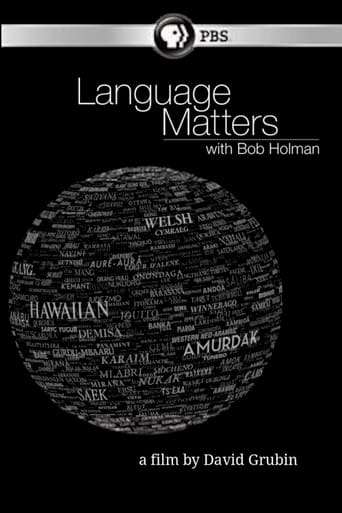
There are over 6,000 languages in the world. We lose one every two weeks. Hundreds will be lost within the next generation. By the end of this century, half of the world's languages will have vanished. Language Matters with Bob Holman is a two hour documentary that asks: What do we lose when a language dies? What does it take to save a language?
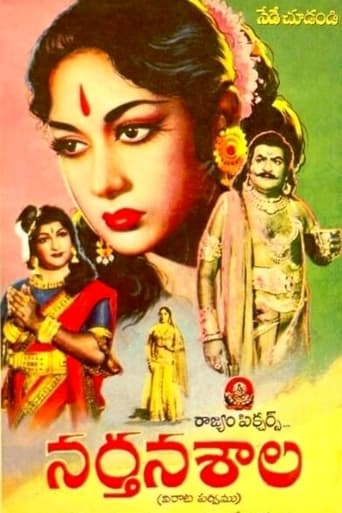
The Pandavas have to finish 13-year exile and hide their real identities until Vijayadashmi. Arjun's son, Abhimanyu, falls in love with Virata's daughter Uttaraa, but does not reveal his identity.
A short historical drama about the Louisiana Purchase.
As a coach and mentor, Walter Gretzky was instrumental in nurturing the talent of his son, hockey great Wayne Gretzky. So it came as an ironic tragedy when in 1991, just days after his 53rd birthday, Walter suffered a debilitating stroke that left him with no memory of his son's hockey career or his own role in Wayne's achievements.
In the darkness of a gothic night, two knights engage in a deadly duel, illuminated only by the mysterious light of a lantern. A noble lady, confined in a castle, has woven a mysterious connection with the contenders. Supernatural forces and inexplicable events will determine the fate of the duelists in a night of horror.
Activate your FREE Account!
You must create an account to continue watching