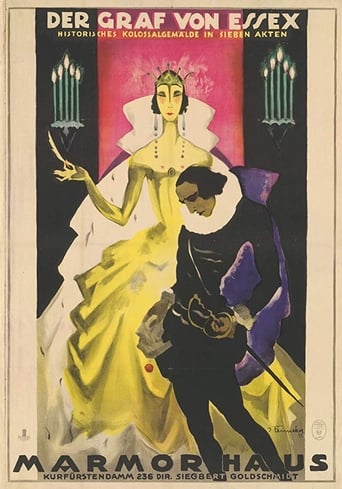
The Earl of Essex, a person favourite of the Queen, is in jeopardy of losing his relationship with the monarch after secretly marrying one of the Queen's ladies-in-waiting.
Based on a true story, a small-town Kazakh singer, Amre Kashaubayev, journeys to Paris to compete in an international singing competition at the 1925 Paris Expo. He meets American songwriter George Gershwin forming a beautiful and unlikely friendship. While Amre’s talent for singing opens up an exciting new world outside Kazakhstan, he is forced to choose between following his singing career and remaining loyal to his home country.
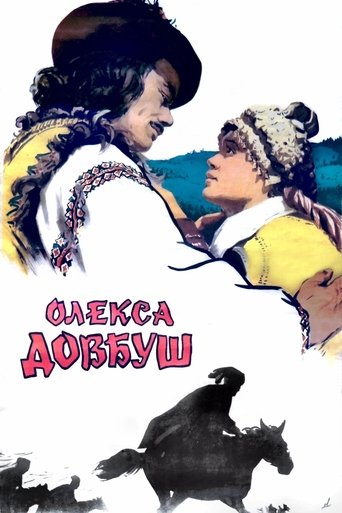
The story of the "Hutsul Robin Hood" Oleksa Dovbush, an 18th century Carpathian Mountains outlaw who's a popular figure of Ukrainian legend.
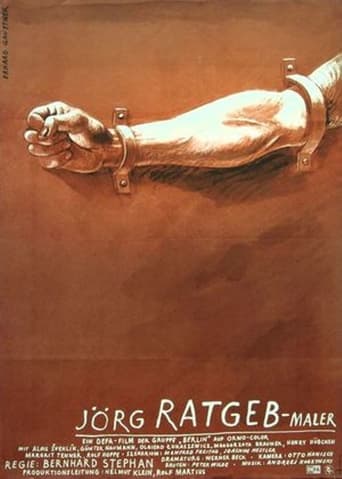
On the eve of the German Peasants' Revolt, painter Joerg Ratgeb is occupied by a crisis of his own: finding a model for a Christ figure. He sets off on a journey to consult with his artistic role model, Albrecht Dürer. Although Ratgeb has always tried to stay out of the political conflict, his journey brings him face-to-face with peasant revolutionaries and the brutality and violence of their daily lives.
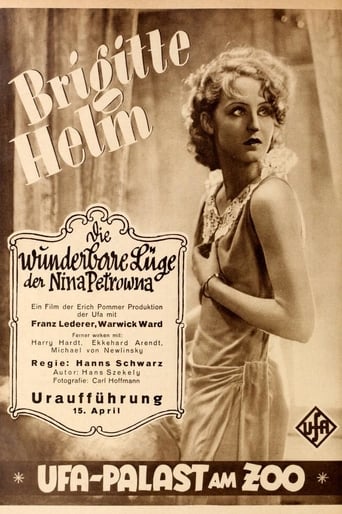
This silent-screen classic, like many others produced near the end of the silent era, was both a theatrical extravaganza boasting an original orchestral score and an item which languished in obscurity for many years. When Carlo Piccardi took what was left of the score by Maurice Jaubert and re-created it, the existing footage was restored and paired with a new orchestral performance which was shown in Paris in 1988. The film's story concerns the travails of a woman who has been living quite comfortably as the mistress of a colonel in the Tsar's army in Russia. However, she eventually encounters a penniless young lieutenant and falls madly in love with him, as he does with her. Despite her best intentions of remaining with the colonel, and his intention to avoid trouble with his fellow soldiers, they cannot forswear this relationship, and tragedy is the inevitable result. The title refers to a moving incident in the story, and translates as "the wonderful lie of Nina Petrovna."
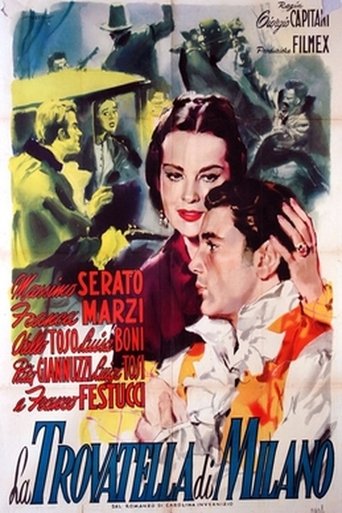
Love story set in Milan during the Five Days of 1848.
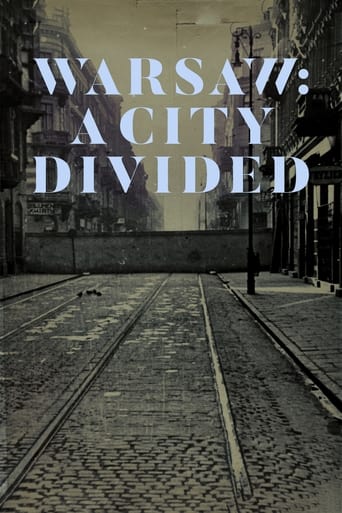
The history of the Warsaw Ghetto (1940-43) as seen from both sides of the wall, its legacy and its memory: new light on a tragic era of division, destruction and mass murder thanks to the testimony of survivors and the discovery of a ten-minute film shot by Polish amateur filmmaker Alfons Ziółkowski in 1941.
A young peasant is forced to flee for killing involuntarily an abusive guard. After an entire year hiding in a remote fishing island, he decides to return to his countryside and reunite with his wife and daughters.
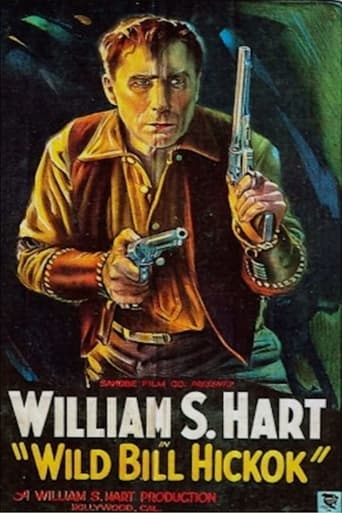
The former gambler turned upholder of law and order after a run-in with a gang of stage robbers.
The film tells the story of Pir Sultan Abdal, a famous folk poet in Turkey, who criticized some Ottoman governors, Hizir Pasha in particular and as a result was hung by him.
When researchers began looking into just how much the Soviet government knew about UFOs and extraterrestrial visitation, they were not surprised to learn that the Russians took the subject very seriously. What they didn't expect was evidence of ancient alien visitation, paranormal properties associated with related artifacts, and most shocking of all, of a mass abduction in 1985!
Steve Shippy and Cindy Kaza uncover the truth about a 1972 plane crash.
In 1969, bankrupt pizzeria owner Richard Davis invented the modern-day bulletproof vest. To prove that it worked, he shot himself — point-blank — 192 times.
Sokol, a young man, joins Bajram Curri's troops in the Democratic Revolution of 1924.
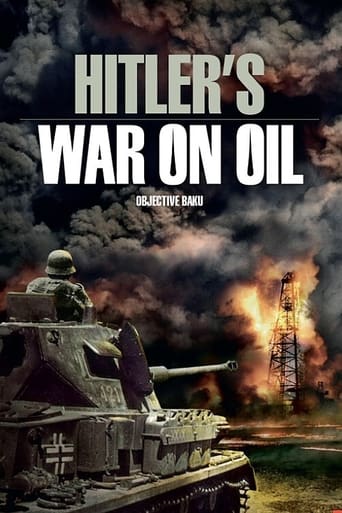
This film tells the story of World War II as experienced by the inhabitants of Baku, the capital of Azerbaijan, at the time a satellite of Moscow. The very rich oil deposits of the region aroused the covetousness of Hitler who needed the oil from Baku to carry out his program of world domination. His entire campaign of 1942-1943 was aimed at seizing them. But the Soviets and the Allies were determined to prevent him from doing so, by all means, including the most radical, even if it meant wiping the city off the map.
At the beginning of the XVII century, events take place preceding the liberation struggle led by Bohdan Khmelnytsky. A young boy Pavlo Pokhylenko leaves his native Kaniv to join the Zaporizhian Sich (camp and cossack army) to fight for freedom and the Orthodox faith.
How did the USSR - a country considered a second-rate industrial power, economically inferior to Germany, the USA and the UK - shape its victory over the armies of Hitler's regime, and secure its place among the winners?
Activate your FREE Account!
You must create an account to continue watching