Exploring the life and impact of the greatest spiritual and legal philosopher in Islamic history, this film examines Ghazali's existential crisis of faith that arose from his rejection of religious dogmatism, and reveals profound parallels with our own times. Ghazali became known as the Proof of Islam and his path of love and spiritual excellence overcame the pitfalls of the organised religion of his day. His path was largely abandoned by early 20th century Muslim reformers for the more strident and less tolerant school of Ibn Taymiyya. Combining drama with documentary, this film argues that Ghazali's Islam is the antidote for today's terror.
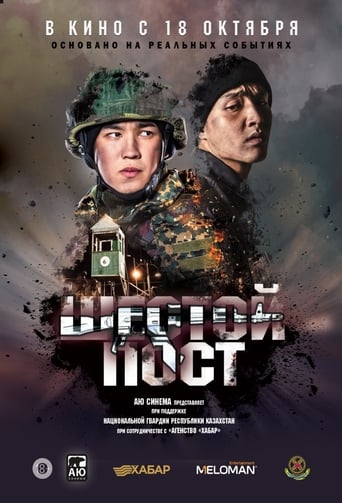
Against the backdrop of a conflict between former friends, and now a soldier and a prisoner, events break out that will make them make a difficult choice. This choice changed the history and attitude to true heroism.
Autumn 1941. In a Nazi POW camp near Kyiev, a person claiming to be a doctor appears. He convinced Germans to set up a hospital. Raising no suspicions in Germans, he supplied prisoners with weapons and helped them to escape.
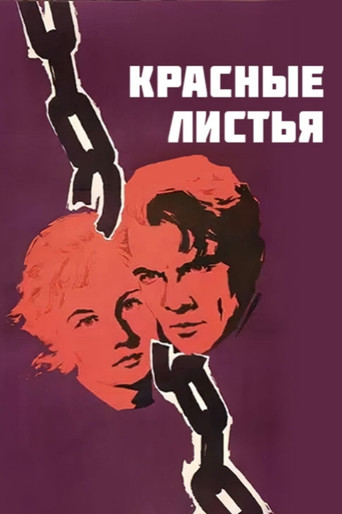
A story is taking place in West Belarus where local rebels are fighting for the unification with Soviet Union during 1930-ies.
The years 1851-1856: events from the life of the writer Božena Němcová, who, because of her free-thinking views and strong patriotic feelings, comes into conflict with the society, the church and the Austrian authorities... A cold, too readable version of the writer's biography. The playwright František Pavlíček dealt with the theme of "Němcová" also later - in the times of his dissidence.
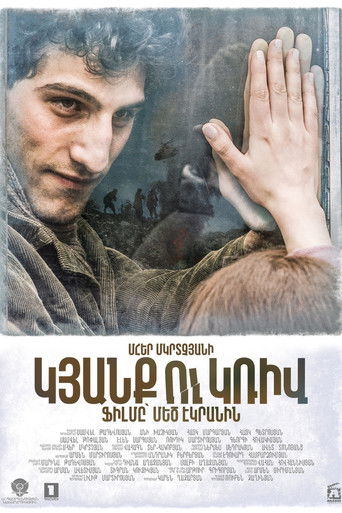
Taking place in 1991, Tigran, who teaches math at a village school to avoid the army, loses the girl he loves. Consumed by abject wretchedness, he decides to enlist as a volunteer in the Nagorno‑Karabakh war to give meaning to his hollow life.
In 1917, Gino Montanari, an elementary school teacher from Romagna, was forced by the principal of his school to volunteer for the First World War because of his libertine and anti-interventionist behavior. With the threat of being expelled from all schools if he refused, Gino was reluctantly sent to the front in a small outpost in Valtellina, where as a heliographer he had to transmit Morse signals with sunlight. His life would be profoundly changed by his encounter with a young illiterate man, with the enemy, and with a series of individuals from various parts of Italy.
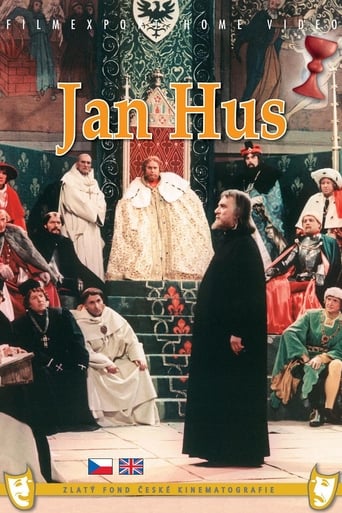
The first part of the "Hussite Revolutionary Trilogy", completed with Jan Žižka (1955) and Proti všem (Against All Odds, 1957). The film captures the period from May 1412 to the summer of 1415, a turbulent time in the Czech Kingdom, during which there were protests in Prague against the sale of "omnipotent indulgences" whose sale throughout the kingdom was announced by Pope John XXIII. The ideological leader of this movement is the preacher Master Jan Hus, whose words, calling for the elimination of church abuses, are listened to in the Bethlehem Chapel by thousands of ordinary Praguers, Czech lords and Queen Sophie, wife of the Czech King Wenceslas IV.
Inspired by the life of Varvara Asenkova, a 19th-century actress who earned great acclaim on St. Petersburg stage before her death at the age of 24.
Jakob Yzermans is an American salesman looking for his roots in Rotterdam. He thinks his father (Hendrik Yzermans) has left Holland with the money he took from his collegues. Jakob is trying to get the money together to repay the money. While doing so he encounters more and more problems.
An account of the life and work of Luis 'Tip' Sánchez Polack (1926-1999) and José Luis Coll (1931-2007), a peculiar pair of comedians who, between 1967 and 1995, followed the twisted path of Spanish absurdist humor, of long tradition, later followed by many others.
The beautiful Galya and the brave Cossack Nazar Stodolya fell passionately in love. But Gali's father, centurion Khoma Kichaty, wants to marry his daughter to an old but rich colonel. Next events are in movie.
From a long lost US base beneath the Arctic ice cap, to a sunken Soviet submarine, the Cold War's toxic legacy is both fascinating and terrifying.
The story is set in 1962, the time of Sino-India war. It revolves around a widowed teacher named Ritu who is transferred to Koronga, a small Assamese village. The school here was destroyed by fire ten years earlier. Ritu takes on the challenge of rebuilding the school and starts campaigning among the villagers.
In the middle of a broadcast about Typhoon Yolanda's initial impact, reporter Jiggy Manicad was faced with the reality that he no longer had communication with his station. They were, for all intents and purposes, stranded in Tacloban. With little option, and his crew started the six hour walk to Alto, where the closest broadcast antenna was to be found. Letting the world know what was happening to was a priority, but they were driven by the need to let their families and friends know they were all still alive. Along the way, they encountered residents and victims of the massive typhoon, and with each step it became increasingly clear just how devastating this storm was. This was a storm that was going to change lives.
Story that takes place during the so-called War of Paraguay or War of the Triple Alliance.
Kutsher's Country Club is the last surviving Jewish resort in the Catskills. One of the legendary Borscht Belt hotels during its heyday, Kutsher's has been family-owned and operated for over 100 years. Exploring the full Dirty Dancing-era Catskills experience-- and how it changed American pop culture in the comedy, sports and vacation industries-- this documentary captures a last glimpse of a lost world as it disappears before our eyes.
This documentary was secretly and 'illegally' shot inside the prison camps, established during World War II by American authorities to detain US citizens of Japanese descent who were considered a potential threat to national security.
A young man is tasked by the powerful Cardinal Richelieu to capture one of the cardinal's enemies but falls in love with his target's sister. The film marks the last motion picture appearance by stage actor Robert B. Mantell who plays Cardinal Richelieu and the only silent screen performance of opera singer John Charles Thomas.
Activate your FREE Account!
You must create an account to continue watching