Between 1864 and 1870, South America was the scene of the biggest and bloodiest armed conflict of the century, known as the "Paraguay War," or "Big War," for Paraguayans. Mixing reality and fiction, the documentary discusses this "draft" of World War I, which involved Brazil, Argentina, Uruguay and Paraguay, decimating around one million people.
From Raymond Baxter live on Tomorrow's World testing a new-fangled bulletproof vest on a nervous inventor to Doctor Who's contemporary spin on the War on Terror, British television and the Great British public have been fascinated with the brave new world offered up by science on TV. Narrated by Robert Webb, this documentary takes a fantastic, incisive and funny voyage through the rich heritage of science TV in the UK, from real science programmes (including The Sky At Night, Horizon, Tomorrow's World, The Ascent of Man) to science-fiction (such as The Quatermass Experiment, Doctor Who, Doomwatch, Blake's 7, The Hitchhiker's Guide to the Galaxy), to find out what it tells us about Britain over the last 60 years.
A discovery of the incredible musical journey of Yannis Spanos, setting off from small-town Kiato to major collaborations in Paris, and ultimately his huge success in Greece. With rare documents and interviews and through the eyes of a devoted fan, we explore why Spanos chose to stay behind the scenes, letting his music steal the spotlight.
For the past twenty years, in the Burgundy region of France, archaeologists and craftsmen have been working on the reconstruction of the fortified castle of Guedelon using the same techniques and materials available in medieval times; a fascinating project that brings to the present a vivid image of the past.
Sohrab, a provincial young writer, is lost in the desert on the way to Tehran to get a publication license for his book on old Persian poetry, but the trip involves some bizarre events.
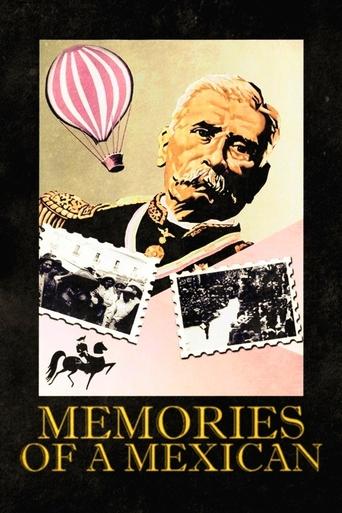
A history of the Mexican Revolution (1910-17), narrated through the striking images of the enormous film archive of Salvador Toscano (1872-1947), pioneer of Mexican cinema, compiled by his daughter, Carmen Toscano.
With unique insights in epic locations and interpretations of ancient inscriptions and artefacts, Mary Beard uncovers the hidden world of the emperors of Rome.
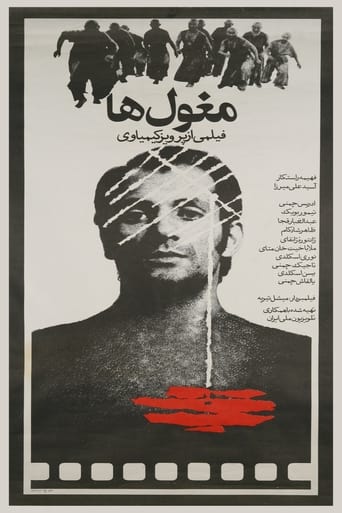
A director of a television series on the history of cinema, who has been grappling with the screenplay of his first feature film, receives an assignment to oversee the installation of a television relay station in a remote region of Zahedan province. He has already hired Turkmen tribespeople for his film and selected his filming location. Meanwhile his wife, who is working on her Ph.D. dissertation about the Mongol invasion of Iran, attempts to dissuade him from accepting the assignment. One night, while working on his history of the cinema series, the director fantasizes a diegetic world that consists of clever juxtapositions of his different worlds: the history of cinema, the history of the mongol invasion, his own film idea and his imminent assignment to the desert.
After John Wilkes Booth assassinated President Abraham Lincoln, he escaped to Maryland and was discovered hiding in a barn. After he refused to surrender, the barn was set afire and Booth died in the blaze. However, in 1903 a Mr. David E. George, while on his deathbed in Enid, Oklahoma, claimed to be John Wilkes Booth. This MGM An Historical Mystery series short presents evidence of the possibility that Mr. George's claim was true.
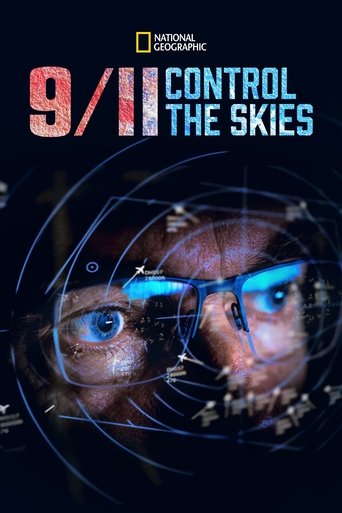
On September 11, 2001, the unimaginable transpired when devastating attacks on the World Trade Center forced the shutdown of the entire U.S. airspace. Thousands of kilometres away in Gander, Newfoundland, a group of Nav Canada air traffic controllers suddenly had the lives of 33,000 people in their hands and had to think fast to find a place for them to go. Discovery uncovers how these unsung heroes managed to safely land 224 planes in four hours, without incident.
Wong Fei-Hung takes on the the five wolves gang.
The story of "Electric Wave" takes place on the eve of the liberation of Shanghai, and is based on the true story of the martyr Li Bai. It is a city card born from the red genes of Shanghai. There is no dialogue in the dance drama film, and the emotional explosion is vividly expressed through the body, conveying the strong love between the two through their dance, eyes, and body movements. The emotional struggle and compromise, as well as the mutual empathy between them, are more intense and lasting than any line of dialogue. The film is adapted from the original dance drama of the same name.
Recent DNA and ballistics evidence have raised new questions and suspicions about Adolf Hitler's death. Hitler's Escape—filmed in Europe and Argentina—revisits these questions, examining the hypothesis of his secret escape to Patagonia. By challenging the official story of his suicide, it opens up the mystery of his final whereabouts.
The bombing of the American naval base at Pearl Harbor, by a nation he knew only by name, thrust nine-year-old Minoru Fukushima into a world of racism so malevolent he would be forced to leave Canada, the land of his birth. Like thousands of other Japanese Canadians, Minoru and his family were branded as an enemy of Canada, dispatched to internment camps in the interior of British Columbia, and finally deported to Japan. Directed by Michael Fukushima, Minoru's son, the film artfully combines classical animation with archival material. The memories of the father are interspersed with the voice of the son, weaving a tale of suffering and survival, of a birthright lost and recovered.
A young Bulgarian girl digs into her grandfather's turbulent life in an attempt to unravel the past and find answers and explanations for the catastrophic fall of communism.
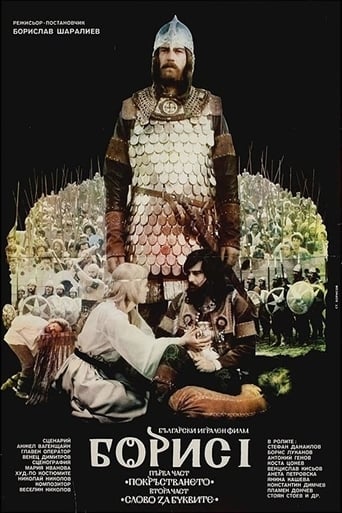
Part one of this two-part epic follows the life and deeds of Boris I – a strong historic personality, which completes his mission to the full and at the end of his life receives holy orders.
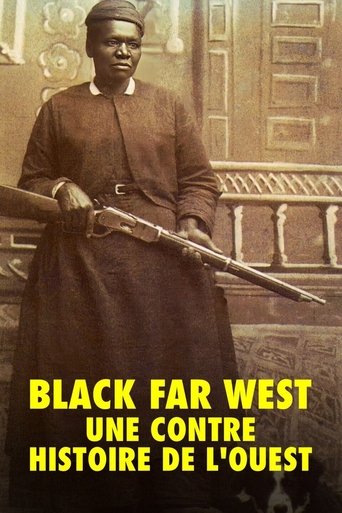
Did you know that the first cowboys were black? Using magnificent archives and testimonies from historians, Cécile Denjean restores justice to African-Americans in the story of the conquest of the West.
As a nun, Katharina von Bora lives the life destined for her until she comes into contact with a completely new world of thought in the early 20s through the writings of Martin Luther. She flees with some of her co-sisters and comes without legal status, without income and rejected by her family to Wittenberg, where she meets Martin Luther personally. Katharina decides to marry the reformer and, as his wife, becomes a respected housekeeper, an equal interlocutor and the mother of their children together.
In 1960, Juliette, Antoine, Marie-Claire and Carlo are second class. They age of the first discoveries of the adult world, the first existential questions and the first stirrings of love. Beaufort teacher practice unconventional methods of education for the time and opens their eyes to what awaits. Serge's brother Anthony must return to America. Despair Antoine, Juliette, 15, falls madly in love with Serge, who is ten years older than her. But the Algeria war breaks out and Serge is called upon to defend his country. The young couple promises to write. Months pass and Juliet, pregnant, no news of the future dad ...
Activate your FREE Account!
You must create an account to continue watching