Robert Ballard has been living and breathing the Titanic since he was part of the team that discovered it in 1985. In Save the Titanic With Bob Ballard, he revisits the iconic ship in an entirely different way—from the perspective of those who set sail on it some 100 years ago. Ballard travels to the shipyards of Northern Ireland to retrace the path of the doomed ship from its very incarnation. Throughout his journey, Ballard is driven by one personal question—will the Titanic survive another 100 years? As evidence mounts that the ship is under siege by natural forces, careless visitors, and even rogue salvage operators, the man who found it teams with the families of victims and survivors to protect the legacy of history’s most famous ship.
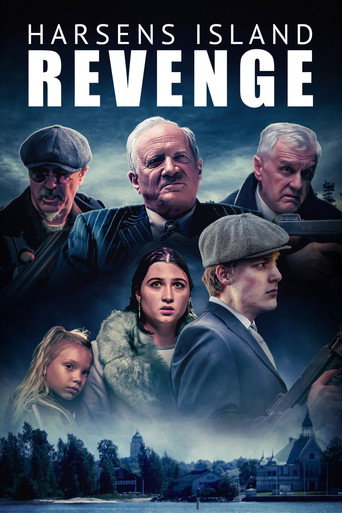
WWI veterans on Harsens Island square off against the infamous 'Purple Gang' over illegal liquor in the 1920s.
The year 2017 marks the 500th anniversary of one on the most important events in Western civilization: the birth of an idea that continues to shape the life of every American today. In 1517, power was in the hands of the few, thought was controlled by the chosen, and common people lived lives without hope. On October 31 of that year, a penniless monk named Martin Luther sparked the revolution that would change everything. He had no army. In fact, he preached nonviolence so powerfully that — 400 years later — Michael King would change his name to Martin Luther King to show solidarity with the original movement. This movement, the Protestant Reformation, changed Western culture at its core, sparking the drive toward individualism, freedom of religion, women's rights, separation of church and state, and even free public education. Without the Reformation, there would have been no pilgrims, no Puritans, and no America in the way we know it.
A film based on the biography of the famous Russian balalaika player Vasili Vasilevich Andreev (1867-1918), a self-taught virtuoso musician, who brought balalaika to the concert stage.
A university student returns home to self-isolate during the lockdown. He's totally alone, he's caught the virus and in order to cope, he's started to talk to himself.
This documentary re-examines the story of the Red Orchestra: the most important resistance network in Nazi Germany, whose operations extended from Berlin and Brussels to Paris.
It is 1991 in Latvia and nineteen-year-old aspiring cinematographer Jazis’s whole world is thrown into chaos as he is dragged into the people’s peaceful protests against the Soviet Army’s attempted takeover of power in his country.
During the Russian Civil War, pilot Sergey Sedov engages in battle with the Black Cat enemy fighter, controlled by the famous pilot Baru. In the battle, Sedov wounded Baru, but Sedov's plane fell apart in the air. Sedov was only miraculously saved. A few years later, Sedov and Baru meet in international competitions in Tehran. Baru are to defend the honor of a French company, Sedov and his student Ivanov - the honor of their country. In the end, the defeated Baru can only express hope of a rematch during a new meeting with Sedov in a future war. The film has not survived.
Vixna and her two children are lured from the safety of Paris by her husband, a officer in Pol Pot's army, back to Cambodia where they undergo brainwashing and enslavement by the Khmer Rouge.
Erik(a) Schinegger – the ski star who became a media sensation. Erika was hailed as a champion skier, until a sex test determined that she was a he – and Erik was rejected and accused of fraud. A story based on real life, a tale about nature and the taboo subjects of 1970s society.
Switzerland in the 13th century: Shot in the middle of World War II, this classic film returns to the origins of Switzerland and turns about the problem of the small country against a big power: Resist or obey?
Set in Siamese Kingdom during the reign of King Rama V, the film follows the story of Lord Bunlue, a progressive government officer who tries to help his common men adapt themselves through the abolition of Siamese slavery. At the meantime, he's also falling in love with a slavery girl.
During the final years of the Ottoman Empire, occupying forces raided villages and oppressed the people. Nationalist fighters Süleyman Ağa and his friends organized themselves and planned to launch a resistance against the enemy. They wanted Mehmet, Süleyman Ağa's son in Istanbul, to lead the organization. For this reason, Mehmet returned to his homeland years later. However, Mehmet would not act according to the plans made by the nationalist fighters.
In the Ukrainian village of Konotop, the chief Centurion wants to marry a beautiful girl and asks for the help of a young witch.
An Italian magistrate leads a crusade against organized crime which ultimately costs him his life in this biopic told through his daughter's eyes.
On a farm in rural Brazil in the 18th century, a new overseer arrives. He falls in love with one of the enslaved women, Mestiça, beloved by all the men. When a pair of silver earrings disappears from the farm and the overseer orders the leader of the enslaved women arrested, Mestiça decides to take revenge.
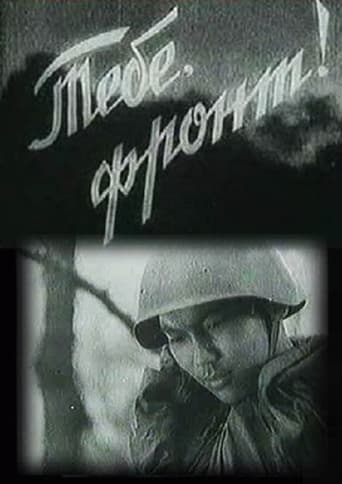
From the start, Vertov made himself known as an irreconcilable enemy of “acted films,” which he regarded as a violation of truth. At the peak of World War II, however, such lofty artistic principles proved impractical. Vertov’s poetic and patriotic For You, Front! is a fiction film with a script and two actors. In a letter to her fiancé, a soldier on the front, Saule asks if there is anything he needs from “our beloved Kazakhstan.” Yes there is, he replies: lead, which can be used to make bullets to kill the enemies of “our beloved country.”
Narration of one of the bloodiest episodes of the Mexican national history, The Tragic Ten, beginning when General Victoriano Huerta sent to kill President Francisco I. Madero, Vice President José María Pino Suárez and Senator Belisario Dominguez. The film recreates the moment of the execution at the hands of Huerta and his accomplices Bernardo Reyes, Félix Díaz and Manuel Mondragón.
Activate your FREE Account!
You must create an account to continue watching