The amazing story of electronic music: its epic journey from its origins in Europe, at the hands of the great artists of the post-war classical avant-garde, to the great post-industrial cities of the USA, where this genre of genres took over music stores, shady clubs and, eventually, the big stages.
Documentary takes a look at the ancient Egyptian Book of the Dead, a scroll created in 1880 BCE, and lost until 1887.
In June 1934, Hitler decided to eliminate the powerful leadership of the SA. With his pistol drawn, he entered the Hotel Hanselbauer in Bad Wiessee on June 30, where his friend Ernst Röhm and other SA functionaries were staying. The three-day murder operation within the SA's own ranks has gone down in history as the "Night of the Long Knives".
Filmed in Cordoba, Granada, Seville, and Toledo, this documentary retraces the 800-year period in medieval Spain when Muslims, Christians, and Jews forged a common cultural identity that frequently transcended their religious differences, revealing what made this rare and fruitful collaboration possible, and what ultimately tore it apart.
In August 1938, just west of Vienna, Hitler ordered the construction of the Nazi's Mauthausen concentration camp, one of the deadliest in history.
Coming to a P.E hall near you, is another chapter in the sacred and sanguinary saga of Havoc in Highfields. When some average drifter by the name of “Turkey” thinks he can have a straightener with a manic Pigeon Fella in the yard after he took his hallowed Petits Filous, the enraged Pigeon Fella challenges him to a quarrel in the wastelands of Highfields. The stakes are sky piercingly high because this time, the champion will dethrone The High King of Highfields and shall have the force of the cavalry resting in his smiting hand.
A small group of eccentric pioneers join forces, in order to do the impossible and create world history in the early 1980s of Denmark
This Passing Parade entry tells the story of Dr. Joseph Goldberger (1874-1929), a Hungarian immigrant who devoted his life to finding the cause of pellagra, a disease that killed hundreds of thousands in the southern United States. Although the medical community believed that the condition was caused by a virus, Goldberger proved that a healthy diet was the cure.
Framed by scenes of Namibia's formal independence as a newly formed African country in 1990, Desiree Kahikopo's historical romance takes us back to 1963, soon after the 1959 uprising in Old Location — an area segregated for black residents of Windhoek, the capital of Namibia (then a territory of South Africa). It is in this setting that Sylvia Kamutjemo (Girley Charlene Jazama, who also produces), a black domestic worker, meets Afrikaner police officer Pieter de Wet (Jan-Barend Scheepers) on a routine passbook check. As the pair exchange letters and a story of forbidden love across racial lines unfolds, Kahikopo explores an underrepresented period of Namibian history with compassion and hope.
Fagun Haway is a Bangladeshi historical drama film based on the novel Bou Kotha Kou by Tito Rahman. This movie based on the language movement during 1952 in East Pakistan.
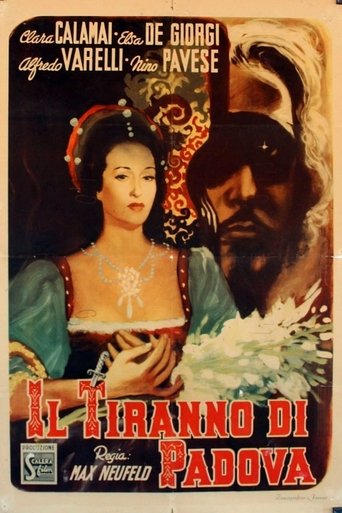
Padua, 1540. Angelo is married to Caterina but has an affair with Tisbe, an actress who travels with Rodolfo, presented as her brother but actually her lover and also Caterina's first and true love. Tisbe is also searching for the daughter of the woman who saved her mother from capital punishment and to whom she had given a crucifix. Caterina, victim of a plot hatched by Angelo and Tisbe, is saved by her at the last minute, as she recognizes her as the daughter of the woman who saved her mother from capital punishment.
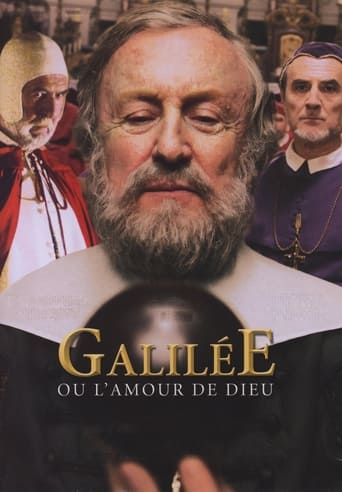
Before the court of the Inquisition, the scientist Galileo defends his position in favor of Copernicus' thesis that the Earth revolves around the sun.
John Newton is captain of a slave ship moored off the coast of Nigeria. He stands at a crossroads in his life, his morality and religion at odds with the brutality of his chosen profession. Stepping ashore, he starts on a journey of redemption that will end in tragedy but prove the catalyst for greater achievements. A local anthem sung in adversity by the slaves whom he captures punctuates the film. It will be the inspiration for Newton's redemption and for his writing of the hymn Amazing Grace.
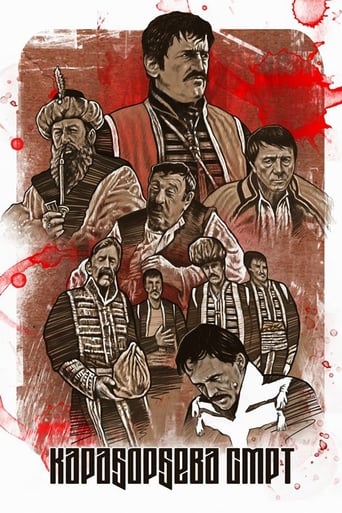
The story about the death of Karadjordje, the elected leader of the First Serbian Uprising that aimed at liberating Serbia from the Ottoman Empire.
Inspired by the writings of Suetonius and Dio Cassius, this baroque-style film, which blends theatre and cinema, retraces key events and facets of the personality of the third Roman emperor: Caligula.
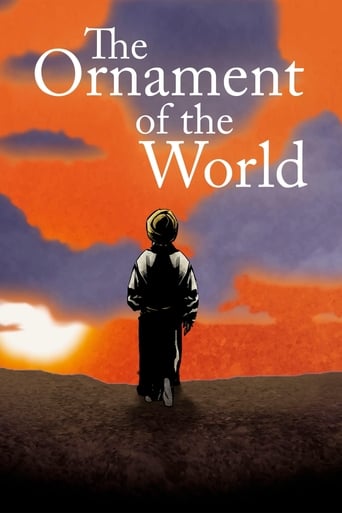
It all begins with a childhood memory: that day when the father of the future filmmaker Sebastiano d'Ayala Valva forces him to listen to certain music that initially terrifies him; a distant echo from the past that leads him to follow the trail of his mysterious ancestor, the Italian composer Giacinto Scelsi (1905-1988), who claimed that his music was directly inspired by the gods.
Over 4,000,000 Poles immigrated to the United States between 1870 and 1920 in search of a better life form their partitioned country. In Chicago, they worked in some of the most dangerous factories and mills in the United States, and fought to free their homeland. Their story is known as the Fourth Partition.
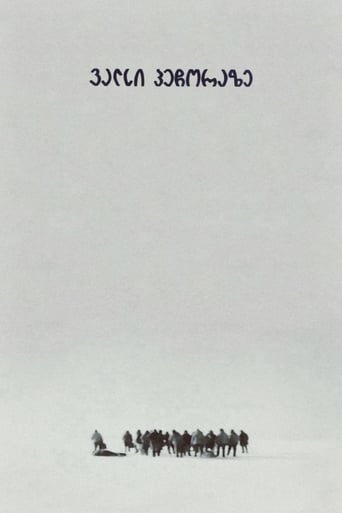
Set in 1937 Stalinist Georgia, the film traces the parallel destinies of a mother, condemned by the government as "an enemy of the people" and exiled to a work camp in Siberia, and her daughter, who meanwhile is sent to an orphanage. Arriving at the overcrowded work camp, the mother and other women who are not considered strong enough to be labourers, must journey still farther, crossing the icy Siberian landscape in search of food and shelter. At the same time, the daughter escapes the orphanage and returns to her former home, where she finds that a KGB officer has taken up residence. He protects her and an uneasy rapport between them develops—one of abhorrence and attraction, need and suspicion.
A native of Wilmington, Delaware, jazz trumpeter Clifford Brown made an outstanding and influential contribution to music. In an era when many musicians were emulating Charlie Parker’s drug abuse, Brown inspired others to achieve greatness while living a clean life. Ironically, he was killed in a car accident at the age of 25. This feature-length documentary presents a richly detailed account of Brown’s life, and examines his historical importance in the context of three criteria–innovation, influence, and individuality.
Activate Your Account!
You must create an account to continue watching