Ivan Hálek, son of the famous poet Vítězslav Hálek, studied medicine and devoted his life to the Slovak countryside. In the poor Kysuce region, he not only treats the local villagers, but also makes an extraordinary contribution to education. At the same time, he struggles with lingering superstitions and mistrust. However, the hero and his young wife also become acquainted with folk customs, songs, and the colorful culture of the poorest. And he proclaims that only those who rid them of terrible mass poverty can provide these poor people with true living water.
The epic (and very costly) retelling of the history of South Africa from 1652 to 1910, made to coincide with the 100th anniversary of the Great Trek (1838)
First-person accounts of slaves, ship owners, traders and colonists recounting the struggle to end the Atlantic slave trade. Drawing on the logbooks, letters and diaries of the victims and witnesses to one of history’s most brutal eras, depicted through dramatic recreations, bolstered by authentic drawings and period documents, featuring insight from historical experts around the world.
When the Soviet Army marched into Romania in 1944, a part of the Romanian population went “into the mountains” – a diverse assortment of nationalists and fascists, liberals, apolitical farmers and members of the middle-class, who were affected by the Communists’ expropriations. Over a thousand armed resistance groups took refuge in the inaccessible forests of the Carpathian Mountains where they waited in vain for the support of the Western Allies. One of them was led by Ion Gavrilă-Ogoranu, who managed to remain undetected until 1976 when he was arrested. This film depicts the daily existence of this group. It tells the story of a struggle that became an end in itself, as the enemy was constantly in pursuit and arrest meant torture and often liquidation. Hungry and emotionally withdrawn, the group of young men got entangled in a partisan war that could not be won, lost in the landscape of the South Carpathians, accompanied by a vigilant secret police, the Securitate.
The greatest amphitheatre ever built by the Romans and a monument to blood and brutality. But what were the origins of the Colosseum and the gruesome spectacles performed within? With unique access to new archaeology, Colosseum: Rise and Fall explores the true purpose of the Colosseum and the network of amphitheatres spread throughout the Roman Empire. Visiting sites across Europe and north Africa, exploring finds that reveal both the scope of the games and the secrets of the gladiators, Colosseum: Rise and Fall charts the expansion of Rome and the ultimate decline of one of history’s most barbaric empires, through the most iconic of Roman landmarks, the Colosseum.
An Emissary of No Return retells the story of a real historical event in 1907 known as the Hague Secret Emissary Affair. Korea had been colonized by Japan. In order to protest to the international community, the Korean emperor king Gojong sent three secret emissaries to the talks of the Hague Convention of 1907, to get the great powers to overturn the Japan–Korea Treaty of 1905.
What was the impact of the emergence of oil on Kuwait in particular and on the Gulf society in general? How did people behave? What were their customs and traditions?! What was the impact of oil on them, bringing about many changes? The play deals with one of the Kuwaiti villages overlooking the sea, in the late forties, when World War II was ending, and the State of Kuwait, and the Gulf states in general, were preparing to move from the sea - to depend on their livelihood - to the land and desert, where oil began to flow, and with it flowed new customs, different behavior, and ideas that Kuwaiti society was not familiar with.
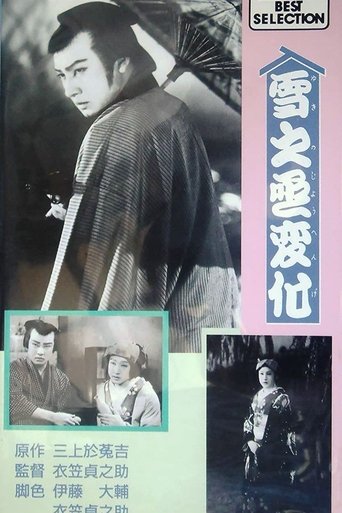
An onnagata (female impersonator) of a Kabuki troupe avenges his parents' deaths. Remade in 1963 as Yukinojô Henge.
Seventh film in the long-running series Daiei Studio's Woman Gambler with Kyoko Enami starring where she plays the woman gambler Ogin.
The strange and sordid tale of Eadweard Muybridge, the man who accidentally invented motion pictures. The film is told from the point of view of Muybridge's abandoned son and viewed completely through a nineteenth century early cinema contraption called a mutoscope.
Set in 15th-century Italy, The Cardinal stars Matheson Lang as one Cardinal de Medici. Bound by the rules of the confessional, the cardinal is unable to disclose the multitude of sins revealed to him by one of his most influential parishioners. De Medici's dilemma is compounded by the fact that the confessor has committed a murder for which the Cardinal's brother has been arrested. The basic plot gimmick was good for another go-round in the 1953 Hitchcock flick I Confess. This 7-reel British film was based on a play by Louis N. Parker.
Based on Érico Verissimo's literary trilogy, Time and the Wind follows 150 years of the Terra Cambará family and their opponents, the Amaral family. The struggles between the two families begin in the missions and lasts until the end of the 19th century. The film also features the period of formation of the state of Rio Grande do Sul and the dispute of territory between the Portuguese and Spanish crowns.
This is the inside story of the Freddie Mercury you never knew: a behind the scenes story focusing on the two years that changed his life, from the summer of 1985 at Live AID when he achieved his greatest musical triumph to the spring of 1987 when he faced his deepest fears and was diagnosed with AIDS. It’s the true story of his battle to keep his privacy against a prying tabloid press, to work despite crippling pain and to confound science and save his life.
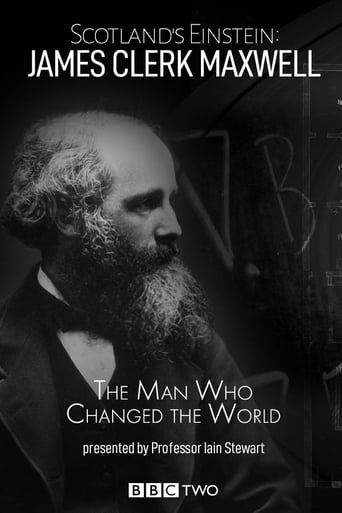
Professor Iain Stewart reveals the story behind the Scottish physicist who was Einstein's hero; James Clerk Maxwell. Maxwell's discoveries not only inspired Einstein, but they helped shape our modern world - allowing the development of radio, TV, mobile phones and much more. Despite this, he is largely unknown in his native land of Scotland. Scientist Iain Stewart sets out to change that, and to celebrate the life, work and legacy of the man dubbed "Scotland's Forgotten Einstein".
Only 3 days after A-bomb was dropped on Hiroshima, a streetcar started running through the town burned to the ground. The drivers were teenage girls working for the train company in place of men. The drama is based on a true story of people who strived for the restoration.
Officer Zhilin, a Caucasus officer, receives a letter from his mother and returns home. He and another Russian officer are attacked by mountaineers, and Zhilin is captured without ransom money.
Biography of the first Catholic Saint to be born in Mexico.
Activate Your Account!
You must create an account to continue watching