Set in early 16th century Finland, a knight Olavi Gideoninpoika meets Mirjam Raakelintytär and falls in love. Mirjami hides in a monastery disguised as a choir boy, but is revealed by a monk Rasmus, who also desires her, and is put on trial.
Set in the Middle Ages the film tells the story of a wonder child, the little sculptor Wawrzek, who goes to work for a great master, Wit Stwosz. The story culminates in the unveiling of Stwosz's greatest masterpiece, the Altar of St. Mary's Church in Cracow.
A young princess arrives at her estate. She is bored by the welcoming ceremony and is quite happy to hear about the rebellious miller who refused to come to the castle. He lives with his mother and ward Hanička in an old mill. The miller is exempt from work, but he is obliged, if the lordship requests it, to accompany her with a lantern to the forest castle. The princess likes the miller and therefore uses his right...
At first playfully, and then seriously, the heroine falls in love with her friend's husband, who fights for social justice. Then there will be an arrest, exhausting interrogations of a police officer fascinated by her, involvement in the death of her lover. And that's not all...
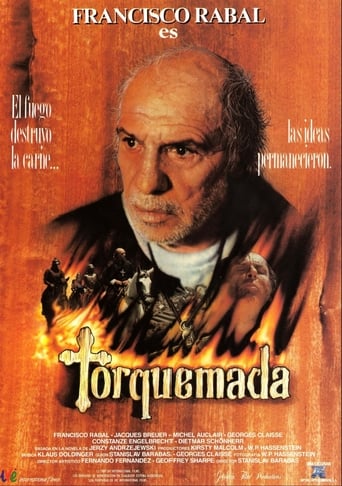
Last feature film of Stanislav Barabas
Princess of Rome, Mellika, granddaughter of Great Caesar. The story talks about her move from Byzantium in the 9th century, to avoid her marriage with Krytos, and brings her to Baghdad to become the mother of Imam Mahdi, the Savior.
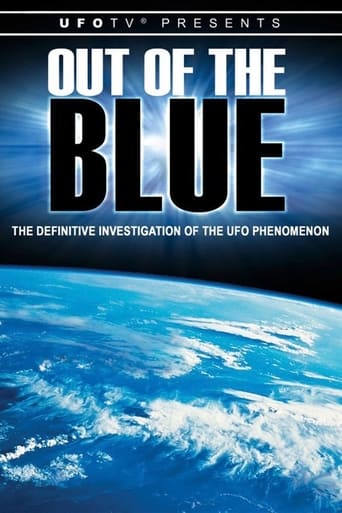
Narrated by Peter Coyote, Out of The Blue is widely considered the best documentary ever made about Unidentified Objects. The producers traveled around the world to investigate some of the most famous UFO events on record. Through exclusive interviews with high-ranking military and government personnel, this award-winning film supports the theory that some UFOs are of extraterrestrial origin.
A.N. Ostrovsky recalls the first period of his creative work (1849–1859), when he began collaborating with the Maly Theatre and with masters of the Russian stage such as L.P. Kositskaya, M.S. Shchepkin, and P.M. Sadovsky. Almost every character in this film is a real historical figure.
The woman who birthed the most children in the City of Toronto within a certain time period would inherit a fortune in the midst of the Great Depression
Between 1405 and 1433, Admiral Zheng He of China led seven epic voyages to more than 30 countries, including Sri Lanka, India, Indonesia, Malaysia, Vietnam, Kenya and Tanzania. The admiral and his crew gathered knowledge and wealth from Indochina to Africa for China's Ming empire. These voyages were the biggest naval expeditions mounted at the time. Zheng He was bigger than life and could have changed the course of history. But after the seven voyages, he and his Treasure Fleet were forgotten by China, and the world, for six hundred years. National Geographic photographer Michael Yamashita sets sail to discover why. To celebrate the 600th anniversary of Zheng He's maiden exploration voyage, Michael Yamashita traveled over 10,000 miles from Yunnan in China to Africa's Swahili coast taking over 40,000 pictures for the feature story on this great explorer, published in the July 2005 edition of National Geographic.
Historian Lucy Worsley restages the 1840 wedding of Queen Victoria and Prince Albert. Aided by a team of experts, Worsley recreates the most important elements of the ceremony and the celebrations, scouring history books, archives, newspapers and Queen Victoria's diaries for the details. She reveals how every moment was brilliantly stage-managed for maximum effect. Woven into the recreation of the wedding day is the story of Victoria and Albert's courtship and engagement, and its political importance.
Renowned as the richest gold strike in North American mining history, the Klondike Gold Rush (1896-1899) set off a stampede of over 100,000 people on a colossal journey from Alaska to the gold fields of Canada's Yukon Territory. Filled with the frontier spirit, prospectors came and gave rise to what was one of the largest cities in Canada at that time - Dawson City. The boomtown, which became known as "the Paris of the North", earned the reputation as a place where lives could be revolutionized. Brought to life with excerpts from the celebrated book The Klondike Stampede - published in 1900 by Harper's Weekly correspondent Tappan Adney - and featuring interviews with award-winning author Charlotte Gray, and historians Terrence Cole and Michael Gates, The Klondike Gold Rush is an incredible story of determination, luck, fortune, and loss. In the end, it isn't all about the gold, but rather the journey to the Klondike itself.
The Battle of Gettysburg
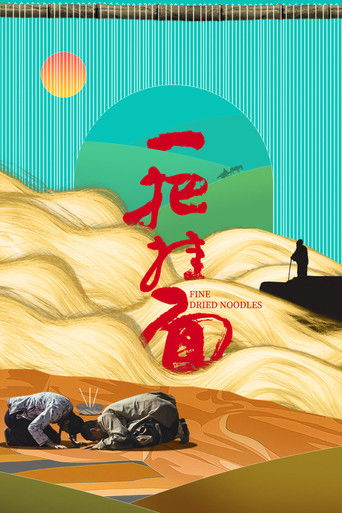
The film is based on the intangible cultural heritage of Shaanxi Wubu County — the traditional handmade hollow dried noodles (空心手工挂面) from Zhangjiashan. It follows the life of Zhang Jiagen (张家根), the first-generation inheritor of this noodle-making craft, and his struggles against fate.
Jonathan Meades explores the architecture of Nazi Germany, from its holiday camps to its concentration camps.
The making of patriotic films was not rare among FAI productions, and Il bacio della gloria is one example, together with Armi e amori (1913) and Per la Patria! (1915). In this Speech from the Throne, which opened the 14th Legislature, the King of Italy stressed and underscored with his words the period recalling the story of the glorious conquering of Libya, sending warm greetings to the courageous men who fought, and to the heroes who fell, for the loftiness of their country. In a response worthy of these august words, immediately thereafter Pathé released this patriotic film which tells one of the many stories of courage which bring glory to the Italian flag.
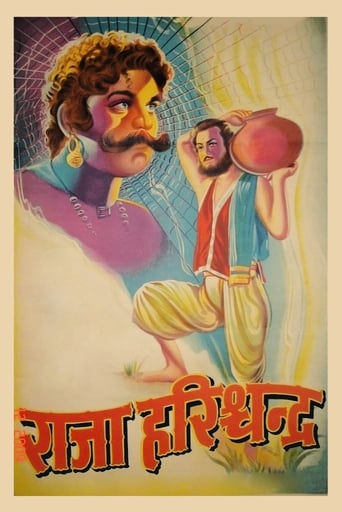
Revolves around the noble and righteous king, Harishchandra, who first sacrifices his kingdom, followed by his wife and eventually his children to honor his promise to the sage Vishwamitra.
Activate Your Account!
You must create an account to continue watching