This film is based on the actual events referred to as the "Mühlviertler Hasenjagd" (Hare-hunt in the Mühlviertel) which occurred in February 1945 around the Mauthausen concentration camp. 500 Soviet officers form death block 20 attempt to escape, but only 150 of them actually succeed. Following the tally-ho of the SS, a barbaric manhunt begins. Only very few fugitives survive. With a lot of good luck, the two young officers Michail and Nikolai reach the Karner family's farm. Frau Karner persuades her husband to hide the two escapees.
Was the legendary playwright William Shakespeare really the author of his acclaimed plays? Or was he just a straw man working for a secret society? Norwegian organist and researcher Petter Amundsen claims to have a solid theory on the subject. Shakespearean scholar Robert Crumpton decides to travel to Norway to meet him.
Medal of Honor Recipient George Sakato said with tear, ' I am not a hero. I just killed a lot of people. It's not good. This medal is for the people who couldn't return their homes, not for me.' Even many soldiers who received the decoration still have deep scars in their hearts now. He is the veteran of 442nd Regimental Combat Team in WW2 composed of Japanese Americans, who were at first seen as the problem because of their race, but later seen as problem solvers because of their splendid achievements on the battle field. They had to fight not only the enemy but also prejudice. This is the story of the 442nd and their veterans now and then.
A film account of the siege and fall of France's major fortress in North America by the British in the Seven Years War
After Antar's death, the men of the Bani Fazaza tribe take revenge on the men of the Bani Abs tribe, leaving no man from them, and Antar's sister can escape and hide Antar's daughter, raising her to hate her father's enemies until she grows up
The Chronicle of 1812
Portrays the dramatic events of the last hours of Jesus' life and his resurrection.
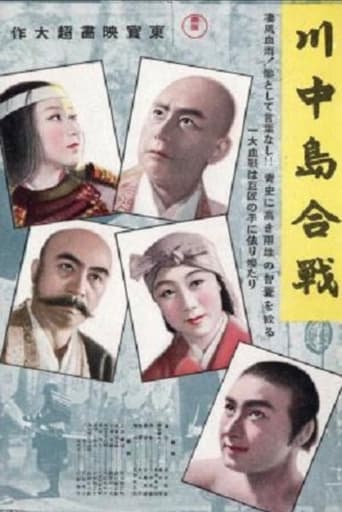
This epic depicts the battle between Uesugi Kenshin and Takeda Shingen. The focus of the story is the struggle by the unit leader in charge of the main supply wagons and the supply troops to transport materiel to the Uesugi army. To this are added episodes involving an itinerant woman.
On the eve of the Grito de Dolores and faced with the threat of being arrested by the viceregal government, Miguel Hidalgo suggested to Captain Allende that the flag of the insurgent movement be the banner of the Virgin of Guadalupe.
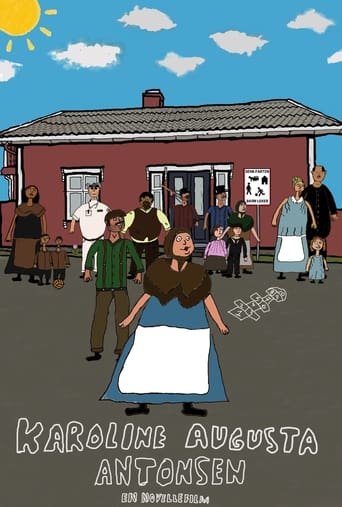
Born into a family of farmers in the mid-19th century, Karoline Augusta Antonsen moves to a nearby industrial city in her late teens, driven by the dream of building a large family and owning a big house. This short film follows her journey of hope, and her struggle to survive in a tough economy. Will she achieve her lifelong ambition or will her story end in tragedy?
After suffering severe floods in 1753, the people of Senbon Matsubara in Shizuoka cooperate on flood prevention around the Kiso, Nagara, and Yuhi rivers. The people of Satsuma (Kumamoto Prefecture) endure great hardships after being forced to undertake the work by the central government, a subtle indication of the bad feeling that would foment into open rebellion the following century.
1930s, in the highlands of Jalisco. Emilia, a teenager, silently lives her sexual awakening with her adopted siblings, Caro and Martín. In search of her freedom, she flees into the bush where she poses as a young muleteer to survive among the living and the dying, among guards and deserters, unaware that Martín is stalking her. Emilia's path will lead her back to the ranch to defy her destiny and escape with Caro.
After their relative and associate runs way, the Naves brothers inform the police of the incident, who end up arresting them under the accusation of murdering the missing person. The brothers are tortured in order to confess a crime they did not commit while their wives are raped.
The truth about the million British horses that served in World War I is even more epic than Steven Spielberg’s War Horse feature film. This documentary tells their extraordinary, moving story, begining with the mass call-up of horses from every farm and country estate in the land. Racing commentator Brough Scott tells the tale of his aristocratic grandfather General Jack Seely and his beloved horse Warrior, who would become the most famous horse of the war. The British Army hoped its illustrious cavalry regiments would win a swift victory, but it would be years before they enjoyed their moment of glory. Instead, in a new era of mechanised trench warfare, the heavy horses transporting guns, ammunition and food to the front-line troops were most important. A quarter of a million of these horses died from shrapnel wounds and disease. But the deep bond that developed between man and horse helped both survive the hell of the Somme and Passchendaele.
Contemporary film critics regard the epic film I Am Cuba as a modern masterpiece. The 1964 Cuban/Soviet coproduction marked a watershed moment of cultural collaboration between two nations. Yet the film never found a mass audience, languishing for decades until its reintroduction as a "classic" in the 1990s. Vicente Ferraz explores the strange history of this cinematic tour de force, and the deeper meaning for those who participated in its creation.
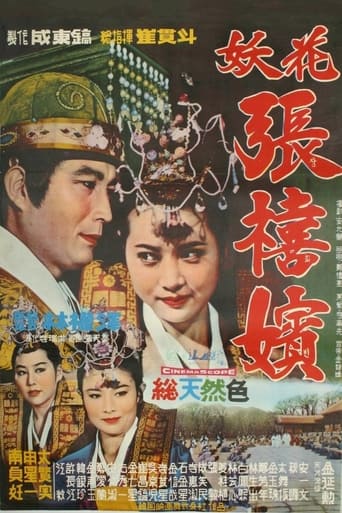
King Sukjong assigns Jang Ok-nan, a court lady, as a concubine overnight. Jang plots to drive the current Queen into exile.
This is the story of the days directly after 9/11, and the president's whereabouts. Scheduled to air shortly before the second anniversary of the September 11 attacks, DC 9/11 takes an inside look at the Bush Administration, beginning with the day of the attacks, and following the President's journey to Ground Zero, culminating with his now famous national address nine days after the attacks.
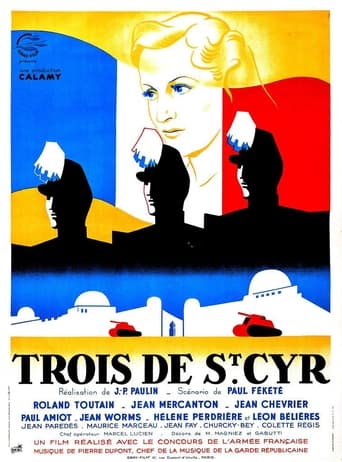
Three students from Saint-Cyr are sent to Syria to fight the rebels in the desert.
Activate Your Account!
You must create an account to continue watching