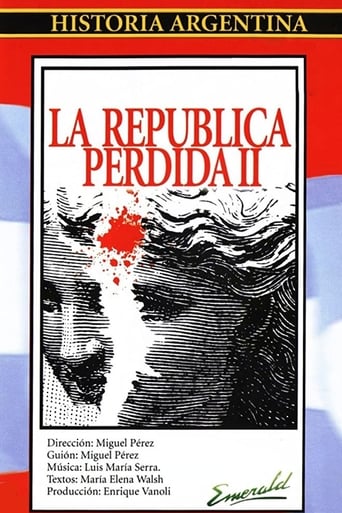
A history of Argentina's last military dictatorship (1976-1983). After "La Republica Perdida" was made, which covered 1930 to 1976, there was an important part of Argentina's history yet to be told, which was too recent to be covered by the first documentary. The first movie was made at the end of the last dictatorship. This second documentary covers this last dictatorship from 1976 to 1983.
Set in a vagabond and petty bourgeois environment, the three stories deal with the pitfalls of love, the petty and insidious betrayals of trust.
Boris Malagurski explains how the military-industrial complex, big business and political interest groups endanger peoples' health and existence, focusing on the examples of Serbia, Cuba, Chile, Italy and Bolivia.
Berlin, 1943, during World War II. Martha Liebermann, an elderly upper-class Jewish woman, faces the decision of her life: should the widow of the world-famous and revered painter Max Liebermann continue to try to obtain an exit permit from the Nazis or, with the help of a resistance group, should she flee to Switzerland?
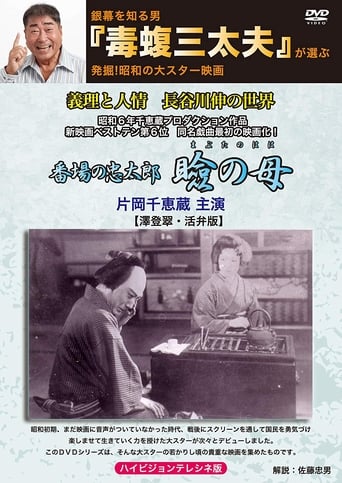
His mother abandoned him as a child, so he had no choice but to live outside society. Even so, he grows up determined to reunite with her. Worried that she might be living in misery, he saves his money to help, only to find that she has married into wealth and social position and has no intention of seeing her outcast Yakuza son...
Mayura challenges an arrogant wrestler and defeats him. Though never formally trained he has only learned techniques of wrestling by observing others. As a Brahmin he is required to study Vedas yet he is deeply interested in martial arts. Ranga Jetti, the premier wrestler in Kanchi, takes him under his wing and trains him. One day while observing the training of Pallava princes Mayura gets into a fight with and thrashes Vishnugopa, the Pallava prince, earning his enmity. Mayura has to flee Kanchi as per the advice of Ranga Jetti to escape from pursuing Pallavas. He also then learns that he is in fact the son of Raja Chandravarma, the Kadamba king who was deceitfully killed by the Pallava king, Sivaskandhavarma. Upon learning of his illustrious lineage, Mayura dedicates himself to overthrow the Pallava yoke. Returning to Banavasi in the guise of a merchant Mayura builds an army and conquers both Banavasi and the Telugu speaking regions around Srishaila, thus building a vast kingdom.
A short film honoring the 21 Coptic men martyred by ISIS in Libya in 2015, produced in the style of Coptic iconography by a global team of more than 70 artists from more than 24 countries. The film is narrated in English, with Arabic dialogue. Subtitles have been produced in English, Arabic, French, Spanish and Russian.
Set at the backdrop of the colonization of pre-Hispanic Philippine, this historical epic revovles around the story of Ramir, a half-caste warrior falls in love with Princess Mahalina. Ramir has to reckon with another brave native, Kiram.
When she was in high school, Ainun was known as a smart girl and became the target of many male students, including Habibie. In college, Ainun became a popular figure. Ahmad is a man who dared to express his love for Ainun.
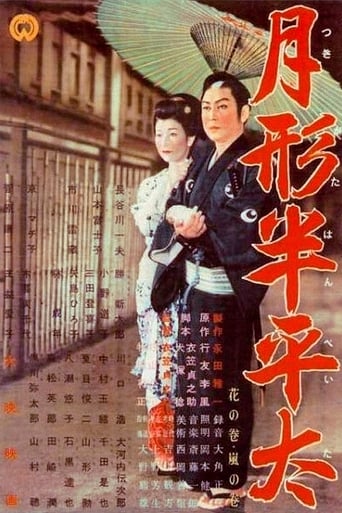
During the bloody era of the Tokugawa Shogunate collapse, a man appeared capable of overthrowing a corrupt government and ending the feud between the Choshu and Satsuma clans. This is the story of Tsukigat Khanpayit, the sword maker of the Choshu clan, who, along with Katsuro Kogoro and Sakamoto Ryoma, sought to fulfill the dream of a new peaceful era in Japan. Can he realize his ideals or will he die in the chaos of internecine fights...
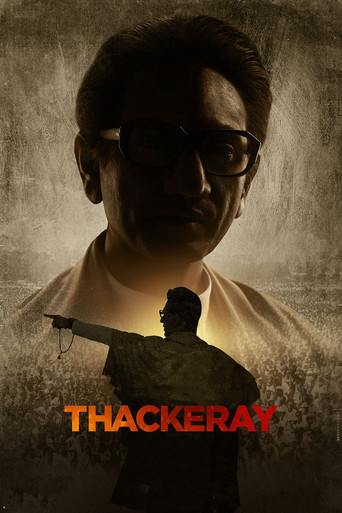
Based on the life of Keshav Thackeray, an Indian politician who is also known as Balasaheb Thackeray.
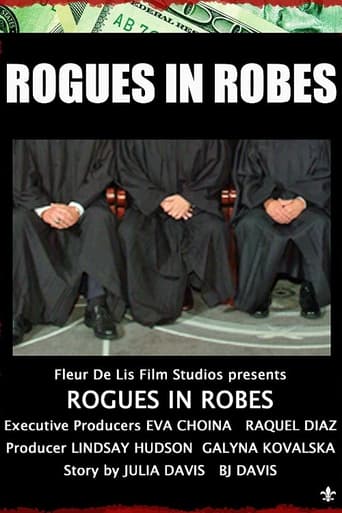
A clinical review of judicial corruption, the good and the bad guys showcased. The need for complete, federal and state judicial reform, term limits, with no immunities.
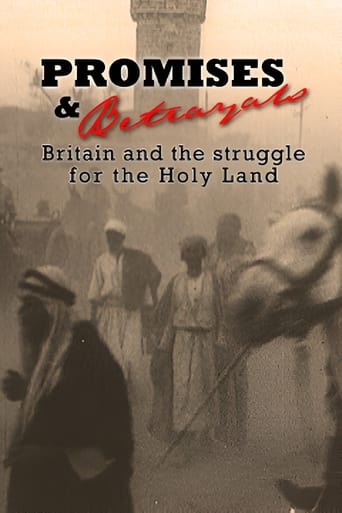
A documentary on how British double-dealing during the First World War ignited the conflict between Arab and Jew in the Middle East. The bitter struggle between Arab and Jew for control of the Holy Land has caused untold suffering in the Middle East for generations. It is often claimed that the crisis originated with Jewish emigration to Palestine and the foundation of the state of Israel. Yet the roots of the conflict are to be found much earlier – in British double-dealing during the First World War. This is a story of intrigue among rival empires; of misguided strategies; and of how conflicting promises to Arab and Jew created a legacy of bloodshed which determined the fate of the Middle East.
Romantic and stormy, full of work, dangers and an irresistible thirst for knowledge was the youth of Al-Hussein ibn Abdallah ibn Al-Hasan ibn Ali ibn Sina, who would become known throughout the world under the name of Avicenna, the great physician, scientist and educator of the 10th-11th centuries.
The art of drag represents an artistic transformation where individuals create characters by amplifying gendered traits, challenging established social norms. This practice, known for its spectacular performances, has evolved through periods of repression and acceptance. Through humor and self-mockery, drag disrupts conventions and is deeply rooted in the history of LGBT+ movements. This documentary traces the history of Drag in France and around the world, from William Dorsey Swann—a young emancipated slave considered the first drag queen—to RuPaul, Nicky Doll, and Paloma. Featuring contributions from historians, anthropologists, and sociologists specialized in drag, as well as testimonies from drag artists who are shaping or have shaped this history.
She was a dichotomy – Sarah was educated, serious, intelligent, articulate, ambitious and untraditional in many ways. Minnie was uncomplicated, direct, playful and quite traditional. A young girl hailing from a small Tennessee town with big dreams of being a Shakespearian actress on the world stage was more like a delusion in the 1930’s. But she did make it on the world stage – with her recognizable costume and same opening line that never grew tiresome. The legacy she left was one of compassion, empowerment and innovation. But mostly she made us laugh. This is her story… simple, yet complicated. A permanent fixture in country music yet music was clearly not her gift.
Using astounding footage from the Luce archives (newsreels, but also true films) Il sorriso del capo/The Smile of the Leader shows how propaganda works, presents everyday life in its most revealing details, and describes a country's "education". Marco Bechis explores the feeling of consensus: he tells us where it originates, what tools are used to spread it, how it is opposed. The thread running through the film is a voice, enigmatic until the end, narrating in the first person what it is like to grow up under fascism.
Activate Your Account!
You must create an account to continue watching