Jida-geki by Santaro Marune.
A priest's daughter is fictitiously married to a revolutionary populist. The youth commune organized their wedding and arranged their move to the city. Over time, the young people fell in love with each other. When he is convicted and sent to penal servitude, she voluntarily follows him.
DOLORES tells the story of a young woman of Scottish descent who returns to the Argentine pampas after her sister dies, to take care of her eight-year-old nephew- but drawn also by the juvenile love she still feels for her English brother-in-law, Jack. Her love story develops in the context of the onset of World War II: while the echoes of war get ever closer, the dispute between Germans and Anglos turns personal when Dolores is seduced by a neighbouring landowner of German descent, Octavio Brandt- he becomes an unexpected love, and from now on Dolores is torn between Octavio and Jack, as Argentina changes for ever. In a society dominated by men, Dolores must now also forge her unique destiny.
The Battle of Gettysburg
In 1944 Leeuwarden, the Netherlands, a band of Dutch resistance fighters plot to covertly rescue dozens of compatriots from the local Nazi prison.
In Iasi, Romania, from June 28 to July 6, 1941, nearly 15 000 Jews were murdered in the course of a horrifying pogrom. At the time, the programmed extermination of European Jews had not yet began. After the war, the successive communist governments did all they could to ensure the Iasi pogrom would be forgotten. It was not until November of 2004 that Romania recognized for the first time its direct responsibility in the pogrom. All that remains of this massacre are about a hundred photographs taken as souvenirs by german and romanian soldiers, and a few remaining survivors.
A story about a colonel Denis Davydov - hero of the 1812 war.
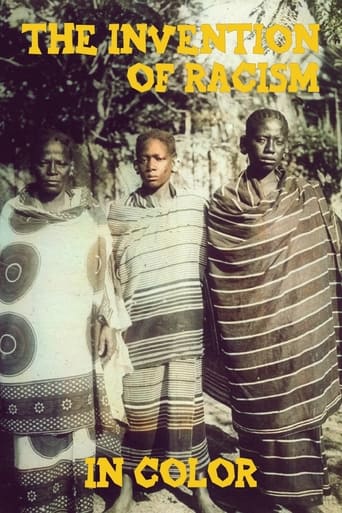
Between 1907 and 1909, Robert Lohmeyer (1879-1959), a German pioneer of color photography, traveled through the German colonies in Africa and portrayed their landscapes and native peoples in color for the first time, thus fulfilling a laudable purpose; but also laying the foundations for an enduring racist vision of the entire continent.
A fresh new look at Lolita, the famous and controversial novel published in 1955 by Russian writer Vladimir Nabokov (1891-1977), a masterpiece of English-language literature that has been constantly misinterpreted by countless readers who have mistakenly turned its young heroine into an erotic icon.
Six crippled kung fu students are each given an Imperial Decree starting an anti-Ching rebellion, and are instructed to deliver them to the Commander-in-Chief.
The young country of Estonia is dancing to the jazzy tune of the 1920's when on December 1, 1924, the capital Tallinn is overrun by members of the Comintern in an attempt to stage a Communist coup. The film follows the fates of a young soldier called Tanel and his wife, a telephone operator named Anna, amidst the ensuing chaos which determines whether the country remains independent or becomes a minor province in the Communist Empire.
In a investigation into the pernicious origins of Stockholm Syndrome, a thrilling family story intersects with a dramatic bank robbery in Sweden (1973) and the famous kidnapping of Patty Hearst (1974).
Celebrate the 150th anniversary of the short-lived but far-reaching American Institution The Pony Express by following a historical re-enactment along the original trail from Sacramento California to Saint Joseph Missouri.
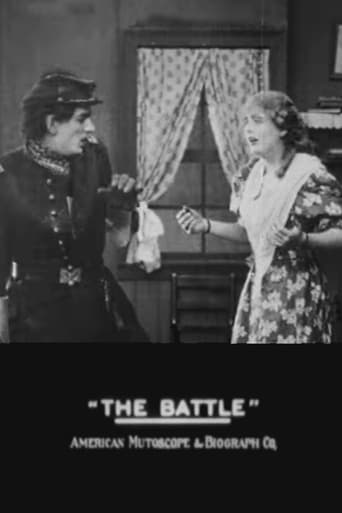
Union soldiers march off to battle amid cheering crowds. After the battle turns against the Union Army, one soldier runs away, hiding in his girlfriend's house. Ashamed of his cowardice, he finds his courage and crosses enemy lines to bring help to his trapped comrades.
Rafael faces the complications of the revolution and discovers true love with Luisa.
Esther Robinson's portrait of her uncle Danny Williams, Warhol's onetime lover, collaborator and filmmaker in his own right, offers a exploration of the Factory era, an homage to Williams's talent, a journey of family discovery and a compelling inquiry into Williams's mysterious disappearance at age 27.
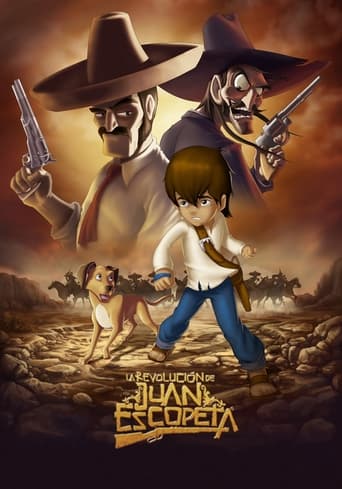
Mexico 1914. During the Revolution, a raid by the army in a small mining town leaves Gapo, 11, orphaned. Taken captive to be turned into a child soldier he escapes with the help of Juan Escopeta, a gunman for hire. Together they travel through a country absorbed in civil war in search of Gapo’s older and only brother: a famed revolutionary outlaw.
The life of Marie Antoinette, Queen of France, during the years leading up to and during the French Revolution in which she was executed.
Activate Your Account!
You must create an account to continue watching