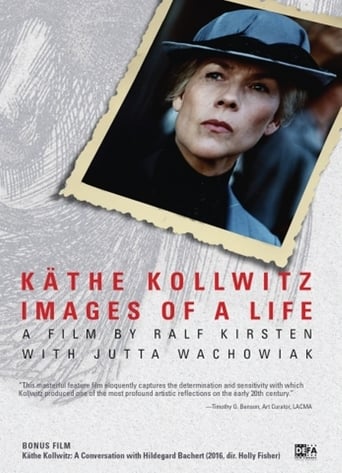
Kathe Kollwitz was 47 years old, and already a well established artist in Germany and abroad when Peter, her youngest son, volunteered to join the German army in WWI and was killed two weeks later. This painful tragedy changed Kollwitz's life and art forever.
During the 1940s, Nevil Shute had a steady job as an engineer in the British military but in his spare time, he wrote novels that were being well-received. Once the war was over, Shute choose to move to Australia and focus on writing, soon becoming an internationally acclaimed novelist. His novel On The Beach, particularly hit a chord with the international community, depicting the impact of global nuclear destruction. This documentary studies Shute's career and the adaptation of his most famous novel into a feature film in Melbourne, as his predictions of a post-Hiroshima world seem to be foreboding in their accuracy.
The theatre play is set in the late Heian (794–1185) and early Kamakura period (1185–1333) in Japan. The main character is young adult Minamoto no Yoshitsune, from the Minamoto clan. Like previous chapters, it is a historical fiction, a world with supernatural powers and spirits (Mononokes). The idea was to create a story where the Oni (Japanese demons) were the origin of vampires, and eventually of the central character.[19] In the Heian period existed those called as Mononoke (spirits), and Mononofu, who were born between humans and Mononoke, and with special powers dominated both Mononoke and humans. The story from Mysteries of Yoshitsune spreads out when the member with inherited blood crossed over to Europe, and became the progenitor of the later vampires.
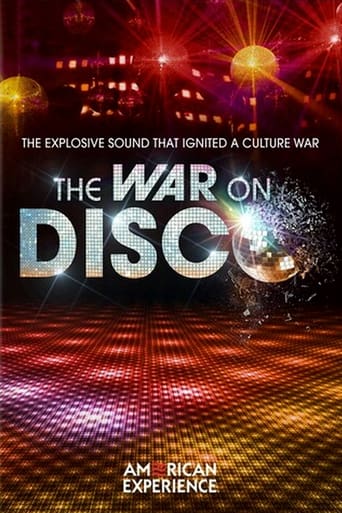
The War on Disco explores the culture war that erupted over the spectacular rise of disco music. Originating in underground Black and gay clubs, disco had unseated rock as America’s most popular music by the late 1970s. But many diehard rock fans viewed disco, with its repetitive beat and culture that emphasized pleasure, as shallow and superficial. A story that’s about much more than music, The War on Disco explores how the powerful anti-disco backlash revealed a cultural divide that to some seemed to be driven by racism and homophobia. The hostility came to a head on July 12, 1979, when a riot broke out at “Disco Demolition Night” during a baseball game in Chicago.
Set in Siamese Kingdom during the reign of King Rama V, the film follows the story of Lord Bunlue, a progressive government officer who tries to help his common men adapt themselves through the abolition of Siamese slavery. At the meantime, he's also falling in love with a slavery girl.
London 1976: Between economic crises and the Silver Jubilee, something is brewing in the squats and basement clubs of West London: Punk. A promise, a new beginning. Punk meant self-empowerment, especially for the women in the scene. For the first time, women picked up guitar, bass and drums, formed bands and wrote their own songs.
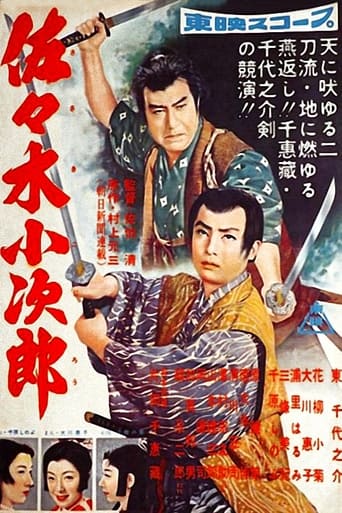
Ronin Sasaki Kojiro pursues his ultimate goal of becoming a master swordsman. Along the way he encounters another great swordsman, Miyamoto Musashi.
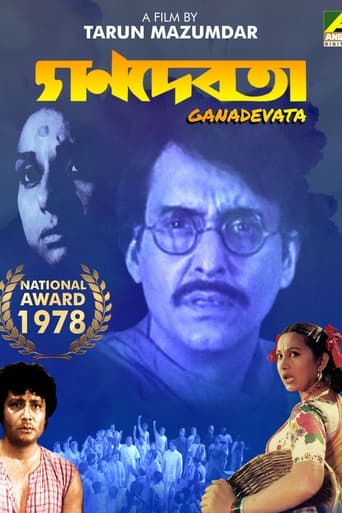
Set in 1920's during the British Raj, the film is about the breakdown of socio-economic structures, impact of industrialization and non-cooperation movement in rural Bengal.
1947 ... The Savchenko family returns to Moscow from evacuation - husband and wife with Kostya's little son. They settle with Grandma Kostya in a huge communal apartment. Street meets the boy with a flock of local boys. Then there were: the division of the territory with the "Sretensky"; trophy movie “Girl of my dreams”; a school with separate education, camp discipline and essays about the border guard Karatsyup. And the monetary reform of 1947, when all of their savings depreciated in an instant, and the boys let out boats from banknotes in puddles.
Biographical film about the work of the young Klement Gottwald. The story depicts his stay in Banská Bystrica, where he edited the Slovak communist press and helped organise the communist revolutionary movement.
Galicia, Spain, during the Second World War The life of Manuela, a mysterious miner who was branded a witch, changes with the arrival of an Allied commando, in charge of sabotaging the production of tungsten, a vital mineral for the continuity of the war effort of Nazi Germany.
Europe in second half of 16th century was very rough place to live. Peasants of Slovenia and Croatia had even rougher times because of the constant threat of Turk raids and being taxed to death in order to provide defence against the Turks. But, the worst things were arrogant local feudal lords led by Franjo Tahi who were oppresing the common folk. All that led to the great peasant revolt of 1573. The movie is made for the 400th anniversary of the event.
Seventh film in the long-running series Daiei Studio's Woman Gambler with Kyoko Enami starring where she plays the woman gambler Ogin.
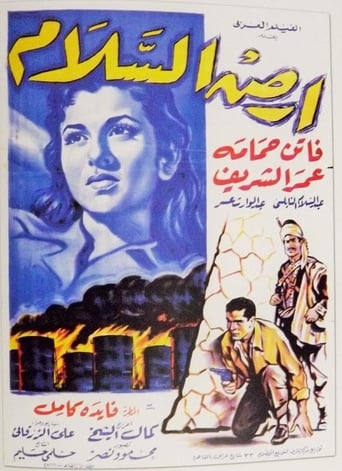
The film takes place in Palestine and portrays the lives of freedom fighters trying to free their village from the control of the Israelis. Ahmed (Omar Sharif) is an Egyptian freedom fighter who ends up in this village. There, he meets Salma, a girl from the village. Together they try to save the Palestinians and always escape danger.
An intimate look at Princess Diana’s life behind the gates of Kensington Palace, including interviews with friends, historians and biographers.
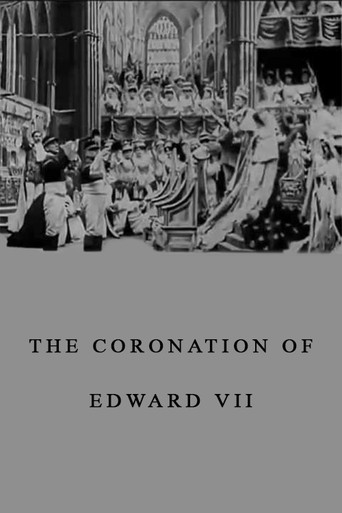
King Edward VII's coronation ceremony.
Bay houses were created in the late 1800s, and are maintained and enjoyed by families for generations. In this documentary, experience the unique and special way of life that, in our time, exists nowhere else in America but on the South Shore of Long Island, New York.
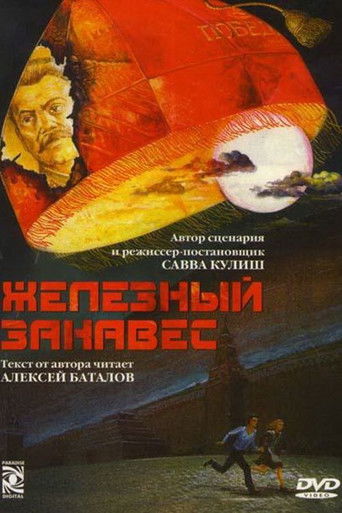
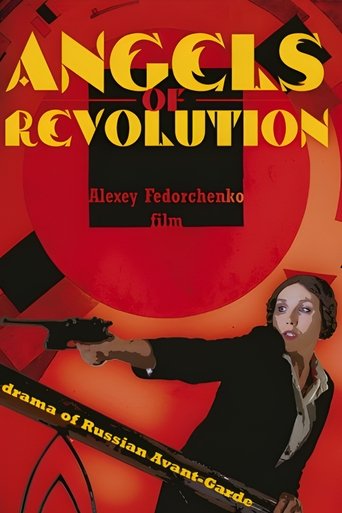
Five friends – a poet, an actor, a painter, an architect and a primitivist film director – are five red avant-garde artists who try to find the embodiment of their hopes and dreams in the young Soviet state. The Revolution is boiling up like a bottle with apple cider: winged service dogs and heart-shaped potatoes, dead Semashko, the People’s Commissar for Health, and cheerful angels, love for the Tsar and love for the young secretary Annushka, executions and pregnancies – everything is interlaced and inseparable!
Activate Your Account!
You must create an account to continue watching