The Battle of Gettysburg
This pre-WW II German costume drama chronicles the French Revolution with a particular focus upon Danton, Robespierre, and Marat. It depicts the dramatic downfall and execution of Georges Danton in 1794 at the hands of Maximilien Robespierre. The film also presents an interesting, if not historically inaccurate, portrayal of Louis XVI.
SATAN'S GUIDE TO THE BIBLE is an animated documentary. Join Satan as he shares Bible secrets, secrets the students' pastor learned at Christian seminary but is afraid to share. Thankfully, Satan's not afraid of losing his job. Satan has amassed an impressive list of biblical scholars ready to reveal the "standard stuff" taught in Christian seminaries: Bart Ehrman (UNC Chapel Hill), John J. Collins (Yale), Dale Allison (Princeton Seminary), Susan Niditch (Amherst), Ron Hendel (UC Berkeley), and Hector Avalos (Iowa State). This is established seminary curriculum about biblical history, biblical morals, authorship claims, and early Christianity — a curriculum never shared with the congregation. Darkly comedic, but thoroughly researched, SATAN'S GUIDE TO THE BIBLE is a fascinating journey into the secrets of the world's best-selling book.
A 1974 dramatised documentary based on the memories of Alfred Maron.
As befits the telling of the story of perhaps the most universally beloved hero of modern-day Chinese history Dr. Sun Yat-Sen (1866-1925), this lavishly produced biographical film uses techniques culled from Chinese Opera to dramatize the great man's political history. Concentrating on the period following his rise to political prominence in 1894 until his death in 1925, the movie is couched in terms of heroes who look heroic and villains who look villainous. Huge numbers of extras and vast battle scenes dot this production, and well-known Hong Kong and Taiwan-based movie stars appear in many cameos.
The story of Antônio Francisco Lisboa, the famed Brazilian sculptor and architect born in the 17th century who became known as "Aleijadinho".
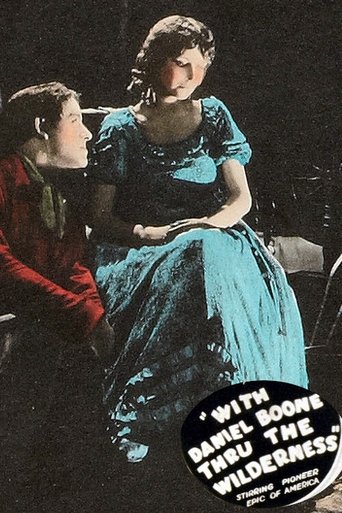
In pre-revolutionary war days, Daniel Boone captures the white renegade Simon Gerty but lets him go. After Boone moves from North Carolina to homestead in Kentucky, Gerty reappears. This time Gerty kills the Chief's son saying it was a white man and this sends the Indians on the warpath.
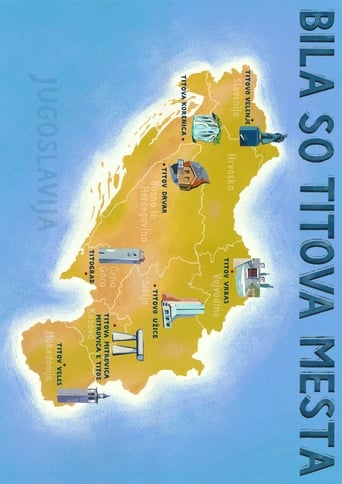
Following the death of Josip Broz Tito (1892–1980), one city in each of the six republics and two autonomous regions of the Socialist Federal Republic of Yugoslavia had the honour to be named after the long-serving president. Having been chosen due to leftist ideas, proletarian character, industrialisation, urbanisation and modernity, they were often privileged. Now located across seven countries, not one of these cities is still named after Tito. We learn the stories of these cities from their residents who look back at the period under Tito’s name. Many of these stories are tragic since the majority of cities have been touched by war.
At the beginning of the 19th century, the plague swept through the Bulgarian lands. Chorbaji Yurdan and his son Yono return from Hadzhilak and find the villagers starving and scared. The Black Plague brings to the fore the greatest human fears and atavistic survival instincts.
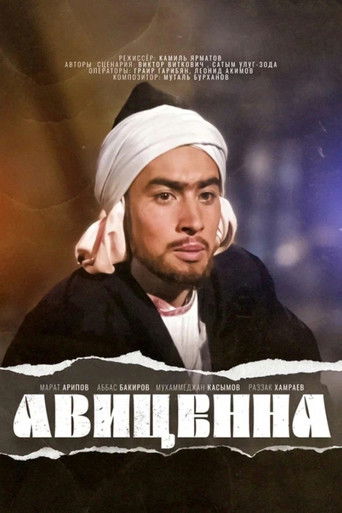
The film is dedicated to the philosopher, doctor, scientist of the East and poet Abu-Ali Ibn-Sin, who lived in Bukhara in the 10th century and was known in Europe under the name of Avicenna. Bukhara. Eighteen-year-old doctor Ibn Sina saves the emir from a fatal illness. Refusing gold and honors, the young man only asks for admission to the emir's book depository as a reward. The study of the works of ancient scientists, philosophers, doctors, observations of nature, numerous experiments increase the knowledge of Ibn Sipa. The treacherous attack on Bukhara by the troops of the ruler of Ghazna Mahmud, who devastated the city and set the world's greatest book depository on fire, forced Ibn-Sina to leave his homeland. After many years of wandering, he, together with his student and assistant Juzjani, comes to the capital of Khorezm, Gurganj, to declare war on the plague raging here...
The thirties, the heyday of Soviet film production. The story of the famed couple's glory — a filmmaker and actress, behind the external well-being of which were hidden strange contradictory relationships and a sense of fear that they carried through their whole lives. The prologue to this story is the 85th anniversary of Lidiya Polyakova, the formerly brightest star in Soviet cinema, who played the main role in all the films of her own husband, director Konstantin Dalmatov. Now in the courtyard there are other times, Dalmatov’s movies are called ideological agitation, and the director himself and his wife are hiding from the world in the country, trying not to let anyone in.
In the Canadian province of Acadia, young Evangeline is betrothed to Gabriel. But before their wedding can take place, the British imprison the men and send them into exile with their lands forfeit to the Crown Evangeline follows the exiled men in hopes of finding her beloved, but even after he and the other Acadians are released in Louisiana, she cannot find him, always arriving at some locale just after he has departed. But she dedicates her life to searching the continent for the man she loves.
Documentary about women's experiences of labour, in factories, mines and dockyards, in the USA during the second World War and how it affected their work and career aspirations once they were encouraged to give up such employment in peacetime.
A tragic story of love and loneliness - this is the unknown life of the great Russian writer Ivan Bunin. The confused love story that involved Bunin, his wife Vera, the young poet Galina Plotnikova, opera singer Marga Kovtun and literary man Leonid Gurov. A work of great honesty and piercing psychology.
The film explores the biography of Taras Shevchenko, the "Kobzar," or more precisely, three editions of his works that were published during his lifetime in 1841, 1844, and 1860. It also highlights related issues, such as the emergence of the alphabet, the textual studies of Shevchenko's works and his friendly correspondence, his first trip to Ukraine, his arrest, and his last journey in 1860, censorship, and secret surveillance. All of these are closely intertwined with the biography of the "Kobzar." In addition, the biographical facts in this book reveal the emergence of an independent modern Ukrainian identity.
In the adaptation of a poem by Taras Shevchenko in the last third of XVIII a small fraction of 300 Cossacks who were enslaving their own people for Turkey and were executed by other Zaporizhian Sich Cossacks are reanimated as living dead at one cold night.
A Spanish boy is shipwrecked and cast ashore in Mexico in the sixteenth century. He is raised as a god by the Tehuan tribe, who have never before seen a white man, and is named Chiapa. Then at manhood he rules the Tehuans. Chiapa loves the priestess Tecolote but she is kidnapped by the Aztec warrior Mexitli, so he follows in the hopes of rescuing her.
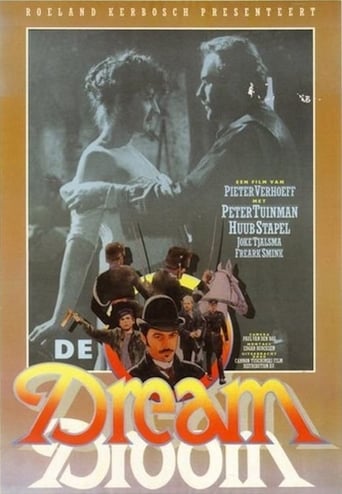
On the turn of the 20th century, in Netherlands, three socialist activists and brothers are imprisoned for a crime they didn't commit. The prosecutor tries to get to the truth, but their comrades and others betray them.
In this experimental collage film, Arthur Lipsett reworks over fifty years of newsreel footage into a surreal audiovisual montage of twentieth-century life. Juxtaposing images of scientific progress, political figures, spectacle, warfare, and everyday leisure, the film becomes a fragmented “time capsule” exploring the rituals and contradictions of modern technological culture.
Activate Your Account!
You must create an account to continue watching