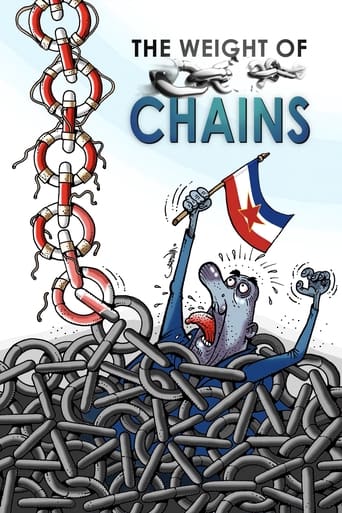
The Weight of Chains is a Canadian documentary film that takes a critical look at the role that the US, NATO and the EU played in the tragic breakup of a once peaceful and prosperous European state - Yugoslavia. The film, bursting with rare stock footage never before seen by Western audiences, is a creative first-hand look at why the West intervened in the Yugoslav conflict, with an impressive roster of interviews with academics, diplomats, media personalities and ordinary citizens of the former Yugoslav republics. This film also presents positive stories from the Yugoslav wars - people helping each other regardless of their ethnic background, stories of bravery and self-sacrifice.
This film is the second of a two-part historical and biographical portrait of the communist politician and anti-fascist Ernst Thälmann. Autumn, 1918: Somewhere on Germany’s western front, Ernst Thälmann, age twenty-four, is calling on his fellow soldiers to put down their guns and join him in the communist struggle at home. When Hamburg’s Police Commissioner blocks a much-needed food shipment to the workers of Petrograd, Ernst battles to see it allowed through. Until his murder on August 18, 1944, Ernst remained true to his political convictions in the face of many setbacks.
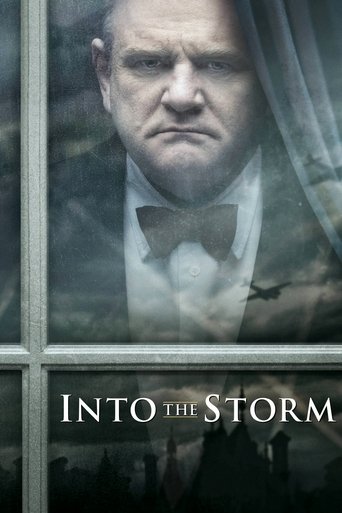
This powerful follow-up to “The Gathering Storm” follows Churchill from 1940 to 1945 as he guided his beleaguered nation through the crucible of the war years--even as his marriage was encountering its own struggles.
When a once famous actor can no longer decipher the past from the present, two devoted caretakers discover that imagination and performance may be the only way to help him reconnect with the world that's left him behind.
Based on the life of the Korean anarchist Park Yeol, the film shows his struggle to counter the massacre of Koreans by the government during the 1923 great Kanto earthquake, focusing on his activities as the leader of the anti-Japanese organization Bulryeongsa and his relationship with Japanese comrade Fumiko Kaneko.
The history of American popular music runs parallel with the history of a Russian Jewish immigrant family, with each male descendant possessing different musical abilities.
Blanca Luz Brum traveled an unusual path, through twentieth-century Latin America, actively participating in the intellectual, political and artistic movements of Uruguay, Chile, Argentina, Peru and Mexico. It is today a symbol of female emancipation in Latin America. The versions about her life are varied and dissimilar, the testimonies of those who knew her, full of contradictions.
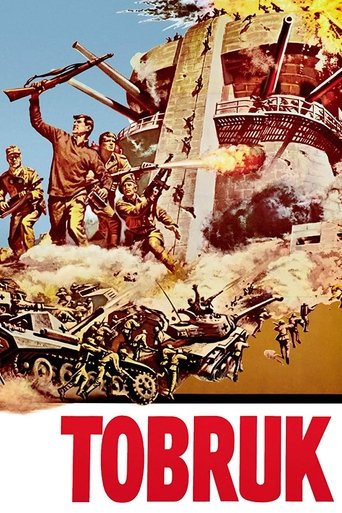
In September 1942, the German Afrika Korps under Rommel have successfully pushed the Allies back into Egypt. A counter-attack is planned, for which the fuel dumps at Tobruk are a critical impediment. In order to aid the attack, a group of British commandos and German Jews make their way undercover through 800 miles of desert, to destroy the fuel dumps starving the Germans of fuel.
The complicated relationship that formed between the FBI analyst Bill Hagmaier and serial killer Ted Bundy during Bundy's final years on death row.
For anyone who has ever wondered just what that mysterious pyramid on the back of the dollar bill really represents, investigative mythologist William Henry digs deep into history to demystify the symbols that the founding fathers employed to represent the new land where anything was deemed possible and the pursuit of a dream was a beacon that attracted citizens from across the globe. From the all-seeing eye to the unmistakable goddess qualities of lady liberty, this release delves deep into the mystical realms of the Kabbalah and the age old practice of alchemy to reveal a group of men with a driving desire to start life in a new land, and a strange connection to such groups as the Freemasons and the Knights Templar.
Fuzuchi Kuraki is a quiet young high school student blessed with immense psychic powers and an ancient sword. He is searching for other magical artifacts with the help of Nanachi Takeo, a college student with latent powers of his own. They delve deep into the dark magic of Izumo, only to discover the secrets buried within the birthplace of all Japanese mythology.
In 1958, in the midst of the Algerian War and two months before the World Cup, the French Football Federation (FFF) discovered on April 15th that nine of its players of Algerian origin had secretly left France to join the headquarters of the National Liberation Front (FLN) in Tunis, where the Provisional Government of the Algerian Republic (GPRA) was based. They chose to leave everything behind—careers, fame, money—to support the FLN cause: the independence of the Algerian people. Their daring escape was worthy of a thriller and made headlines across the international press. For four years, the FLN team toured the world and became the standard-bearer for a people. FIFA refused to recognize the team and threatened federations that played against it with sanctions. Nevertheless, the team made a lasting impression with 57 wins, 14 draws, and 12 losses in 83 matches. Ferhat Abbas, president of the GPRA, told them, "You have gained ten years for the cause of independent Algeria."
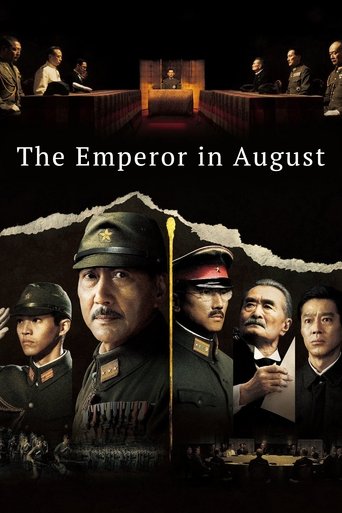
In July 1945, during the end of World War II, Japan is forced to accept the Potsdam Declaration. A cabinet meeting has continued through days and nights, but a decision cannot be made. The U.S. drops atomic bombs on the cities of Hiroshima and Nagasaki, Japan. General Korechika Anami is torn over making the proper decision and the Emperor of Japan worries about his people. Prime Minister Kantaro Suzuki leads the cabinet meeting, while Chief Secretary Hisatsune Sakomizu can't do anything, but watch the meeting. At this time, Major Kenji Hatanaka and other young commissioned officers, who are against Japan surrendering, move to occupy the palace and a radio broadcasting station. The radio station is set to broadcast Emperor Hirohito reading out the Imperial Rescript on the Termination of the War.
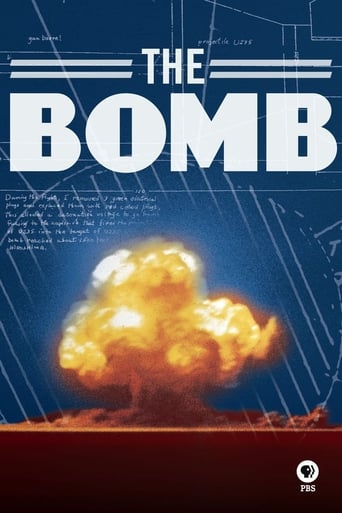
Using masterfully restored footage from recently declassified images, The Bomb tells a powerful story of the most destructive invention in human history. From the earliest testing stages to its use as the ultimate chess piece in global politics, the program outlines how America developed the bomb, how it changed the world and how it continues to loom large in our lives. The show also includes interviews with prominent historians and government insiders, along with men and women who helped build the weapon piece by piece.
Based on the autobiographical work of New Zealand writer Janet Frame, this production depicts the author at various stage of her life. Afflicted with mental and emotional issues, Frame grows up in an impoverished family and experiences numerous tragedies while still in her youth, including the deaths of two of her siblings. Portrayed as an adult by Kerry Fox, Frame finds acclaim for her writing while still in a mental institution, and her success helps her move on with her life.
Paris, June 1940. The de Gaulle couple is confronted with the military and political collapse of France. Charles de Gaulle joins London while Yvonne, his wife, finds herself with her three children on the road of the exodus.
Drs. Bernard Nathanson and Mildred Jefferson square off in a national battle in this untold conspiracy that led to the most famous and controversial court case in history.
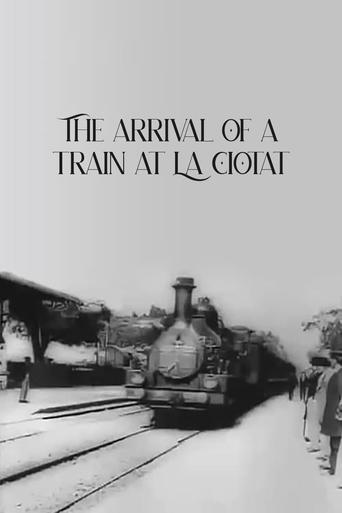
A group of people are standing along the platform of a railway station in La Ciotat, waiting for a train. One is seen coming, at some distance, and eventually stops at the platform. Doors of the railway-cars open and attendants help passengers off and on. Popular legend has it that, when this film was shown, the first-night audience fled the café in terror, fearing being run over by the "approaching" train. This legend has since been identified as promotional embellishment, though there is evidence to suggest that people were astounded at the capabilities of the Lumières' cinématographe.
Defiant's crew is part of a fleet-wide movement to present a petition of grievances to the Admiralty. Violence must be no part of it. The continual sadism of Defiant's first officer makes this difficult, and when the captain is disabled, the chance for violence increases.
During the Texas War of Independence of 1836 American frontiersman and pioneer Jim Bowie pleads for caution with the rebellious Texicans. They don't heed his advice since he's a Mexican citizen, married to the daughter of the Mexican vice-governor of the province and a friend to General Santa Anna since the days they had fought together for Mexico's independence. After serving as president for 22 years, Santa Anna has become too powerful and arrogant. He rules Mexico with an iron fist and he would not allow Texas to self-govern. Bowie sides with the Texans in their bid for independence and urges a cautious strategy, given Santa Anna's power and cunning. Despite the disagreement between the Texicans and Bowie regarding the right strategy they ask Bowie to lead them in a last-ditch stand, at Alamo, against General Santa Anna's numerically superior forces.
Activate your FREE Account!
You must create an account to continue watching