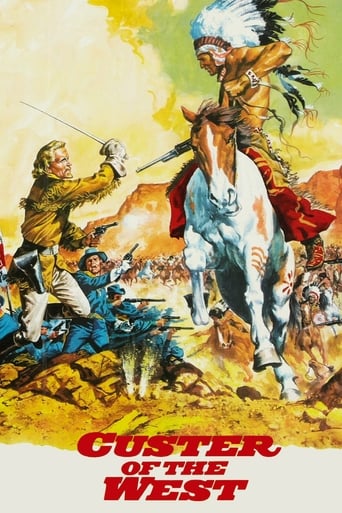
The story of U.S. Army commander George Armstrong Custer, a flamboyant hero of the Civil War who later fought and was exterminated with his entire command by warring Sioux and Cheyenne tribes at the battle of Little Big Horn in 1876.
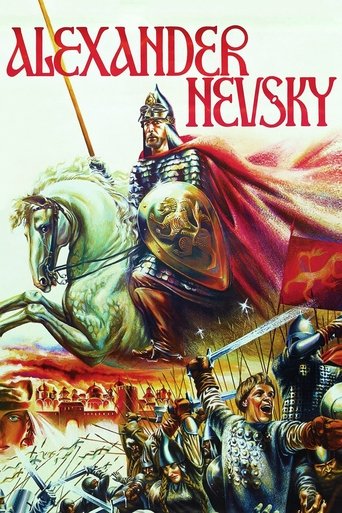
When German knights invade Russia, Prince Alexander Nevsky must rally his people to resist the formidable force. After the Teutonic soldiers take over an eastern Russian city, Alexander stages his stand at Novgorod, where a major battle is fought on the ice of frozen Lake Chudskoe. While Alexander leads his outnumbered troops, two of their number, Vasili and Gavrilo, begin a contest of bravery to win the hand of a local maiden.
The tale of a confrontation with a formidable enemy, poised to seize the throne. It is time for the two kings to set aside their differences and unite in order to protect and preserve their kingdom.
This one is modelled on the painting by Paul Delaroche and is an extension of the stage act known as “tableau vivant”.
In a time when the main source of energy was still coal, there was a man who saw the future in oil. Young Tetsuzo Kunioka who hails from Moji, Kitakyushu, rides out into the oil business, but is faced with numerous challenges and competitors who stand in his way, including domestic suppliers and major western oil companies, or the "oil majors". But Tetsuzo never gave up, however despairing the situation was. He always found a way and paved a new road with his unconventional ideas, eccentric actions, and most of all, his caring heart toward his own men. That style of Tetsuzo's was not something that would ever change, even when the tides were against him in a war-lost Japan.
Dedicated to the development of the oil industry of Soviet Azerbaijan in the background of the first half of the twentieth century, including their selfless work in strengthening the economic and military might of the USSR.
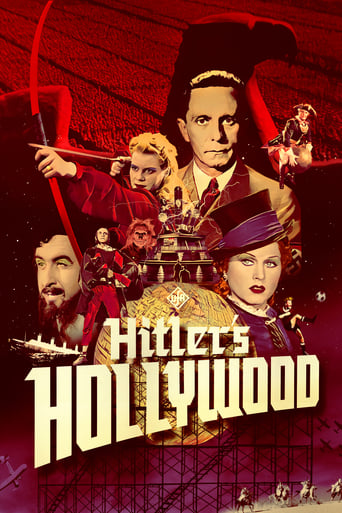
Film journalist and critic Rüdiger Suchsland examines German cinema from 1933, when the Nazis came into power, until 1945, when the Third Reich collapsed. (A sequel to From Caligari to Hitler, 2015.)
Based on the Depression-era bildungsroman memoir of writer A. E. Hotchner, the film follows the story of a boy struggling to survive on his own in a hotel in St. Louis after his mother is committed to a sanatorium with tuberculosis. His father, a German immigrant and traveling salesman working for the Hamilton Watch Company, is off on long trips from which the boy cannot be certain he will return.
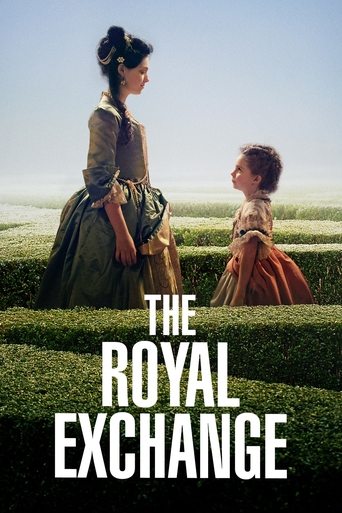
After many years of confrontation, the treasures of Spain and France are empty. In 1721, the regent of France draws up an ambitious plan to inaugurate an era of peace and prosperity that will heal the economies of both nations: his intention is to build a solid network of marriage alliances that will involve four children of very different ages who know nothing of betrayals and power games…
A theatrical film version of Madhouse's Aoi Bungaku Series anime. The film will re-edit the four episodes based on Osamu Dazai's No Longer Human (Ningen Shikkaku) novel, which have character designs inspired by manga artist and novel illustrator Takeshi Obata. This "director's cut" will include new "navigation" footage which is being created specifically for the film with narrator Masato Sakai.
A former spy in the Chinese Nationalist Party falls for an opium-dealing widow, as China is ravaged by war and revolution.
A ronin desperately seeks a way out of financial straits; he allies with the Tosa clan under the ruthless leader Takechi, who quickly takes advantage.
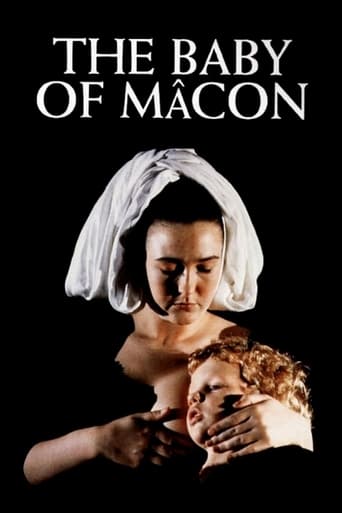
In 17th-century Tuscany, a church play is performed for the benefit of young aristocrat Cosimo. In the play, a grotesque old woman gives birth to a beautiful baby boy. The child's older sister is quick to exploit the situation, selling blessings from the baby, and even claiming she's the true mother by virgin birth. However, when she attempts to seduce the bishop's son, the Church exacts a terrible revenge.
Perhaps the most notorious concubine in Chinese history, Yang Guifei set a pudgy standard of beauty in her days of glory during the Tang dynasty. The Emperor Minghuang was so besotted with the woman that when An Lushan stages his rebellion against the empire, the ruler takes Yang Guifei along with his imperial entourage in an escape to the mountainous area of modern-day Sichuan, and sanctuary of sorts. But the concubine had roused the jealousy of the court and unfortunately for her and to the great sorrow of the king, her brother and others among the king's retainers demanded she be strangled to death while they were still in the mountains. This is the story told in this interesting Taiwanese adaptation by director Li Han-hsiang (Li Hanxiang).
Into an era seething with war and revolution, a man comes with an incredible power to heal a nation...or destroy it. Based on the true story of one of the most powerful and mysterious figures in Russian history.
Benkei, a master fighter and killer, vows never to take another life after his conversion to Buddhism. His faith in pacifism, however, is shaken and ultimately broken by the attacks from a trio of fighters known only as the demons. Taking up his sword once more, he sets out to end their murderous terror.
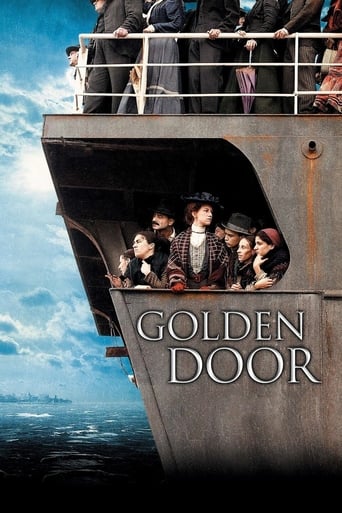
The story is set at the beginning of the 20th century in Sicily. Salvatore, a very poor farmer, and a widower, decides to emigrate to the US with all his family, including his old mother. Before they embark, they meet Lucy. She is supposed to be a British lady and wants to come back to the States. Lucy, or Luce as Salvatore calls her, for unknown reasons wants to marry someone before to arrive to Ellis Island in New York. Salvatore accepts the proposal. Once they arrive in Ellis Island they spend the quarantine period trying to pass the examinations to be admitted to the States. Tests are not so simple for poor farmers coming from Sicily. Their destiny is in the hands of the custom officers.
Corrie and Betsie ten Boom are middle-aged sisters working in their father's watchmaker shop in pre-World War II Holland. Their uneventful lives are disrupted with the coming of the Nazis. Suspected of hiding Jews and caught breaking rationing rules, they are sent to a concentration camp, where their Christian faith keeps them from despair and bitterness.
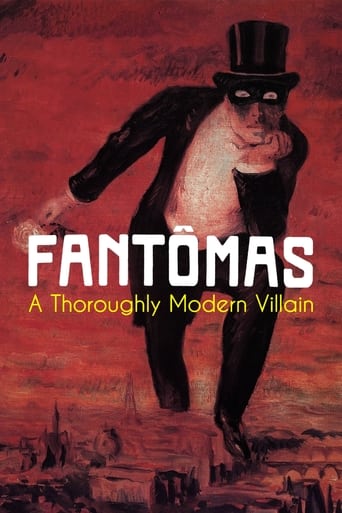
The story of Fantômas, the first villain of modernity, from his birth in 1911 as a novel character to his contemporary vicissitudes, passing through Louis Feuillade, André Hunebelle, surrealism and Moscow.
The story of Allan Kardec, from his days as an educator to his contribution to the spiritist codification.
Activate your FREE Account!
You must create an account to continue watching