Tao and Dong promised each other they’d return to the village where the latter grew up, in Inner Mongolia, before following his family, who left to find better fortune in a large city in Southern China. This voyage is a mere pretext meant to reconnect the two childhood friends, who were separated for ten years. With a rare sensitivity, Tao Gu films this companion, who was lost not only “from view”, approaching him stealthily to capture all of his tragic intensity, his disillusioned generosity. Dong has remained a dreamer besotted with rock, an incensed body struggling to find money (he comes up with a jade business which does not work out), love, sex and, above all, to live following his own conceptions of liberty, under the ambiguous gaze of his parents and his “successful” brother.
Investigative journalist Jeremy Corbell emerges as a key figure in a dangerous fight to uncover the truth about UAPs, driven by rare access and knowledge few possess. As his pursuit deepens, so do the risks of exposing what was never meant to be seen.
45,000 patients died in French psychiatric hospitals between 1939 and 1945. A single site escaped this carnage: the asylum in Saint-Alban, an isolated village in Lozère. What happened there for it to be an exception? Retracing several decades in the history of this important site of psychiatry, using precious archival films and the accounts of those who worked there, Martine Deyres answers this question and, in doing so, shows how the political courage and poetic audacity that were practised there contributed to changing medicine and society’s perception on madness. Intersecting in the crucible of this movement called “institutional psychotherapy” were members of the Resistance, artists, doctors and philosophers—including Paul Eluard, Tristan Tzara and Georges Canguilhem.
The Spanish Civil War (1936-1939) caused a great impression on the lives of most of the American artists of that era, so many movies were made in Hollywood about it. The final defeat of the Spanish Republic left an open wound in the hearts of those who sympathized with its cause. The eventful life of screenwriter Alvah Bessie (1904-1985), one of the Hollywood Ten, serves to analyze this sadness, the tragedy of Spain and its consequences.
This remarkable journey across our planet and universe explores how meteorites, shooting stars, and deep impacts have awoken our wonder about other realms—and make us rethink our destinies.
Two inmates at Canelones prison fight for a better future, running a voluntary rehabilitation programme.
A chronicle of the violence that occurred in much of the African continent throughout the 1960s. As many African countries were transitioning from colonial rule to other forms of government, violent political upheavals were frequent. Revolutions in Zanzibar and Kenya in which thousands were killed are shown, the violence not only political; there is also extensive footage of hunters and poachers slaughtering different types of wild animals.
A young man narrated the details of his dream from last night to his father about the celebration of demonstration, anger, and graduation.
John Calder, Samuel Beckett’s British publisher, moved to Montreuil, a town to the east of Paris, where Calder met with Billie Whitelaw, the muse, so to speak, of Beckett’s stage work, who is now relegated to a nursing home for actors.
Six years ago, Charity Jimohe left Nigeria for France. After ten months of forced prostitution to pay off a debt of 35,000 euros contracted with the traffickers who had brought her here, she walked through the door of a police station in Nantes to denounce the members of her prostitution ring.
Waving the flag that states every film is political, Vincent Carelli visibilizes in this documentary the cause of the Guarani-Kaiowá: a group of indigenous people that fear their lands, located in the Mato Grosso do Sul, will be confiscated by the State. A territorial conflict born more than one hundred years ago, during the Paraguay war. While fighting against the Brazilian Congress in order not to be evicted from their homes, the 50.000 indigenous people demand the demarcation of the space that belongs to them. With some rigorous investigative work, the Brazilian director tells with his own voice of the social and political injustices suffered by the Guarani people through material he filmed over the course of more than forty years. The archive images, both color and black and white, reveal the crudeness with which they coexist every day: among the violation of their civil rights and the guts with which they confront the usurpers.
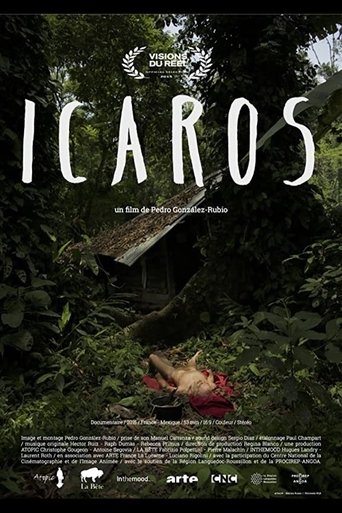
In the late 1970s, Marcel fled Catalonia to avoid conscription into the Spanish military. For 30 years he has been living in the tropical forests of Costa Rica, where he hosts ayahuasca ceremonies for young seekers from the West.
“I was really young when I was first raped. I thought of telling this story someday, the story behind this picture. I lacked the courage. If the film could speak for me, then, I could.”
Commissioned by the Smithsonian's National Museum of Natural History, OCEAN ODYSSEY takes viewers on an undersea journey to remote and magical places. Follow Feodor Pitcairn, a pioneer in underwater HD cinematography, as he explores the marine ecosystems of the Galápagos Islands, Raja Ampat in Indonesia, the Maldives, the Azores, Hawai'i, the Caribbean, the Bahamas, the Channel Islands, British Columbia, the Gulf of Mexico, French Polynesia and Belize. Filmed in high definition, with commentary by Feodor Pitcairn and fellow cinematographer Bob Cranston, OCEAN ODYSSEY is a stunning film that reveals some of the most amazing underwater footage ever seen and offers reflections by two of the most prominent cinematographers at work today.
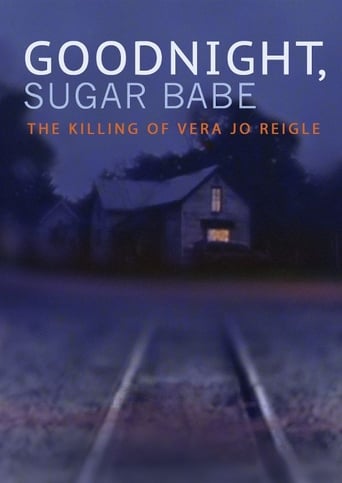
The discovery of the mutilated body of a mentally challenged young mother begins a journey into madness that is so unbelievable the mastermind behind the crime ultimately got away with murder. Revealing for the first time how and why it happened filmmaker J. David Miles ventures into the insane mind of a small town crime family's matriarch and uncovers a conspiracy that continues to elude law enforcement to this very day. By going straight to the murderers themselves for interviews it is a true crime investigation like you have never seen, unveiling an alternate motive to what was presented in the courtroom that is as bizarre as it is heartbreaking.
A pro-Republican documentary short made during the Spanish Civil War.
In November 15, 2017, the painting Salvator Mundi, attributed to Italian artist Leonardo da Vinci (1452-1519), was sold for an unprecedented $450 million. An examination of the dirty secrets of the art world and the surprising story of how a work of art is capable of upsetting both personal and geopolitical interests.
Alberto Luis Galateo was an Argentinian soccer star of the 1930s. But at home, he was abusive towards his family. One Sunday afternoon, three shots stirred up his quiet neighborhood.
Ivanilda seeks evidence to prove that her husband, who has disappeared since 1975, was arrested by the Brazilian government. Romildo searches for his brother's body in a cemetery in the suburb of Rio de Janeiro. Mothers cry for their children, murdered by the police in the slums. They belong to the group "Tortura Nunca Mais", which, interacting between a traumatic memory and oblivion, brings up the memory of recent events. They also reveal the selectivity of official history and build a political memory. They think of the past so that they can free the future from the ghosts they still chase in the present.
Dom Barbudo, a pioneer in the São Paulo gay and BDSM community and elected first Mister Leather Brasil in 2017, prepares to pass on the mantle to one of the four contestants in the second edition of the contest.
Activate Your Account!
You must create an account to continue watching