This documentary praises comedian Richard Pryor by showing fragments of various shows Pryor made and having famous comedians talk about the importance and greatness of Pryor. Different themes are reviewed this way. Among others, they are the use of the word nigger, the way Pryor talked about racism, the fact Pryor talked openly about his own faults on-stage and the fact he didn't mince matters.
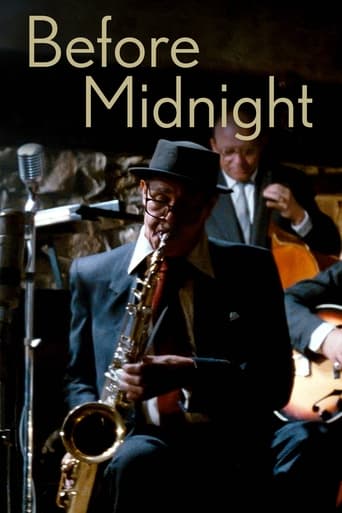
Filmmaker Jean Achache shot extensively on the set of ’Round Midnight. This documentary presents that material for the first time, including footage of director Bertrand Tavernier, production designer Alexandre Trauner, and other members of the cast and crew.
After the World War I, Mussolini's perspective on life is severely altered; once a willful socialist reformer, now obsessed with the idea of power, he founds the National Fascist Party in 1921 and assumes political power in 1922, becoming the Duce, dictator of Italy. His success encourages Hitler to take power in Germany in 1933, opening the dark road to World War II. (Originally released as a two-part miniseries. Includes colorized archival footage.)
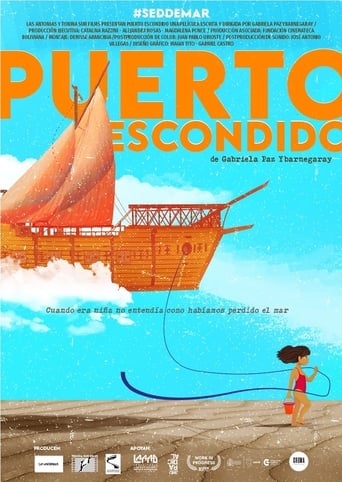
In 1879, Bolivia lost its access to the sea in a war. When I was a child I did not understand how we had lost it; he thought the Chileans had taken him away in buckets. It is a diary towards interior landscapes, myths, characters and contradictions in a country that relives this loss every day.
An involved behind-the-scenes documentary that focuses on the High Definition cameras used for the movie as well as intimate interviews with the cast and crew. It is a short featurette, but never fails to be interesting.
In The Beckoning Silence, Joe Simpson, whose amazing battle for survival featured in the multi-award winning "Touching the Void", travels to the treacherous North Face of the Eiger to tell the story of one of mountaineering's most epic tragedies. As a child, it was this story and that of one of the climbers in particular, that first captured Simpson's imagination and inspired him to take up mountaineering.
Cars! Film! Cars on film! Film involving cars! You get the idea. It’s basically a DVD involving those two things. Gasp as we find the perfect drift car for a gritty, Bourne Identity-style chase! Cheer as we stage a race for all those unsung heroes of the movie industry! Whoop as we find the car that makes the perfect dramatic exhaust note to dub onto an action sequence! Make some other sort of noise we haven’t thought of yet as we re-attempt the classic Man With The Golden Gun barrel roll, having frankly made a total hash of it when we first tried it on telly! All this plus a vast fleet of sexy supercars and a man with a jet pack racing a Skoda. Top Gear At The Movies. It’s better than an actual movie. Probably. Actually, it depends on which movie we’re talking about. Truth is, you’d be better judging this on a case-by-case basis. Why not write to us with the name of a film and we’ll tell you whether this DVD is better or not. Actually, on second thoughts, don’t.
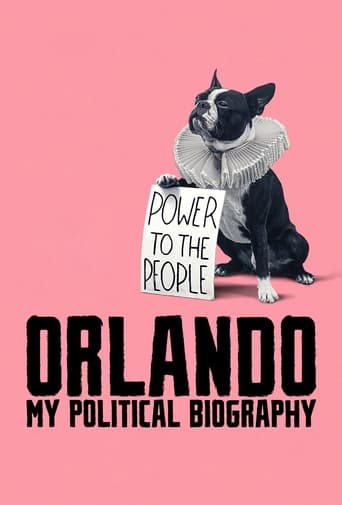
Virginia Woolf's 1928 novel "Orlando: A Biography" follows the centuries-spanning life of a young nobleman who awakens to find that they are a woman. Almost a century after its publication, Paul B. Preciado claims that fiction has become reality and Orlando's story lies at the root of all contemporary trans and non-binary life.
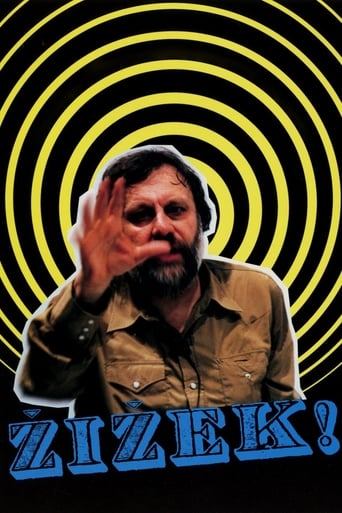
ŽIŽEK! trails the thinker as he crisscrosses the globe, racing from New York City lecture halls, through the streets of Buenos Aires, and even stopping at home in Ljubljana, Slovenia. All the while Žižek obsessively reveals the invisible workings of ideology through his unique blend of Lacanian psychoanalysis, Marxism, and critique of pop culture.
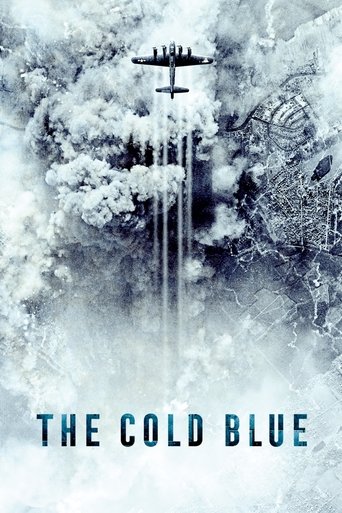
A meditation on youth, war and stunning bravery, featuring footage, taken from the National Archives, from the documentary filmed in 1943 by legendary Hollywood director William Wyler about the famous Memphis Belle flying fortress and the gripping narration from some of the last surviving B-17 pilots.
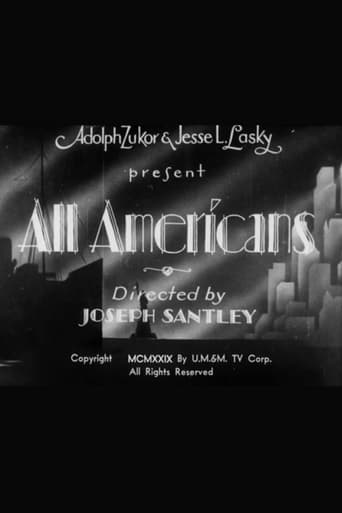
People of all nations come to America, sing a native song and go into a “melting pot”. This scene was later used in King of Jazz (1930).
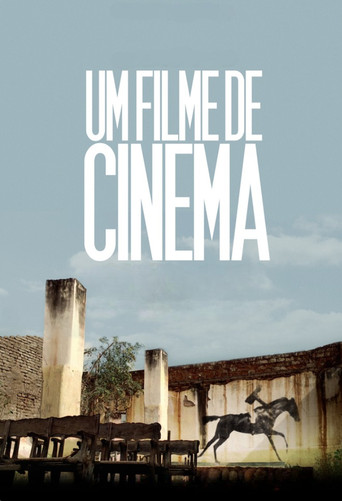
An abandoned tumbledown theater in the outback of Paraíba state is the initial setting of a film about cinema, which explores the testimonials of the novelist and playwright Ariano Suassuna and other filmmakers such as Ruy Guerra, Julio Bressane, Ken Loach, Andrzej Wajda, Karim Ainouz, José Padilha, Hector Babenco, Vilmos Zsigmond, Béla Tarr, Gus Van Sant and Jia Zhangke. They all respond to two basic questions: why do they make movies and why do they serve the seventh art. The filmmakers share their thoughts about time, narrative, rhythm, light, movement, the meaning of tragedy, the audience‘s desires and the boundaries with other forms of art.
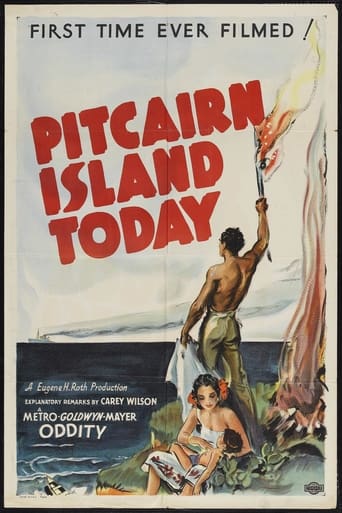
This visit to Pitcairn Island in the South Pacific Ocean shows that life for the residents has changed little in the years since Fletcher Christian and his fellow mutineers on HMS Bounty, along with several Tahitian natives, landed here. The island is self-sufficient and has few visitors. Among the islanders we see at work is Fletcher Christian's great-grandson.
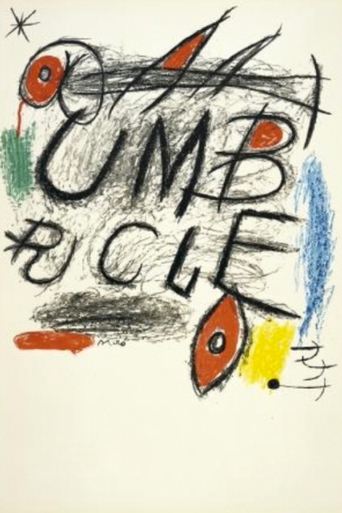
This film turns on two basic axes: the inquiry into ways of cinematographic representation and a critical image of official Spain at the time of the Franco dictatorship. “Montage of attractions” and Brechtianism in strong doses. Umbracle is made up of fragments (some are archive footage) that resound rather than progress by unusual links, with dejá vu scenes that promise us more but remain tensely unfinished. Jonathan Rosembaun said: “few directors since Resnais have played so ruthlessly with the unconscious narrative expectations to bug us”. Learning from the feeling of strangeness caused by Rossellini as he threw well known actors into savage scenery in southern Europe. Portabella makes Christopher Lee wander around a dream-like Barcelona. Without a doubt Portabella’s most structurally complex and most profoundly political film, that is ferociously poetic.
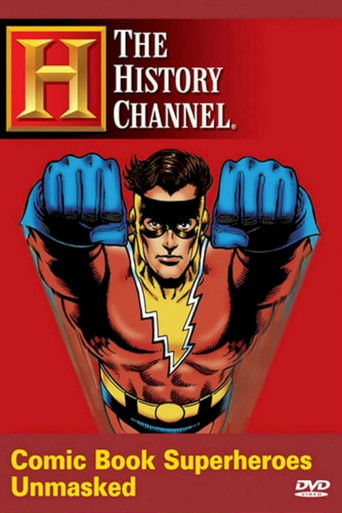
Industry insiders like Stan Lee and Neil Gaiman (The Sandman) reflect on the way their colorful creations reflect society at large. They have spread from the pulpy pages of nickel comics to Saturday morning cartoons, the big screen and beyond. They have evolved from simple, All-American heroes to tortured, complicated characters reflecting the dreams, desires and fears of modern society. From Superman to The Sandman, Comic Book Superheroes Unmasked is a fascinating, feature-length look at the evolution of an art form that has proved remarkably adaptable and enduring. Filled with classic images from DC and Marvel Comics as well as extensive interviews with modern masters of the graphic novel like Neil Gaiman and Frank Miller (The Dark Knight Returns), this documentary, originally aired on the History Channel, goes far beyond the superficial escapist fantasies to probe the forces that shaped the characters who have become legend...
Featuring never-before-seen concert footage and narration by Jeff Bridges, this documentary explores CCR's humble origins and meteoric rise. It includes the entire set recorded at the Royal Albert Hall on April 14th, 1970.
Canyoneering is the sport of descending canyons by means of hiking, climbing, rappelling and swimming. Relatively obscure, the sport was brought to the mainstream in 2003 with the news of Aron Ralston who had severed his own arm while trapped in a canyon. Experiencing an overnight spike in popularity by the late 90s - a result of information appearing on the internet - the sport became inundated with thrill-seekers of all backgrounds and skill levels. Facing a new era of off-the-couch recreationalists, three influential participants, a canyoneering instructor, pioneer, and guidebook author each respond to a growing interest in the incredibly dangerous activity. Gorging employs the story of canyoneering to examine larger questions about the pursuit of thrills and the consequences that follow.
Mark Rappaport's creative bio-pic about actress Jean Seberg is presented in a first-person, autobiographical format. He seamlessly interweaves cinema, politics, American society and culture, and film theory to inform, entertain, and move the viewer. Seberg's many marriages, as well as her film roles, are discussed extensively. Her involvement with the Black Panther Movement and subsequent investigation by the FBI is covered. Notably, details of French New Wave cinema, Russian Expressionist (silent) films, and the careers of Jane Fonda, Vanessa Redgrave, and Clint Eastwood are also intensively examined. Much of the film is based on conjecture, but Rappaport encourages viewers to re-examine their ideas about women in film with this thought-provoking picture.
The inspiring and tumultuous story of 85-year old surfer, health advocate and sex guru, Dr. Dorian "Doc" Paskowitz, his wife Juliette, and their nine children who were all home-schooled and raised in a small camper on the beach, where they surfed and had to adhere to the strict diet and lifestyle of animals in the wild.
Activate your FREE Account!
You must create an account to continue watching