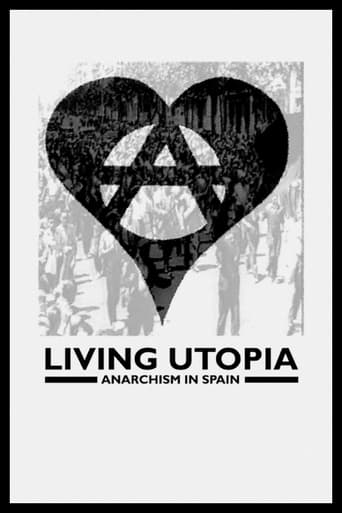
A retrospective look at the anarcho-syndicalist and anarcho-communist experience in Spain from 1930 until the end of the Civil War in 1939.
Spain in the 1930s is the place to be for a man of action like Robert Jordan. There is a civil war going on and Jordan—who has joined up on the side that appeals most to idealists of that era—has been given a high-risk assignment up in the mountains. He awaits the right time to blow up a crucial bridge in order to halt the enemy's progress.
David Carr is a British Communist who is unemployed. In 1936, when the Spanish Civil War begins, he decides to fight for the Republican side, a coalition of liberals, communists and anarchists, so he joins the POUM militia and witnesses firsthand the betrayal of the Spanish revolution by Stalin's followers and Moscow's orders.
Salamanca, Spain, 1936. In the early days of the military rebellion that began the Spanish Civil War (1936-39), writer Miguel de Unamuno supports the uprising in the hope that the prevailing political chaos will end. But when the confrontation becomes bloody, Unamuno must question his initial position.
Spain, April 15, 1939. With the Civil War concluded, and with the intention of celebrating his victory, General Franco attends a dinner with his generals at the Palace Hotel.
Embark on an epic journey through time and faith with 'The Apocalypse of Saint John.' Join the Apostle John in a stunning visual narrative that unravels the visions of the End Times. Experience each vision like never before, with striking visual effects and epic scenes that immerse you in the apocalyptic narrative.
At the tense 1938 Munich Conference, former friends who now work for opposing governments become reluctant spies racing to expose a Nazi secret.
Spain, 1973. Dictator Francisco Franco has ruled the country since 1939 with an iron fist; but he is now a very old and sick man. The future of the weakened regime is in danger. Admiral Carrero Blanco is his natural successor. The Basque terrorist gang ETA decides that he must die to prevent the dictatorship from continuing.
The buried memories of the Spanish Civil War are unearthed as a woman searches for the remains of her grandfather's father and discovers the story of an idealistic young teacher from Tarragona.
At the outbreak of the Spanish Civil War, the nun Maria is forced to flee her convent. She takes refuge in a brothel, until it is liberated by a woman's anarchist group. Maria joins the group and eventually goes to the front. The women's group faces the problems of fighting not only the nationalists, but also factions on the left seeking to impose a more traditional military structure.
A small village in Huelva, Andalusia, Spain, 1936. Higinio and Rosa have been married only for a few months when the Civil War breaks out. Higinio, being afraid of possible reprisals from the rebel faction, decides to use a hole dug in his own house as a temporary hideout.
Spanish photographer Francesc Boix, imprisoned in the Mauthausen-Gusen concentration camp, works in the SS Photographic Service. Between 1943 and 1945, he hides, with the help of other prisoners, thousands of negatives, with the purpose of showing the freed world the atrocities committed by the Nazis, exhaustively documented. He will be a key witness during the Nuremberg Trials.
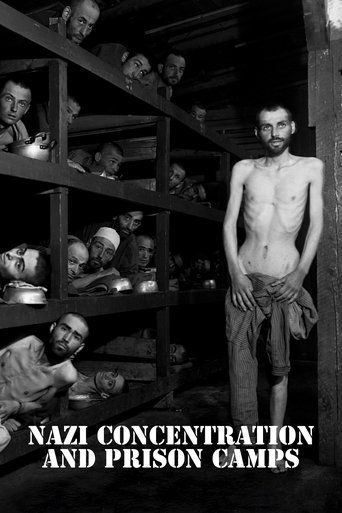
When Allied forces liberated the Nazi concentration camps in 1944-45, their terrible discoveries were recorded by army and newsreel cameramen, revealing for the first time the full horror of what had happened. Making use of British, Soviet and American footage, the Ministry of Information’s Sidney Bernstein (later founder of Granada Television) aimed to create a documentary that would provide lasting, undeniable evidence of the Nazis’ unspeakable crimes. He commissioned a wealth of British talent, including editor Stewart McAllister, writer and future cabinet minister Richard Crossman – and, as treatment advisor, his friend Alfred Hitchcock. Yet, despite initial support from the British and US Governments, the film was shelved, and only now, 70 years on, has it been restored and completed by Imperial War Museums under its original title "German Concentration Camps Factual Survey".
A chronicle of the Cristeros War (1926-1929), which was touched off by a rebellion against the Mexican government's attempt to secularize the country.
In a remote South American colony in the late 18th century, officer Zama of the Spanish crown waits in vain for a transfer to a more prestigious location. He suffers small humiliations and petty politicking as he increasingly succumbs to lust and paranoia.
Hildegart is conceived and educated by her mother Aurora to be the woman of the future, to become one of the most brilliant minds of Spain in the 1930s and one of the European references on female sexuality.
The chronicle of the political tension in Chile in 1973 and of the violent counter revolution against the democratically elected government of Salvador Allende.
Ernesto Guevara, known as 'Che', leads a group of Cuban exiles under Fidel Castro in a revolution to overthrow Fulgencio Batista, the dictator of Cuba.
The history of cinematic sound, told by legendary sound designers and visionary filmmakers.
Activate your FREE Account!
You must create an account to continue watching