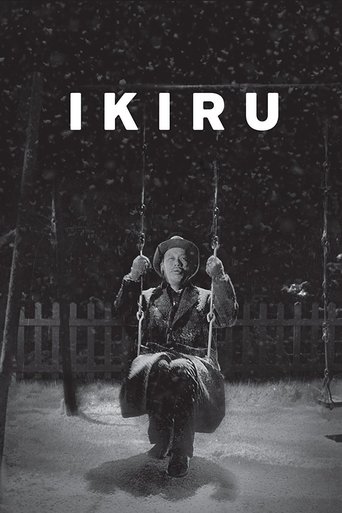
Kanji Watanabe is a middle-aged man who has worked in the same monotonous bureaucratic position for decades. Learning he has cancer, he starts to look for the meaning of his life.
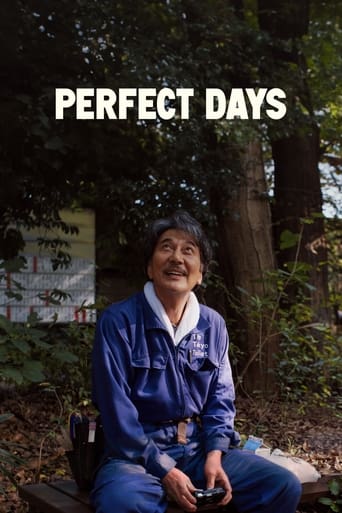
Hirayama is content with his life as a toilet cleaner in Tokyo. Outside of his structured routine, he cherishes music on cassette tapes, books, and taking photos of trees. Through unexpected encounters, he reflects on finding beauty in the world.
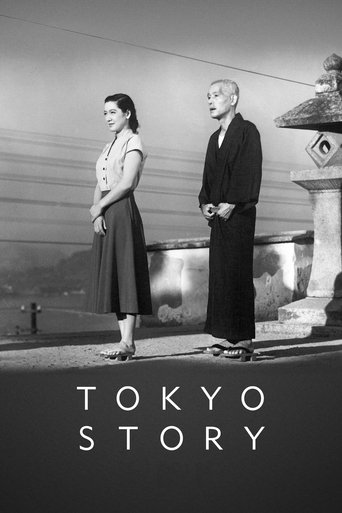
The elderly Shukishi and his wife, Tomi, take the long journey from their small seaside village to visit their adult children in Tokyo. Their elder son, Koichi, a doctor, and their daughter, Shige, a hairdresser, don't have much time to spend with their aged parents, and so it falls to Noriko, the widow of their younger son who was killed in the war, to keep her in-laws company.
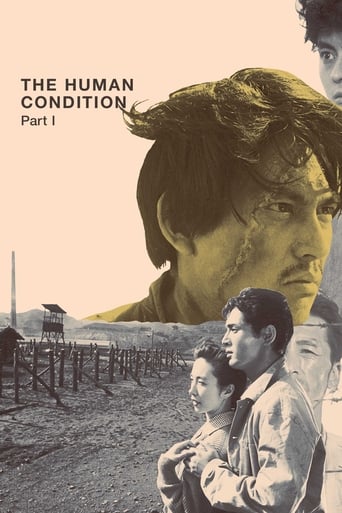
After handing in a report on the treatment of Chinese colonial labor, Kaji is offered the post of labour chief at a large mining operation in Manchuria, which also grants him exemption from military service. He accepts and moves with his newlywed wife Michiko, but when he tries to put his ideas of more humane treatment into practice, he finds himself at odds with scheming officials, cruel foremen, and the military police.
In this extraordinary story of an ordinary man, Charles 'Chuck' Krantz experiences the wonder of love, the heartbreak of loss, and the multitudes contained in all of us.
Three people — a blue-collar American, a French journalist and a London school boy — are touched by death in different ways.
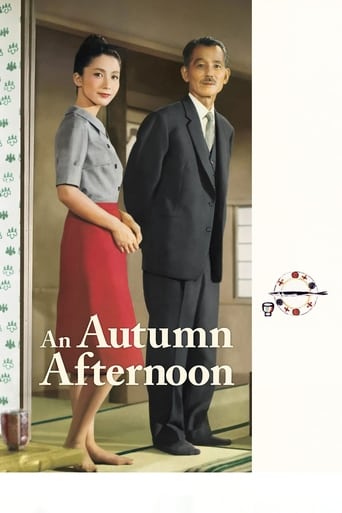
Widower Shuhei Hirayama's caretaker is his 24-year-old daughter, Michiko. Gradually, he comes to realize that Michiko should not be obliged to look after him for the rest of his life, so he arranges a marriage for her.
Four women in their thirties reevaluate their relationships, both shared and private, after a startling revelation concerning one's marriage forces each of them to ask one of life's biggest questions: "Am I who I want to be?"
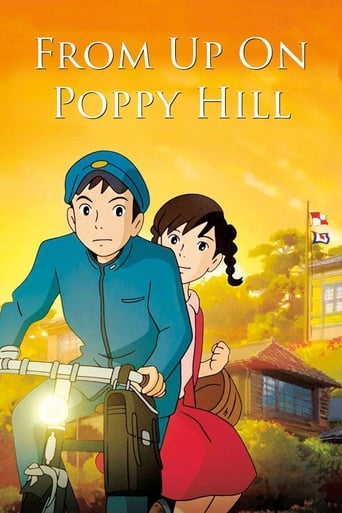
Yokohama, 1963. Japan is picking itself up from the devastation of World War II and preparing to host the 1964 Olympics—and the mood is one of both optimism and conflict as the young generation struggles to throw off the shackles of a troubled past. Against this backdrop of hope and change, a friendship begins to blossom between high school students Umi and Shun—but a buried secret from their past emerges to cast a shadow on the future and pull them apart.
In Japan's Aokigahara Forest, a troubled teacher meets a mysterious lost stranger who takes him on a life-changing journey of love and redemption.
Totsuko is a high school student with the ability to see the 'colors' of others. Colors of bliss, excitement, and serenity, plus a color she treasures as her favorite. Kimi, a classmate at her school, gives off the most beautiful color of all. Although she doesn't play an instrument, Totsuko forms a band with Kimi and Rui, a quiet music enthusiast they meet at a used bookstore in a far corner of town. As they practice at an old church on a remote island, music brings them together, forming friendships and stirring affections.
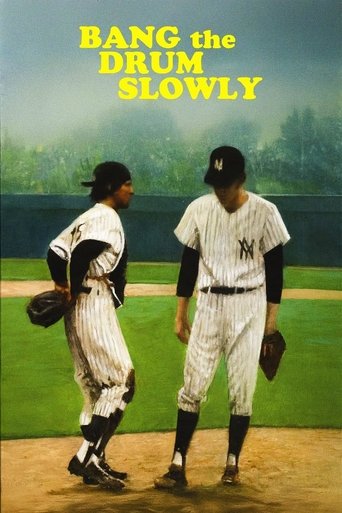
The story of a New York pro baseball team and two of its players. Henry Wiggen is the star pitcher and Bruce Pearson is the normal, everyday catcher who is far from the star player on the team and friend to all of his teammates. During the off-season, Bruce learns that he is terminally ill, and Henry, his only true friend, is determined to be the one person there for him during his last season with the club. Throughout the course of the season, Henry and his teammates attempt to deal with Bruce's impending illness, all the while attempting to make his last year a memorable one.
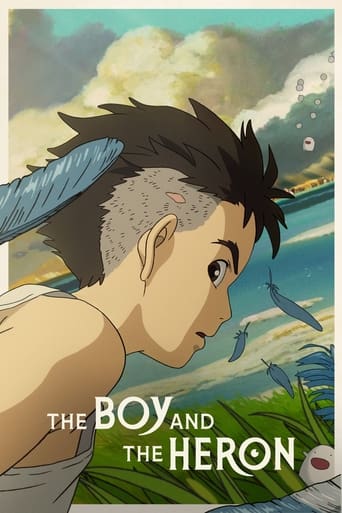
While the Second World War rages, the teenage Mahito, haunted by his mother's tragic death, is relocated from Tokyo to the serene rural home of his new stepmother Natsuko, a woman who bears a striking resemblance to the boy's mother. As he tries to adjust, this strange new world grows even stranger following the appearance of a persistent gray heron, who perplexes and bedevils Mahito, dubbing him the "long-awaited one."
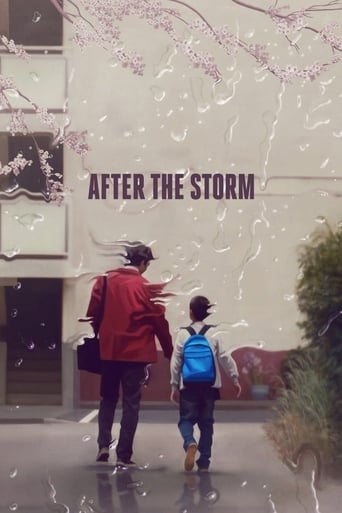
Ryota is an unpopular writer although he won a literary award 15 years ago. Now, Ryota works as a private detective. He is divorced from his ex-wife Kyoko and he has an 11-year-old son Shingo. His mother Yoshiko lives alone at her apartment. One day, Ryota, his ex-wife Kyoko, and son Shingo gather at Yoshiko's apartment. A typhoon passes and the family must stay there all night long.
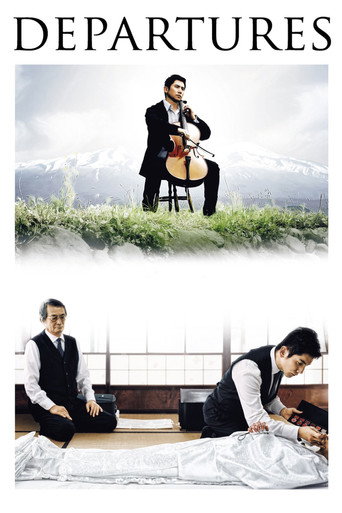
Daigo, a cellist, is laid off from his orchestra and moves with his wife back to his small hometown where the living is cheaper. Thinking he’s applying for a job at a travel agency he finds he’s being interviewed for work with departures of a more permanent nature – as an undertaker’s assistant.
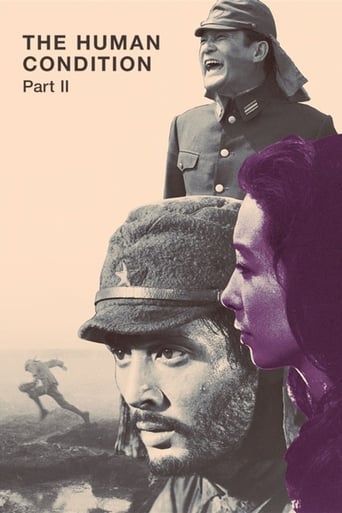
Kaji, sent to the Japanese army labeled Red, witnesses cruelties in the army and revolts against the abusive treatment against a fellow recruit. He also sees his friend Shinjô defecting to the Russian border, and he ends in the front to fight a lost battle against the Russian tanks division.
Frank, a retired Irish seaman, and Walter, a retired Cuban barber, are two lonely old men trapped in the emptiness of their own lives. When they meet in a park Frank is able to start a conversation after several attempts. They begin to spend time together and become friends. But because of their different characters they often quarrel with each other and finally seperate after Frank misbehaves to Walter's friend Elaine.
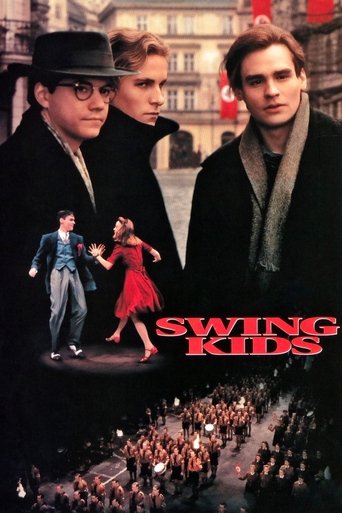
The story of a close-knit group of young kids in Nazi Germany who listen to banned swing music from the US. Soon dancing and fun leads to more difficult choices as the Nazis begin tightening the grip on Germany. Each member of the group is forced to face some tough choices about right, wrong, and survival.
A dying 15-year-old boy draws stories of an invincible superhero as he struggles with his mortality.
Activate Your Account!
You must create an account to continue watching