Rome, 1825. Bishop Rivarola and Colonel Nardoni are in charge of suppressing the liberal revolution. Shoemaker Cornacchia got the information that the liberal Filippo Spada is a spy and is going to denounce his revolutionary companions.
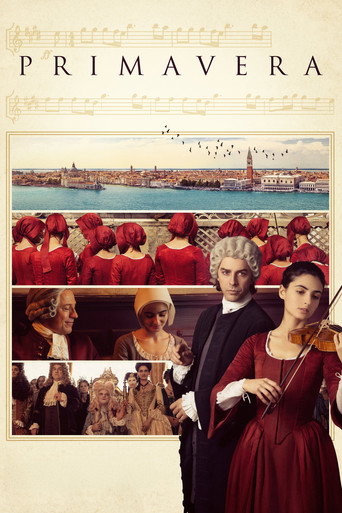
1828. After witnessing the brutal repression of revolutions in monarchist South, three young friends join Giuseppe Mazzini's patriotic cause, seeking to finally unify Italy under a republican government. Their idealism will clash with the inevitable disillusionment as they grow apart over the following decades.
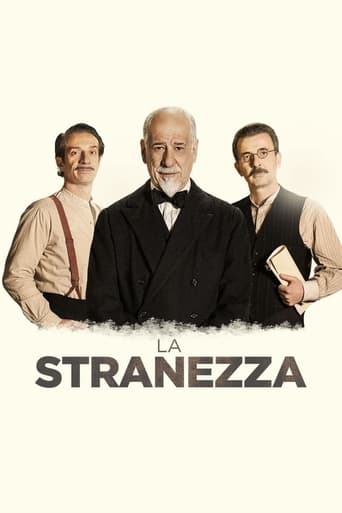
During a trip to Sicily in 1920, Luigi Pirandello meets two gravediggers-turned-playwrights rehearsing a play with their amateur dramatics. Pirandello takes an interest in the odd couple, having been suffering from writer's block while working on his eventual masterpiece, Six Characters in Search of an Author.
In 1867, with Garibaldi's forces close to bringing Rome into the Italian kingdom, Monsignor Colombo da Priverno, a world-weary judge on the papal court, wants to resign, disgusted by the violence to which the papacy resorts to hold secular power.
Elba island, 1814. Martino is a young teacher, idealist and strongly anti Napoleon, in love with the beautiful and noble Baroness Emily. The young man finds himself serving as librarian to the Great Emperor in exile, whom he deeply hates, yet soon begins recording Napoleon's memoirs, getting to know and learning to value the man behind the myth. Among seductions and affairs, expectations and fears, he will craft a precise portrait that nevertheless will not manage to hide a final, inevitable, disappointment.
The story of Vera Atkins, a crafty spy recruiter, and two of the first women she selects for Churchill's "secret army": Virginia Hall, a daring American undaunted by a disability and Noor Inayat Khan, a pacifist. These civilian women form an unlikely sisterhood while entangled in dangerous missions to turn the tide of the war.
Fr. Hugh O'Flaherty is a Vatican official in 1943-45 who has been hiding downed pilots, escaped prisoners of war, and Italian resistance families. His activities become so large that the Nazis decide to assassinate him the next time he leaves the Vatican.
In autumn of 1526, the Emperor, Charles V, sends his German landsknechts led by Georg von Frundsberg to march towards Rome. The inferior papal armies, commanded by Giovanni de'Medici, try to chase them in the midst of a harsh winter. Nevertheless, the Imperial armies manage to cross the rivers along their march and get cannons thanks to the maneuvers of its Lords. In a skirmish, Giovanni de'Medici is wounded in the leg by a falconet shot. The attempts to cure him fail and he dies. The Imperial armies assault Rome. The film is beautifully but unassumingly set, and shows the hard conditions in which war is waged and its lack of glory. It ends straightforwardly with the declaration made after the death of Giovanni de'Medici by the commanders of the armies in Europe of not using again fire weapons because of their cruelty.
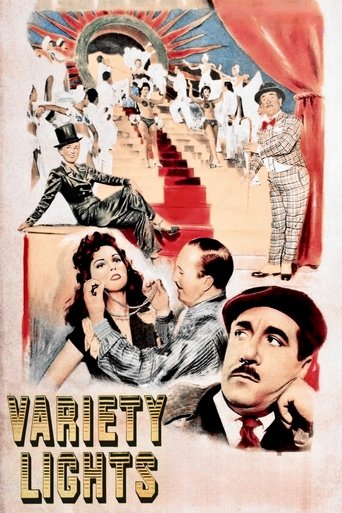
In Italy, Checco Dal Monte manages a troupe of traveling performers with plenty of heart but minimal talent. At a small town engagement, he encounters the starry-eyed, gorgeous Lily Antonelli, and hires her as a dancer on the show. Vivacious Lily quickly sells out crowds and earns the resentment of Checco's mistress, Melina Amour, but the fledgling performer has far bigger ambitions and soon sets her sights on a higher-profile role.
In 1970s Rome, a filmmaker gathers actresses for a new project, which triggers memories of his past working in a Roman costume shop, run by Alberta and Gabriella, navigating personal and professional challenges while creating costumes for a major film.
On the evening of March 31, 1943, legendary lyricist Lorenz Hart confronts his shattered self-confidence in Sardi’s bar as his former collaborator, Richard Rodgers, celebrates the opening night of his ground-breaking hit musical, “Oklahoma!”
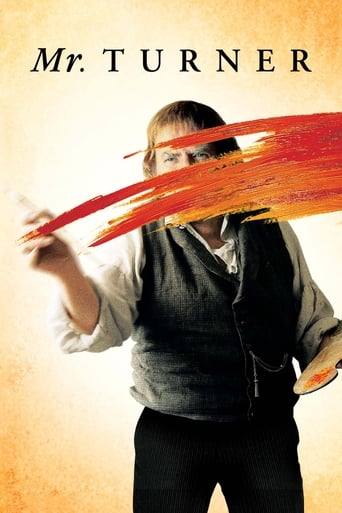
Eccentric British painter J.M.W. Turner lives his last 25 years with gusto and secretly becomes involved with a seaside landlady, while his faithful housekeeper bears an unrequited love for him.
A dramatization, in modern theatrical style, of the life and thought of the Viennese-born, Cambridge-educated philosopher Ludwig Wittgenstein, whose principal interest was the nature and limits of language. A series of sketches depict the unfolding of his life from boyhood, through the era of the first World War, to his eventual Cambridge professorship and association with Bertrand Russell and John Maynard Keynes. The emphasis in these sketches is on the exposition of the ideas of Wittgenstein, a homosexual, and an intuitive, moody, proud, and perfectionistic thinker generally regarded as a genius.
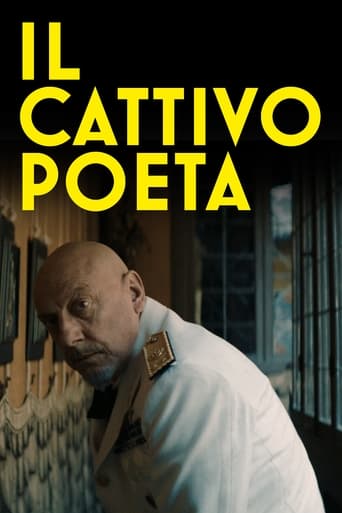
1936. Giovanni Comini, the youngest Federal in Fascist Italy, is summoned to Rome for a delicate mission: to surveil aging national poet Gabriele D'Annunzio, whose increasingly restless behavior Mussolini fears could damage his alliance with Nazi Germany. However, after spending time with D'Annunzio, Comini finds himself torn between loyalty to the Party and his fascination with the poet, who will put his burgeoning career at risk.
Like all sixteen-year-olds, Leo prefers the company of friends, motorbike rides and music to school. None of the teachers seem to be able to arouse his interest until the arrival in his class of a young history and philosophy substitute who, with his modern methods, helps him see the world with different eyes. In love with Beatrice, the ethereal girl of his dreams, Leo divides the world by colours. Beatrice is the red of love but he is forced to confront his own beliefs and fears when he discovers that the girl is suffering from leukemia, a disease that he links to white, a symbol of emptiness and loss.
An obscure Italian magistrate suspects that a well-known industrialist commited murder, and decides to investigate him, and bring him to court, whatever it takes. But - will the magistrate have it in him to go against impossible odds, in the name of the Italian people he represents?
Set against the backdrop of the succession of Queen Elizabeth I, and the Essex Rebellion against her, the story advances the theory that it was in fact Edward De Vere, Earl of Oxford who penned Shakespeare's plays.
Italian immigrant Francesca Cabrini arrives in 1889 New York City and is greeted by disease, crime, and impoverished children. Cabrini sets off on a daring mission to convince the hostile mayor to secure housing and healthcare for society's most vulnerable. With broken English and poor health, Cabrini uses her entrepreneurial mind to build an empire of hope unlike anything the world had ever seen.
Giacinto lives with his wife, their ten children and various other family members in a shack on the hills of Rome. Some time ago he has lost his left eye while at work, and got a consistent sum of money from the insurance company, which he keeps hidden from the rest of the family. His whole life is now based on defending the money he sees as his own, while the rest of the family tries to kill him.
Activate your FREE Account!
You must create an account to continue watching