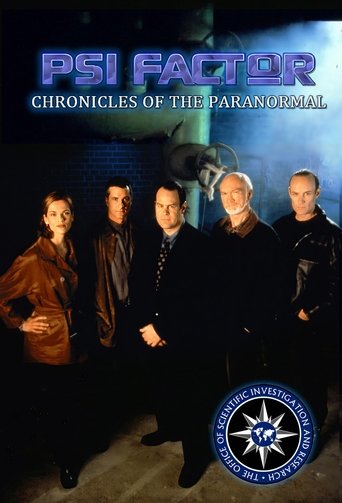
Psi Factor: Chronicles of the Paranormal is a Canadian science fiction television series that surrounds a scientific team that deals with all manner of paranormal phenomena around the world; from alien abductions to possessions. The organization depicted in the series is loosely inspired by a real-life scientific organization. While locations in the series took place worldwide, the series was primarily filmed in and around Toronto, Ontario, Canada, and aired 88 episodes over four seasons from 1996 to 2000.
A Swedish sport competition based on "Eeuwige roem" (Eternal Glory.)
Jiu Shi’s skills are pushed to the edge as he faces life-or-death challenges inside a brutal VR maze.
Angelito tells the story of a poor boy who arrives from Maracaibo and, following his grandfather's death, goes to Caracas. Lost in the big city, he is taken in by a charitable institution run by Mother Chepa.
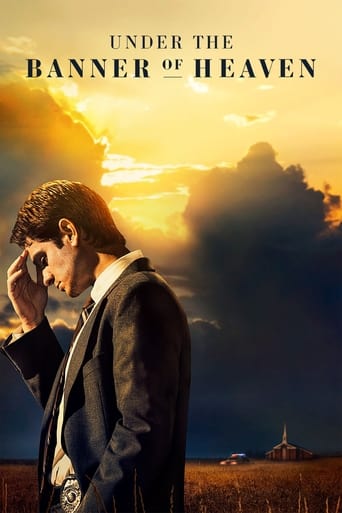
A devout detective's faith is tested as he investigates a brutal murder that seems to be connected to an esteemed Utah family's spiral into LDS fundamentalism and their distrust in the government.
Her heart was anchored in an unrequited love, while the one who truly saw her from the beginning waited in the wings. A tale of a fateful first encounter that changes everything—and a second chance at a love that was always meant to be.
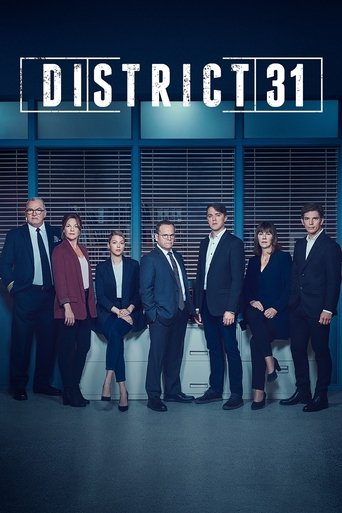
After years of keeping his detectives at the headquarters, the Montreal PD has decided to reassign them to neighbourhood precincts in an effort to get closer to the population. Nadine Legrand and Patrick Bissonnette have to find their footing in their new work place: District 31.
A bride has a feeling that something horrifying will happen at her wedding — and the closer to the altar she gets, the worse it becomes.
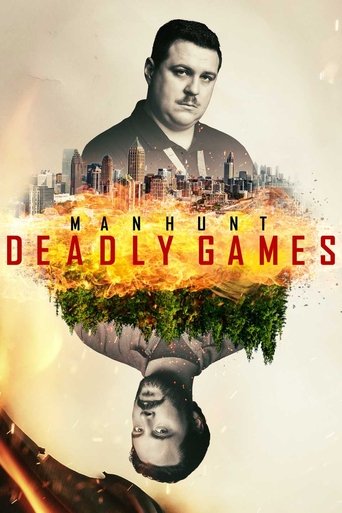
Inspired by actual events, this true crime anthology series takes a deep dive into the dark, twisted minds of terrorists and follows the brave souls who hunt them down.
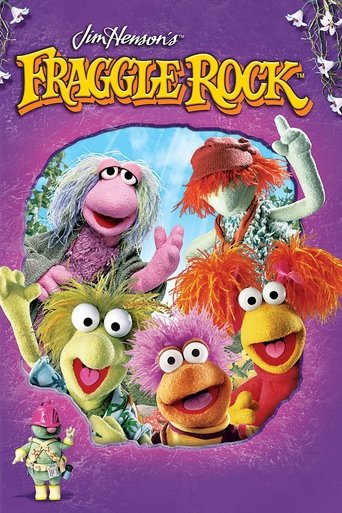
The Fraggles are a fun-loving community of creatures who live in a subterranean fantasy land where they love to play, sing and dance their cares away, sharing their world with the tiny Doozers and the giant Gorgs. The series teaches empathy and tolerance and encourages children to understand people different from themselves.
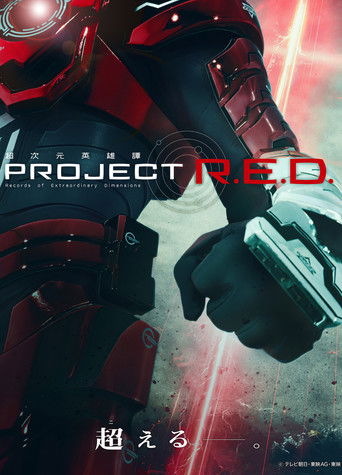
Since 1975, Japan’s iconic Super Sentai series has defined the tokusatsu landscape. Now, after 50 years, Japan’s weekly tokusatsu broadcasting timeslot will welcome a brand-new project by Toei titled, PROJECT R.E.D. (short for Records of Extraordinary Dimensions). PROJECT R.E.D. is a new tokusatsu series featuring a red hero in action.
Eight years after the original website went dark, a new generation of New York private school teens are introduced to the social surveillance of Gossip Girl.
The story of Ashoka, emperor of the Maurya Empire, from his early struggles to his reign as a ruthless emperor.
A four-star general begrudgingly teams up with an eccentric scientist to get the U.S. military's newest agency — Space Force — ready for lift-off.
Compact was a British television soap opera shown by the BBC between 1962 and 1965. The series was created by Hazel Adair and Peter Ling, who together went on to devise Crossroads. In contrast to the kitchen sink realism of Coronation Street, Compact was a distinctly middle-class serial, set in the more "sophisticated" arena of magazine publishing. An early "avarice" soap, it took the viewer into the business workplace, and aligned the professional lives of the characters with more personal storylines. The show was scheduled for broadcast on Tuesdays and Thursdays, thus avoiding a clash with ITV's Coronation Street on Mondays and Wednesdays. When Compact began, the editor was a woman, Joanne Minster, yet it was not long before she was replaced by Ian Harmon, the son of the magazine's owner. Despite being largely criticised by reviewers, Compact was popular with the general public, and in 1964 a regular omnibus edition was introduced, broadcast on Sundays. Morris Barry, a some-time actor and BBC director – he directed several Doctor Who stories in the 1960s – took over as producer and was given a brief to spice the series up in view of the criticism it had received from the national press. But the BBC, never comfortable with the concept of soap opera, quietly dropped the series in 1965.
In the bustling capital of Bianjing during the Northern Song Dynasty, Madam Li moves her family in search of better marriage prospects for her five beautiful but quirky daughters, whose love lives have long been her worry. Each daughter, though famous for her beauty and wit, comes with unique quirks: the eldest, Shou Hua, has no interest in remarrying after early widowhood; the third, Kang Ning, is fierce and headstrong; the fourth, Hao De, is well-meaning but blunt; and the youngest, Le Shan, is spoiled and selective. Challenges abound as they face unexpected setbacks, including a cold reception from the already-married sister they came to visit. As the family reestablishes their business, they navigate a series of humorous and heartwarming misadventures, ultimately finding love and fulfilling their mother’s hopes in this lively tale of family and romance.
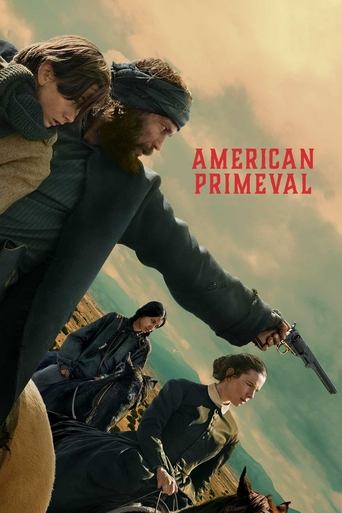
A mother and son fleeing from their past form a found family while confronting a harsh landscape of freedom and cruelty in the American West.
Kraft Television Theater is an American, well-received anthology series presenting live television dramas.
The Legend of Snow White is a Japanese anime series produced by Tatsunoko Production and based on the European fairy tale. Directed by Tsuneo Ninomiya and using a screenplay written by Jinzō Toriumi, the series premiered on NHK on April 6, 1994 and ran for 52-episodes until its conclusion on March 29, 1995. The series uses two pieces of theme music: one opening theme, "Heart no mori e tsuretette" by Miki Sakai with Red Dolphins, and one ending theme, "Folk Dance" by Mebae Miyahara.
Activate Your Account!
You must create an account to continue watching